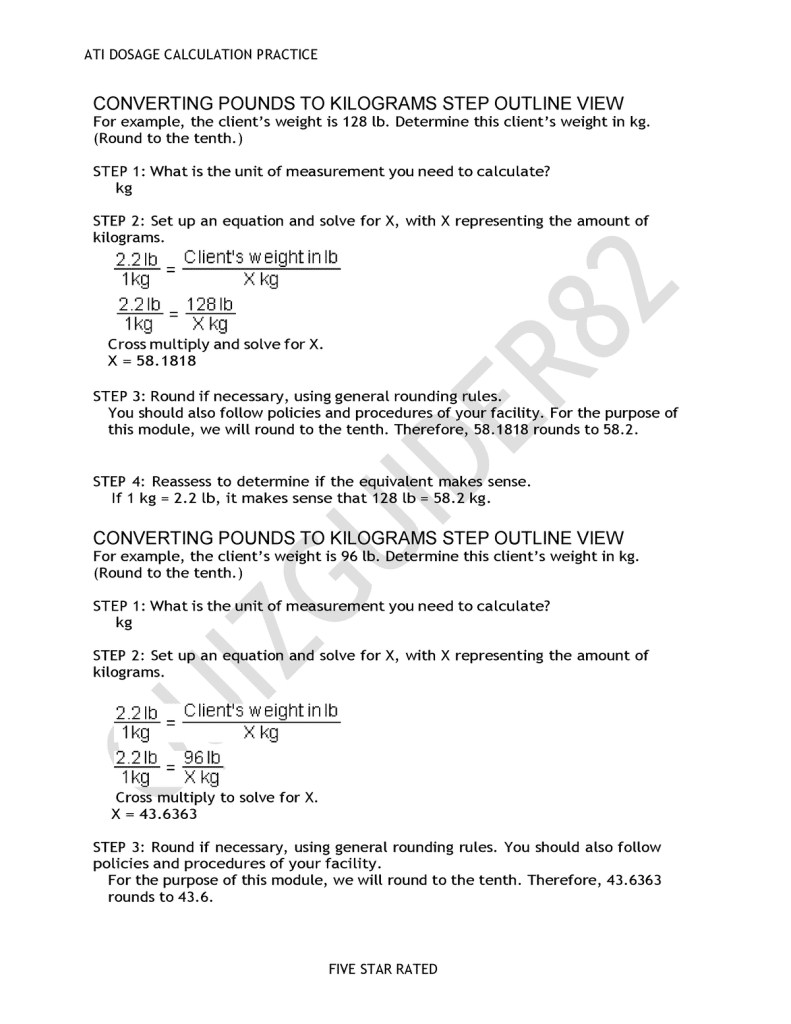
When it comes to medication administration, accuracy is crucial to ensure patient safety. Nurses and healthcare professionals are required to have a solid understanding of dosage calculations to ensure the correct amount of medication is given to patients. ATI dosage calculation practice questions are an excellent way to test and improve your calculation skills. These practice questions will help you become more confident and proficient in dosage calculations, making you a competent and competent healthcare professional.
Calculating medication dosages involves a combination of mathematical skills and critical thinking. It requires understanding the medication’s prescribed dosage, the patient’s weight and age, and the concentration of the medication. By practicing dosage calculation questions, you can enhance your ability to accurately calculate medication dosages and minimize the risk of errors.
Whether you are a nursing student preparing for exams or a healthcare professional looking to sharpen your dosage calculation skills, these ATI dosage calculation practice questions will be beneficial. They cover a wide range of medication types, including oral medications, injections, and intravenous medications. Practicing these questions will help you gain confidence in your ability to calculate dosages and ensure patient safety.
See these ATI Dosage Calculation Practice Questions
- 1. A patient is prescribed 500mg of medication. The medication is available in a concentration of 250mg/5ml. How many ml should the nurse administer?
- 2. The prescribed dose of medication is 0.5mg/kg. The patient weighs 70kg. How many mg should the patient receive?
- 3. A medication is available in a concentration of 10mg/ml. The prescribed dose is 25mg. How many ml should the nurse administer?
- 4. The prescribed dose of medication is 0.2mg/kg. The patient weighs 60kg. How many mcg should the patient receive?
- 5. A medication is available in a concentration of 50mcg/1ml. The prescribed dose is 100mcg. How many ml should the nurse administer?
- 6. The prescribed dose of medication is 0.15mcg/kg. The patient weighs 80kg. How many mcg should the patient receive?
- 7. A medication is available in a concentration of 5mg/ml. The prescribed dose is 20mg. How many ml should the nurse administer?
- 8. The prescribed dose of medication is 0.1mg/kg. The patient weighs 50kg. How many mcg should the patient receive?
- 9. A medication is available in a concentration of 100mcg/2ml. The prescribed dose is 250mcg. How many ml should the nurse administer?
- 10. The prescribed dose of medication is 0.3mg/kg. The patient weighs 65kg. How many mg should the patient receive?
- 11. A medication is available in a concentration of 25mg/5ml. The prescribed dose is 75mg. How many ml should the nurse administer?
- 12. The prescribed dose of medication is 0.4mg/kg. The patient weighs 55kg. How many mcg should the patient receive?
- 13. A medication is available in a concentration of 50mcg/1ml. The prescribed dose is 200mcg. How many ml should the nurse administer?
- 14. The prescribed dose of medication is 0.2mcg/kg. The patient weighs 75kg. How many mcg should the patient receive?
- 15. A medication is available in a concentration of 10mg/ml. The prescribed dose is 30mg. How many ml should the nurse administer?
- 16. The prescribed dose of medication is 0.05mg/kg. The patient weighs 40kg. How many mcg should the patient receive?
- 17. A medication is available in a concentration of 25mcg/1ml. The prescribed dose is 75mcg. How many ml should the nurse administer?
- 18. The prescribed dose of medication is 0.3mcg/kg. The patient weighs 60kg. How many mcg should the patient receive?
- 19. A medication is available in a concentration of 5mg/ml. The prescribed dose is 15mg. How many ml should the nurse administer?
- 20. The prescribed dose of medication is 0.1mg/kg. The patient weighs 70kg. How many mcg should the patient receive?
- 21. A medication is available in a concentration of 100mcg/2ml. The prescribed dose is 300mcg. How many ml should the nurse administer?
- 22. The prescribed dose of medication is 0.2mg/kg. The patient weighs 50kg. How many mg should the patient receive?
- 23. A medication is available in a concentration of 50mcg/1ml. The prescribed dose is 150mcg. How many ml should the nurse administer?
- 24. The prescribed dose of medication is 0.15mcg/kg. The patient weighs 65kg. How many mcg should the patient receive?
- 25. A medication is available in a concentration of 10mg/ml. The prescribed dose is 40mg. How many ml should the nurse administer?
- 26. The prescribed dose of medication is 0.05mg/kg. The patient weighs 45kg. How many mcg should the patient receive?
- 27. A medication is available in a concentration of 25mcg/1ml. The prescribed dose is 100mcg. How many ml should the nurse administer?
- 28. The prescribed dose of medication is 0.2mcg/kg. The patient weighs 60kg. How many mcg should the patient receive?
- 29. A medication is available in a concentration of 5mg/ml. The prescribed dose is 10mg. How many ml should the nurse administer?
- 30. The prescribed dose of medication is 0.1mg/kg. The patient weighs 60kg. How many mcg should the patient receive?
- 31. A medication is available in a concentration of 100mcg/2ml. The prescribed dose is 200mcg. How many ml should the nurse administer?
- 32. The prescribed dose of medication is 0.3mg/kg. The patient weighs 75kg. How many mg should the patient receive?
- 33. A medication is available in a concentration of 25mg/5ml. The prescribed dose is 50mg. How many ml should the nurse administer?
- 34. The prescribed dose of medication is 0.4mg/kg. The patient weighs 40kg. How many mcg should the patient receive?
- 35. A medication is available in a concentration of 50mcg/1ml. The prescribed dose is 100mcg. How many ml should the nurse administer?
- 36. The prescribed dose of medication is 0.2mcg/kg. The patient weighs 65kg. How many mcg should the patient receive?
- 37. A medication is available in a concentration of 10mg/ml. The prescribed dose is 20mg. How many ml should the nurse administer?
- 38. The prescribed dose of medication is 0.15mg/kg. The patient weighs 50kg. How many mcg should the patient receive?
- 39. A medication is available in a concentration of 25mcg/1ml. The prescribed dose is 50mcg. How many ml should the nurse administer?
- 40. The prescribed dose of medication is 0.3mcg/kg. The patient weighs 70kg. How many mcg should the patient receive?
Practicing these ATI dosage calculation questions regularly will help you master dosage calculations and ensure patient safety in your nursing practice. Remember to always double-check your calculations, use reliable references, and seek clarification if you are unsure. With dedication and practice, you will become proficient in dosage calculations and provide quality care to your patients.