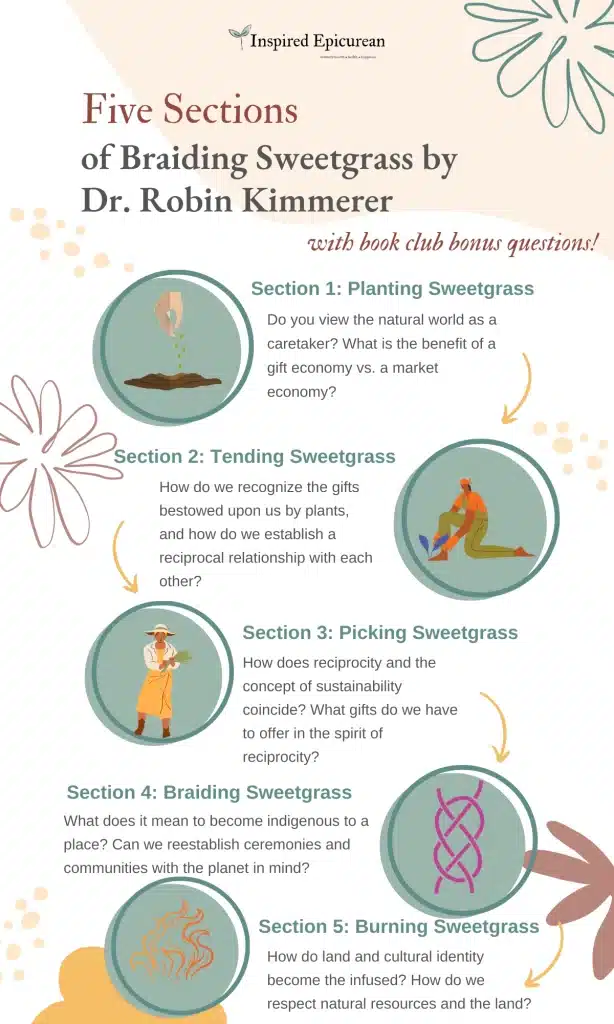
Braiding Sweetgrass is a thought-provoking and insightful book written by Robin Wall Kimmerer. This book invites readers to explore the intersection of indigenous wisdom, scientific knowledge, and the natural world. It beautifully weaves together stories, personal experiences, and scientific facts to reveal the interconnectedness of all living beings and the importance of reciprocity in our relationship with nature. If you are part of a book club or simply interested in engaging in meaningful discussions about this book, here are some discussion questions to get you started.
In Braiding Sweetgrass, Kimmerer shares her personal journey as a botanist and her experiences as a member of the Potawatomi Nation. She offers a unique perspective on the relationship between humans and the natural world. How did Kimmerer’s background and indigenous wisdom shape her understanding of nature? How did her scientific training complement her indigenous knowledge?
The concept of reciprocity is a central theme in Braiding Sweetgrass. Kimmerer emphasizes the importance of giving back to the Earth and nurturing the reciprocal relationship between humans and nature. How can we apply the principle of reciprocity in our own lives? What are some practical ways in which we can show gratitude and give back to the natural world?
See these Braiding Sweetgrass discussion questions
- How does the author define “braiding sweetgrass” and what does it symbolize?
- What are some examples of indigenous wisdom shared in the book?
- How does the author challenge the conventional Western understanding of nature?
- What role does storytelling play in Braiding Sweetgrass? How does it contribute to the overall message of the book?
- What are some examples of the author’s personal experiences with nature?
- How does the author explain the concept of “Two-Eyed Seeing” and why is it important?
- What are some examples of the author’s scientific research and how does it support her arguments?
- What are the author’s views on the commodification of nature?
- What are some examples of the author’s connection to her indigenous heritage?
- How does the author discuss the relationship between humans and non-human beings?
- What are some examples of the author’s observations of ecological restoration?
- What is the significance of the author’s discussion on the Three Sisters (corn, beans, and squash) and their interdependence?
- How does the author describe the role of fire in ecosystems?
- What are some examples of the author’s reflections on the importance of language?
- How does the author challenge the notion of “wilderness”?
- What are some examples of the author’s encounters with plants and their teachings?
- How does the author discuss the impact of colonization on indigenous peoples and the environment?
- What are some examples of the author’s discussions on the ethics of harvesting and consumption?
- How does the author describe the relationship between humans and water?
- What are some examples of the author’s insights on the intelligence of plants?
- How does the author explain the concept of “the Honorable Harvest”?
- What are some examples of the author’s discussions on the importance of ceremony and ritual?
- How does the author discuss the role of gratitude in our relationship with nature?
- What are some examples of the author’s reflections on the interconnectedness of all living beings?
- How does the author explore the concept of “decolonizing the mind”?
- What are some examples of the author’s discussions on the impacts of climate change?
- How does the author discuss the role of education in fostering a deeper connection with nature?
- What are some examples of the author’s discussions on the importance of place-based knowledge?
- How does the author discuss the relationship between science and indigenous knowledge?
- What are some examples of the author’s reflections on the role of beauty in our relationship with nature?
- How does the author challenge the notion of hierarchy in the natural world?
- What are some examples of the author’s discussions on the impacts of environmental degradation?
- How does the author describe the role of the senses in our connection with nature?
- What are some examples of the author’s discussions on the importance of community?
- How does the author discuss the concept of “gift” in relation to the natural world?
- What are some examples of the author’s reflections on the intergenerational transmission of knowledge?
- How does the author explore the concept of “restoration”?
- What are some examples of the author’s discussions on the importance of empathy?
- How does the author discuss the role of indigenous women in environmental activism?
- What are some examples of the author’s reflections on the power of ceremony?
- How does the author challenge the notion of “ownership” of land?
- What are some examples of the author’s discussions on the importance of storytelling?
- How does the author explore the concept of “living in reciprocity”?
- What are some examples of the author’s reflections on the role of art in our relationship with nature?
These discussion questions are meant to spark deep conversations and reflections on the themes presented in Braiding Sweetgrass. Feel free to choose the questions that resonate with you or explore new ones inspired by your own reading experience. Happy discussing!