When it comes to effective communication and problem-solving, asking the right questions is key. Calibrated questions are a powerful tool that can help individuals and teams gain a deeper understanding of complex issues and make better decisions. These questions are designed to encourage critical thinking, explore different perspectives, and uncover hidden assumptions. By using calibrated questions, you can foster more meaningful conversations and drive innovation within your organization.
Calibrated questions are open-ended and thought-provoking. They require individuals to think deeply and reflect on their own beliefs and assumptions. These questions are not meant to have a right or wrong answer, but rather to stimulate discussion and challenge existing ways of thinking. By asking calibrated questions, you can encourage others to explore different possibilities and consider alternative solutions.
One of the key benefits of calibrated questions is that they help uncover blind spots and biases. By challenging assumptions and exploring different perspectives, individuals can gain a more comprehensive understanding of a problem. This can lead to more informed decision-making and better outcomes. Calibrated questions also promote active listening and empathy, as individuals are encouraged to truly understand and appreciate different viewpoints.
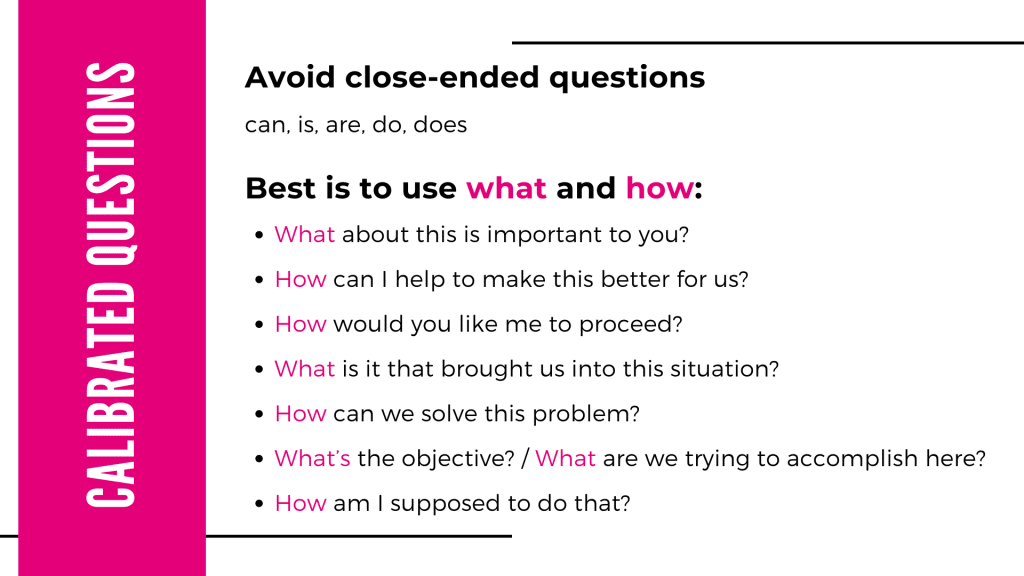
See these calibrated questions
- What are the underlying assumptions behind this decision?
- How might this problem look from a different perspective?
- What are the potential risks and benefits of this course of action?
- What are some alternative solutions we could explore?
- How does this align with our overall goals and values?
- What resources or support do we need to implement this idea?
- What are the potential long-term consequences of this decision?
- How can we mitigate any potential risks or challenges?
- What are the potential unintended consequences of this action?
- What assumptions are we making about our customers’ needs?
- How can we ensure that all stakeholders are heard and represented?
- What data or evidence do we have to support this hypothesis?
- What are the potential ethical implications of this decision?
- How can we create a safe and inclusive environment for everyone?
- What are the different ways we can measure success in this project?
- What are the potential barriers or obstacles we might face?
- How can we ensure effective communication and collaboration?
- What assumptions are we making about our competitors’ strategies?
- How can we encourage diverse perspectives and ideas?
- What are the potential unintended consequences of this policy change?
- How can we adapt to changing market conditions?
- What are the potential biases that might be influencing our decision-making?
- What are the potential consequences of not taking any action?
- How can we leverage technology to solve this problem?
- What are the potential trade-offs we need to consider?
- How can we create a culture that values continuous learning and improvement?
- What assumptions are we making about our team’s capabilities?
- How can we ensure that our decisions are fair and equitable?
- What are the potential social or environmental impacts of this project?
- How can we foster creativity and innovation within our organization?
- What are the potential consequences of rushing into a decision?
- How can we effectively prioritize our resources and time?
- What are the potential risks and benefits of maintaining the status quo?
- How can we build trust and collaboration with our partners?
- What assumptions are we making about our target audience?
- How can we ensure that our decisions are aligned with our values?
- What are the potential consequences of not addressing this issue?
- How can we create a culture that encourages accountability and ownership?
- What are the potential implications of this decision on our stakeholders?
- How can we effectively manage and mitigate any conflicts that arise?
- What assumptions are we making about our competitors’ motivations?
- How can we promote diversity and inclusion in our decision-making?
- What are the potential risks and benefits of collaborating with others?
- How can we ensure that our decisions are based on reliable data?
These are just a few examples of calibrated questions that you can use in various situations. By incorporating these questions into your conversations and decision-making processes, you can stimulate critical thinking, challenge assumptions, and drive innovation within your organization.