Preparing for the California MFT (Marriage and Family Therapist) Exam can be a daunting task. One of the best ways to familiarize yourself with the exam format and content is by practicing with sample questions. These sample questions can help you identify your strengths and weaknesses, and allow you to focus your studying efforts on areas that need improvement. In this article, we will provide you with a comprehensive list of California MFT exam sample questions to aid in your preparation.
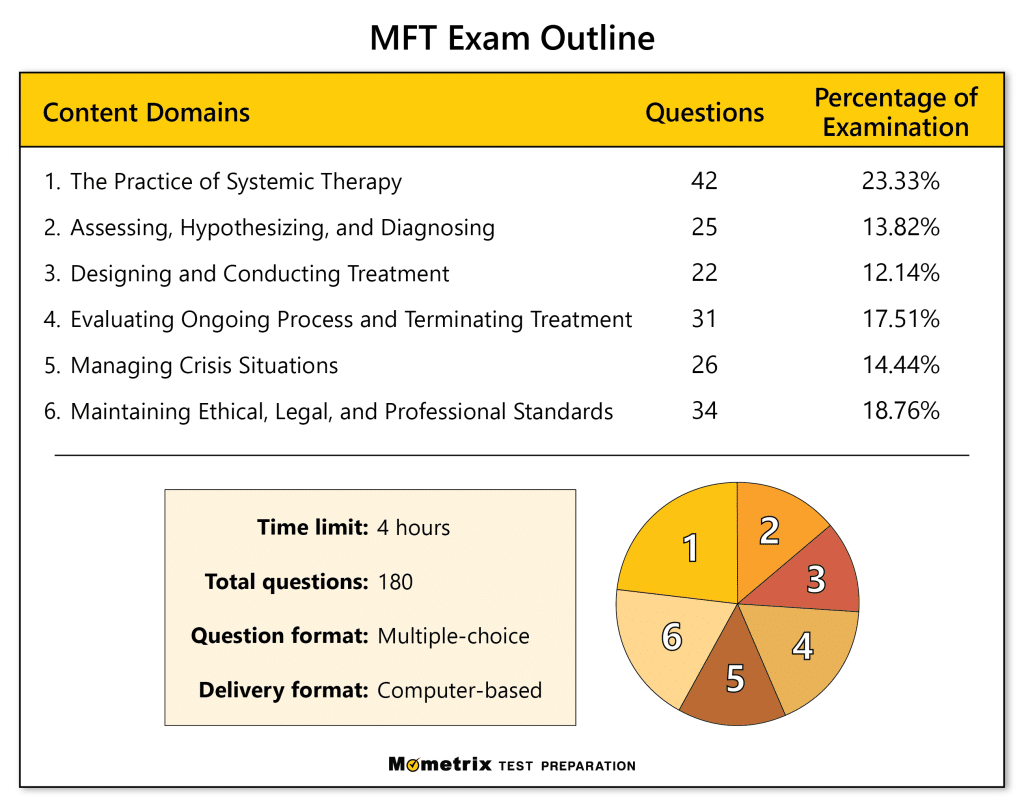
Before we dive into the sample questions, let’s briefly discuss the California MFT Exam. This exam is designed to assess the knowledge and skills necessary to practice as a licensed marriage and family therapist in California. It covers a wide range of topics, including assessment and diagnosis, treatment planning, legal and ethical considerations, and more. The exam consists of multiple-choice questions, and you will have four hours to complete it.
Now, let’s get to the heart of the matter. Below, you will find a list of California MFT exam sample questions to help you in your preparation:
See these California MFT Exam Sample Questions
- 1. What is the primary goal of the initial client assessment?
- 2. Which theoretical approach emphasizes the role of unconscious processes?
- 3. What are the four stages of the family life cycle?
- 4. What is the purpose of a genogram in family therapy?
- 5. What is the difference between confidentiality and privileged communication?
- 6. What are the ethical considerations when working with minors?
- 7. How would you assess for domestic violence in a family therapy session?
- 8. What are the symptoms of major depressive disorder?
- 9. How would you approach a client who is resistant to therapy?
- 10. What is the role of the therapist in solution-focused therapy?
- 11. How would you handle a situation where a client expresses suicidal thoughts?
- 12. What is the purpose of informed consent in therapy?
- 13. How would you assess for substance abuse in a family therapy session?
- 14. What are the symptoms of post-traumatic stress disorder?
- 15. How would you address cultural diversity in therapy?
- 16. What are the steps involved in developing a treatment plan?
- 17. How would you handle a situation where a client breaches confidentiality?
- 18. What is the role of empathy in the therapeutic process?
- 19. How would you assess for child abuse in a family therapy session?
- 20. What are the symptoms of anxiety disorders?
- 21. How would you approach a client who is experiencing a crisis?
- 22. What is the significance of countertransference in therapy?
- 23. How would you address issues of diversity and inclusion in therapy?
- 24. What are the ethical considerations when working with LGBTQ+ clients?
- 25. How would you assess for eating disorders in a family therapy session?
- 26. What are the symptoms of bipolar disorder?
- 27. How would you approach a client who is struggling with self-esteem?
- 28. What is the role of self-disclosure in therapy?
- 29. How would you handle a situation where a client threatens harm to others?
- 30. What is the purpose of termination in therapy?
- 31. How would you assess for substance use disorders in a family therapy session?
- 32. What are the symptoms of schizophrenia?
- 33. How would you approach a client who is dealing with grief and loss?
- 34. What is the role of boundaries in the therapeutic relationship?
- 35. How would you handle a situation where a client discloses child abuse?
- 36. What is the purpose of self-care for therapists?
- 37. How would you assess for personality disorders in a family therapy session?
- 38. What are the symptoms of obsessive-compulsive disorder?
- 39. How would you approach a client who is struggling with relationship issues?
- 40. What is the role of transference in therapy?
These are just a few examples of the California MFT exam sample questions you may encounter. Remember to use these questions as a starting point for your study efforts and seek out additional resources to ensure comprehensive exam preparation. Good luck!