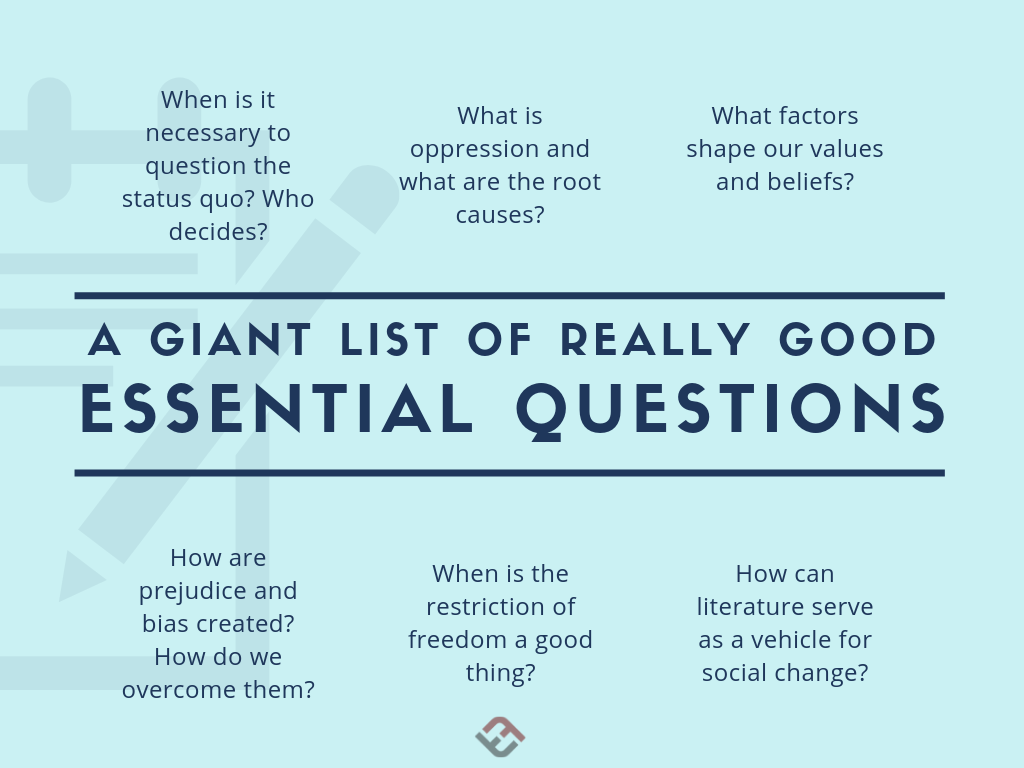
When it comes to teaching English Language Arts (ELA), essential questions play a crucial role in guiding students’ understanding and learning. These questions are thought-provoking and open-ended, aiming to deepen students’ knowledge and encourage critical thinking. ELA essential questions serve as a foundation for students to explore different literary elements, understand complex texts, and develop their communication skills. In this article, we will explore the importance of ela essential questions and provide a comprehensive list of questions that can be used in the classroom.
ELA essential questions are designed to spark students’ curiosity and encourage them to think beyond surface-level understanding. These questions address the big ideas and concepts that are at the core of English Language Arts. By exploring these questions, students can develop their analytical and interpretive skills, make connections between different texts, and develop a deeper understanding of the English language. ELA essential questions also foster discussion and collaboration among students, allowing them to learn from each other’s perspectives and insights.
One of the key benefits of using ela essential questions in the classroom is that they promote higher-order thinking skills. These questions require students to analyze, evaluate, and synthesize information, rather than simply regurgitating facts. By engaging in these types of questions, students develop a deeper understanding of the texts they read, and they can apply these analytical skills to other areas of their lives. ELA essential questions also help students develop their communication skills, as they need to articulate their thoughts and ideas effectively.
See these ela essential questions:
- How does the author use symbolism to convey the theme?
- What is the impact of the setting on the overall mood of the story?
- How does the protagonist change throughout the novel?
- What is the author’s message about society in the text?
- How does the use of figurative language enhance the reader’s understanding?
- What are the ethical implications of the character’s actions?
- How does the author create suspense in the narrative?
- What is the significance of the title?
- How does the author use foreshadowing to build tension?
- What are the social and cultural contexts of the text?
- How does the author use irony to convey a message?
- What is the impact of the point of view on the reader’s understanding?
- What are the main conflicts in the story?
- How does the author use dialogue to develop the characters?
- What is the author’s purpose in writing the text?
- How does the author use descriptive language to create imagery?
- What are the main themes explored in the text?
- How does the author create a sense of place in the narrative?
- What is the impact of the author’s tone on the reader’s interpretation?
- How does the author use flashbacks to provide insight into the story?
- What are the different narrative techniques used in the text?
- What is the author’s commentary on human nature?
- How does the author use motifs to develop the story?
- What is the significance of the resolution?
- How does the author use pacing to build tension?
- What are the moral dilemmas faced by the characters?
- How does the author use allusion to enhance the reader’s understanding?
- What is the impact of the author’s choice of words on the reader’s interpretation?
- How does the author create a sense of atmosphere in the text?
- What are the different narrative perspectives in the story?
- How does the author use subtext to convey meaning?
- What are the social, political, and historical contexts of the text?
- How does the author use repetition to emphasize a point?
- What is the author’s commentary on power and authority?
- How does the author use suspense to engage the reader?
- What is the significance of the opening scene?
- How does the author use humor to convey a message?
- What are the different narrative structures used in the text?
- How does the author use imagery to create a vivid portrayal?
- What are the underlying social issues explored in the text?
- How does the author use symbolism to represent abstract concepts?
- What is the impact of the author’s use of language on the reader’s emotions?
- How does the author create believable and relatable characters?
- What are the consequences of the character’s choices?
These ela essential questions are just a starting point for engaging discussions and deepening students’ understanding of English Language Arts. By incorporating these questions into your lessons, you can foster a love for literature, develop critical thinking skills, and empower students to become lifelong learners.