
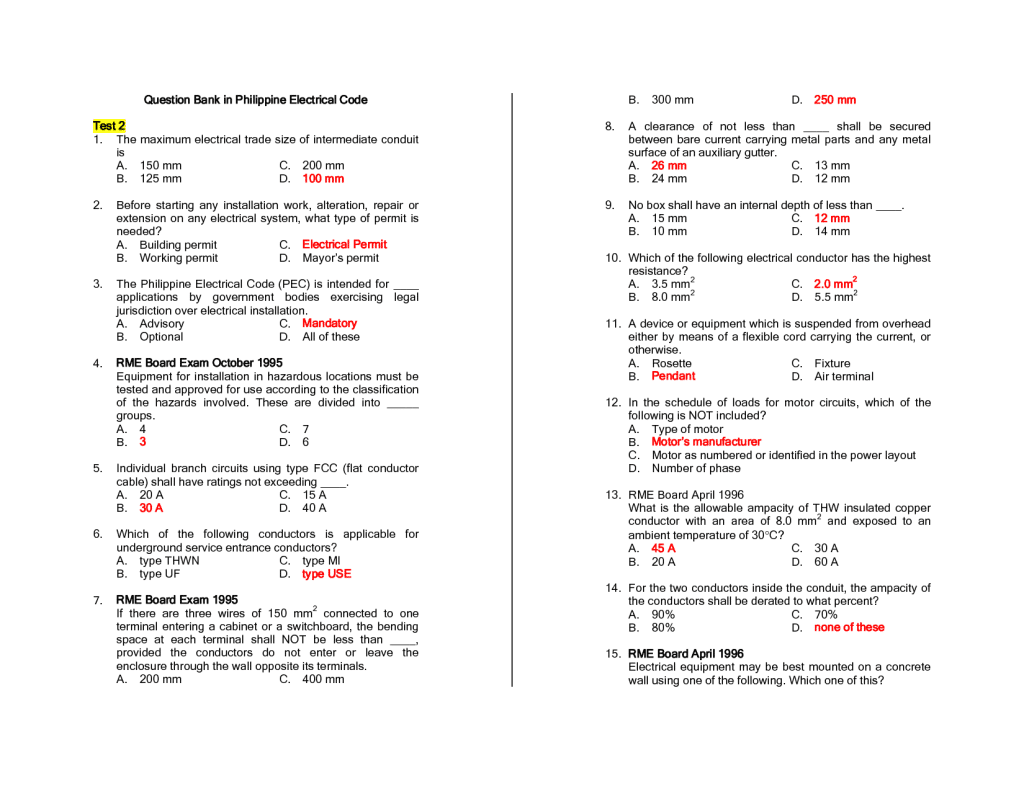
Understanding electrical codes is crucial for anyone involved in electrical work. Whether you are an electrician, contractor, or homeowner, knowing and following electrical codes ensures safety and compliance. However, navigating through the electrical code book can be challenging, and questions may arise. In this article, we will answer some common electrical code questions to help you stay informed and make informed decisions.
From wiring methods to grounding requirements, electrical codes cover various aspects of electrical installations. It is essential to familiarize yourself with these codes to ensure that electrical systems are safe and reliable. Here, we have compiled a list of frequently asked electrical code questions to provide clarity and guidance.
Disclaimer: It is crucial to consult the local electrical codes and authorities having jurisdiction for specific code requirements in your area. The information provided below is for general reference only and should not replace professional advice.
See These Electrical Code Questions
- What is the maximum number of conductors allowed in a conduit?
- What are the requirements for GFCI protection?
- How far should electrical panels be from plumbing fixtures?
- What is the minimum clearance required above electrical panels?
- Can Romex® be used in a commercial building?
- What is the height requirement for electrical outlets?
- How many outlets can be on a single circuit?
- What is the maximum length for a flexible metal conduit?
- Can I install a junction box in a bathroom?
- What are the requirements for AFCI protection?
- Is it necessary to bond metal water pipes?
- Can I use aluminum wire for branch circuits?
- How deep should underground electrical conduits be buried?
- What is the minimum ampacity of service conductors?
- Can I use extension cords as a permanent wiring solution?
- What are the requirements for outdoor receptacles?
- Can I install a ceiling fan without a box?
- What is the minimum size for grounding conductors?
- Are tamper-resistant receptacles required in all areas?
- Can I use two different gauge wires in the same circuit?
- What are the requirements for emergency lighting?
- Can I install a light fixture without a ground wire?
- How many outlets are required in a kitchen?
- Can I install a three-prong outlet on an ungrounded circuit?
- What is the maximum distance between supports for a conduit?
- Are AFCI breakers required for all circuits?
- Can I use NM cable in a wet location?
- What are the requirements for electrical bonding of swimming pools?
- Can I install a two-pole breaker in a single-pole panel?
- What is the minimum height requirement for service entrance conductors?
- Can I use a dimmer switch with LED lights?
- What is the maximum voltage drop allowed for branch circuits?
- Are tamper-resistant receptacles required in commercial buildings?
- Can I install a junction box in an attic?
- What are the requirements for smoke detectors?
- Can I use non-metallic conduit for commercial installations?
- What is the minimum clearance required for electrical equipment in front of a panel?
- Can I use a white wire as a hot conductor?
- How many circuits are allowed in a raceway?
- What are the requirements for arc flash labeling?
- Can I use an extension cord for a refrigerator?
- What is the minimum height for bathroom receptacles?
- Are tamper-resistant outlets required in outdoor areas?
- Can I use NM cable in a conduit?
- What is the maximum allowable voltage drop for service conductors?
These are just a few examples of the many electrical code questions that may arise during electrical installations. Remember, it is essential to stay updated with the latest electrical codes and consult with professionals for specific requirements in your area. By following electrical codes, you can ensure the safety and reliability of electrical systems.






The questions are so good