“Lamb to the Slaughter” is a short story written by Roald Dahl. It tells the tale of a seemingly perfect housewife named Mary Maloney who commits a shocking crime. This story raises several thought-provoking questions that leave readers pondering long after they finish reading. In this article, we will explore some of the most commonly asked questions about “Lamb to the Slaughter” and provide insightful answers to deepen your understanding of this gripping story.
One of the most frequently asked questions about “Lamb to the Slaughter” is the motive behind Mary Maloney’s actions. Why did she kill her husband? The answer lies in her emotional state and the sudden revelation of her husband’s intention to leave her. Mary’s actions can be seen as a desperate act of preserving the life she had created, leading her to commit an unthinkable act.
Another question that often arises is the significance of the frozen leg of lamb used as the murder weapon. It symbolizes the transformation of Mary from a meek and submissive housewife into a cunning and vengeful woman. The lamb represents the innocence and vulnerability Mary had before the betrayal, and her use of it as a weapon showcases her resourcefulness and determination.
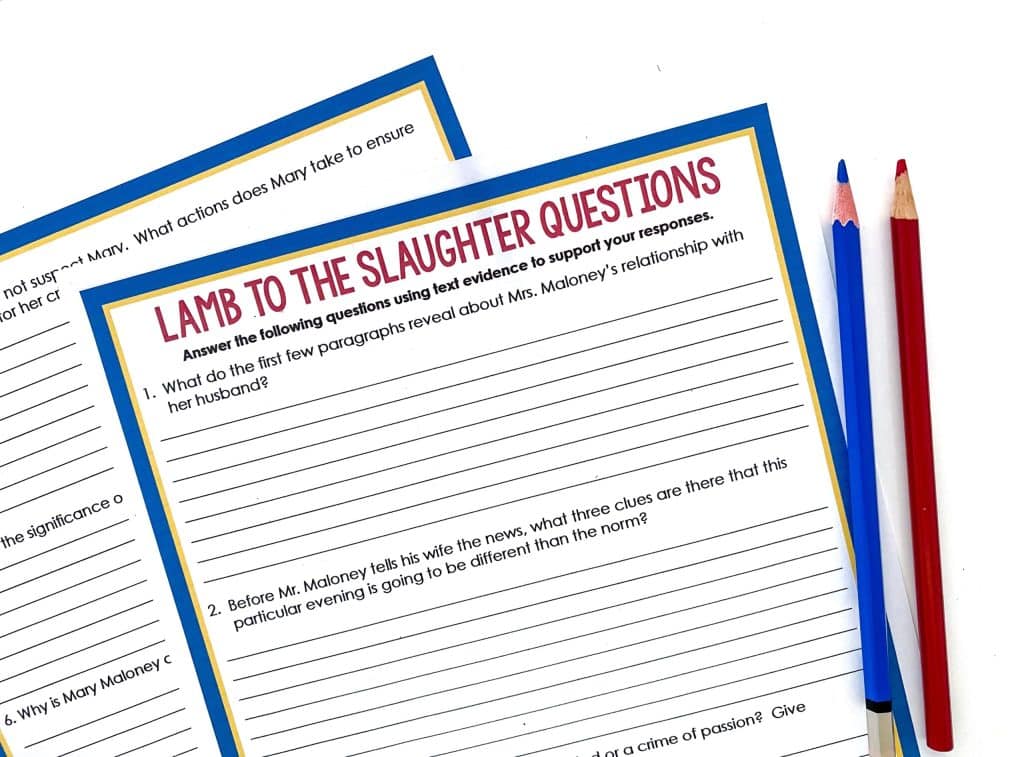
See these Lamb to the Slaughter Questions and Answers
- Why did Mary Maloney kill her husband?
- What was Patrick Maloney’s intention before his murder?
- How does Mary react to the news of her husband leaving?
- What does the frozen leg of lamb symbolize?
- What is the significance of the title “Lamb to the Slaughter”?
- How does the story challenge traditional gender roles?
- What role does the police investigation play in the story?
- Why does Mary offer the detectives the lamb to eat?
- What is the overall tone of the story?
- What does the story reveal about the consequences of betrayal?
- How does Dahl create suspense in the story?
- Why does Mary giggle when the detectives eat the lamb?
- What does the story suggest about the unpredictability of human behavior?
- What role does irony play in the story?
- How does the story explore the theme of justice?
- Why does Mary focus on creating an alibi after the murder?
- What does the story say about the power of manipulation?
- What does the ending of the story imply about Mary’s future?
- How does the story challenge the notion of a perfect marriage?
- Why does Mary feel remorse after the murder?
- What is the significance of the story’s setting?
- How does the story portray the concept of trust?
- Why does Dahl choose to leave some details open to interpretation?
- What does the story suggest about the consequences of impulsive actions?
- How does the story explore the theme of identity?
- Why does Mary decide to cover up her husband’s murder?
- What role does the unborn child play in the story?
- What does the story say about the fragility of relationships?
- How does the story challenge societal expectations?
- Why does Mary act calmly and normally after committing the crime?
- What is the significance of the detectives eating the murder weapon?
- How does the story use dark humor to engage the reader?
- Why does Dahl choose to tell the story from Mary’s perspective?
- What does the story suggest about the power dynamics in a marriage?
- How does the story explore the theme of revenge?
- Why does Mary feel a sense of liberation after the murder?
- What does the story imply about the nature of love?
- How does the story challenge the concept of justice?
- Why does Mary go to the grocery store after the murder?
- What does the story reveal about the limitations of the justice system?
- How does the story convey a sense of irony?
- Why does Mary choose not to reveal her true emotions to the detectives?
- What is the significance of the lamb’s blood on Mary’s face?
These questions and answers provide a deeper understanding of the complexities and themes explored in “Lamb to the Slaughter.” Whether you are studying this story or simply exploring its literary merits, delving into these thought-provoking questions will enhance your appreciation for Roald Dahl’s masterful storytelling.