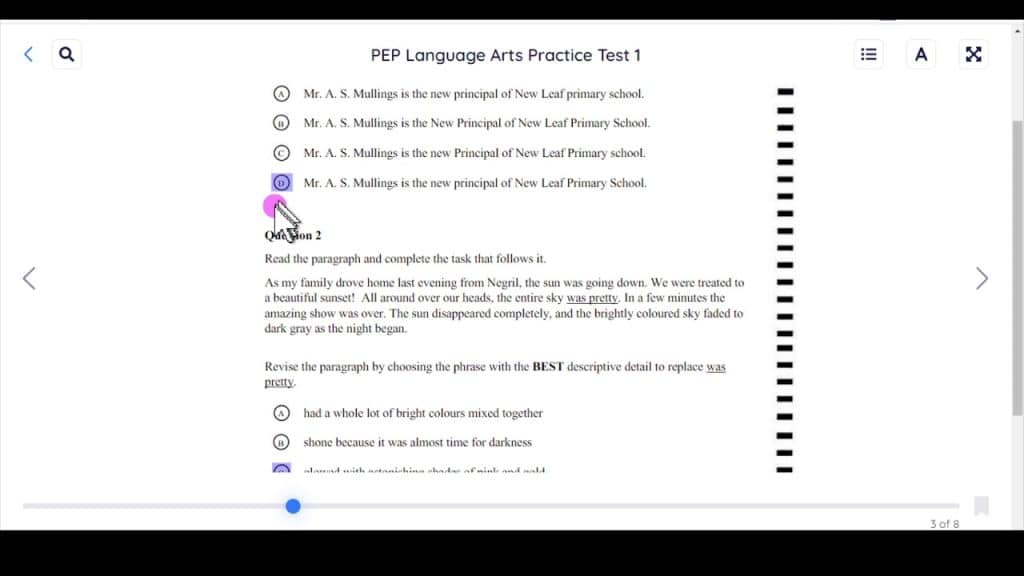
Language arts is a crucial subject in education as it encompasses various aspects of communication and literacy. It includes reading, writing, speaking, and listening, all of which are essential skills for effective communication. To gauge students’ understanding and proficiency in language arts, teachers often use language arts questions to assess their knowledge and comprehension. These questions help students develop critical thinking skills, improve their language abilities, and enhance their overall communication skills. In this article, we will explore a list of language arts questions that can be beneficial for students.
Language arts questions can cover a wide range of topics, including grammar, vocabulary, comprehension, and writing skills. These questions can be used in classroom discussions, homework assignments, and assessments to evaluate students’ understanding and progress. By answering language arts questions, students can strengthen their reading and writing abilities, expand their vocabulary, and enhance their critical thinking skills.
Whether you are a teacher looking for language arts questions to use in your classroom or a student aiming to improve your language skills, this list of language arts questions will be a valuable resource. These questions are designed to challenge students’ knowledge and encourage them to think critically about various aspects of language arts.
See these language arts questions:
- What is the difference between a noun and a verb?
- How do you identify the main idea in a passage?
- What are the different types of conjunctions?
- What is the purpose of a thesis statement in an essay?
- How do you use commas correctly in a sentence?
- What is the difference between similes and metaphors?
- What are the different types of figurative language?
- How do you determine the author’s tone in a text?
- What is the purpose of dialogue in a story?
- How do you analyze a character’s traits in a novel?
- What are the steps involved in the writing process?
- What is the difference between a fact and an opinion?
- How do you identify the theme of a poem?
- What is the importance of using descriptive language in writing?
- What are the elements of a persuasive essay?
- How do you properly cite sources in a research paper?
- What are the different types of sentence structures?
- What is the purpose of using imagery in literature?
- How do you analyze the plot of a story?
- What is the difference between active and passive voice?
- What are the characteristics of a well-developed paragraph?
- How do you identify the author’s purpose in a text?
- What are the different types of point of view in a story?
- How do you analyze the tone of a poem?
- What is the importance of context clues in reading comprehension?
- How do you identify the conflict in a story?
- What are the different types of sentence fragments?
- How do you determine the credibility of a source?
- What is the purpose of using transitions in writing?
- How do you analyze the structure of a play?
- What is the importance of dialogue tags in a conversation?
- What are the different types of figurative language techniques?
- How do you identify the mood of a piece of writing?
- What is the difference between a theme and a motif?
- How do you analyze the symbolism in a novel?
- What are the characteristics of a well-written essay?
- How do you identify the tone of a persuasive speech?
- What is the purpose of using rhetorical devices in writing?
- How do you analyze the use of irony in a story?
- What are the different types of sentence types?
- How do you determine the author’s bias in a text?
- What is the significance of foreshadowing in literature?
- How do you identify the purpose of an advertisement?
These language arts questions are just a starting point. Feel free to use them as a foundation and customize them to suit your specific needs. By engaging in language arts questions, students can enhance their language skills, broaden their knowledge, and become effective communicators.