
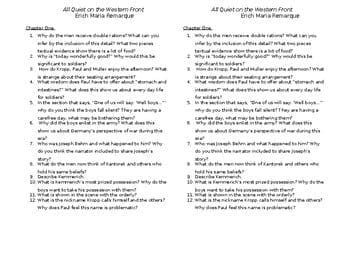
All Quiet on the Western Front, written by Erich Maria Remarque, is a powerful novel that provides a realistic depiction of the horrors of war. It narrates the experiences of Paul Baumer, a young German soldier, during World War I. The book raises thought-provoking questions about the futility of war, the effects of violence on individuals, and the loss of innocence. If you’re looking to explore deeper into the themes and characters of this novel, here are some essential All Quiet on the Western Front questions to ponder.
The novel delves into the psychological and emotional impact of war on soldiers. It challenges the glorification of war and highlights the devastating consequences it has on individuals. The following questions will help you analyze and reflect on the various aspects of the novel, such as its themes, characters, and historical context.
So, without further ado, let’s dive into these All Quiet on the Western Front questions to gain a deeper understanding of this remarkable novel.
See these All Quiet on the Western Front Questions
- What is the significance of the title “All Quiet on the Western Front”?
- How does the novel portray the loss of innocence?
- What role does camaraderie play in the lives of the soldiers?
- How does the novel challenge traditional notions of heroism and patriotism?
- What impact does the constant exposure to violence have on the soldiers’ mental state?
- What are some examples of dehumanization in the novel?
- How does the novel depict the horrors of trench warfare?
- What is the role of authority figures in the novel?
- How does Paul’s perspective on war evolve throughout the book?
- What does the novel suggest about the long-term effects of war on individuals?
- How does the author use imagery to convey the brutality of war?
- What is the significance of the butterfly motif in the novel?
- What role do women play in the story?
- How does the novel depict the relationship between soldiers and civilians?
- What effect does the constant fear of death have on the soldiers?
- What are some examples of irony in the novel?
- How does the novel explore the theme of disillusionment?
- What is the significance of Paul’s boots?
- What does the novel suggest about the impact of war on national identity?
- How does the novel depict the physical and emotional toll of war?
- What is the significance of the ending of the novel?
- How does the novel portray the dehumanizing effects of war propaganda?
- What role does nature play in the story?
- What are some examples of dark humor in the novel?
- How does the novel challenge the idea of a just war?
- What does the novel suggest about the cyclical nature of war?
- How does the novel explore the theme of alienation?
- What is the significance of Paul’s friendship with Katczinsky?
- What does the novel suggest about the impact of war on the individual’s sense of self?
- How does the novel depict the soldiers’ struggle for survival?
- What role does religion play in the lives of the soldiers?
- What does the novel suggest about the role of chance and luck in war?
- How does the novel depict the physical and psychological scars of war?
- What is the significance of Paul’s interactions with the French soldier?
- What does the novel suggest about the human capacity for cruelty?
- How does the novel challenge the idea of a noble enemy?
- What effect does the constant exposure to death have on the soldiers?
- What does the novel suggest about the generational divide?
- How does the novel portray the soldiers’ longing for home?
- What is the significance of Paul’s visit home?
- What does the novel suggest about the role of chance and luck in war?
- How does the novel explore the theme of survival?
- What is the significance of the graveyard scene?
These All Quiet on the Western Front questions will serve as a starting point for your exploration of the novel. They will help you delve into its profound themes, dissect its characters, and gain a deeper understanding of the devastating effects of war. Take your time to reflect on these questions and draw your own conclusions as you journey through this remarkable piece of literature.






