
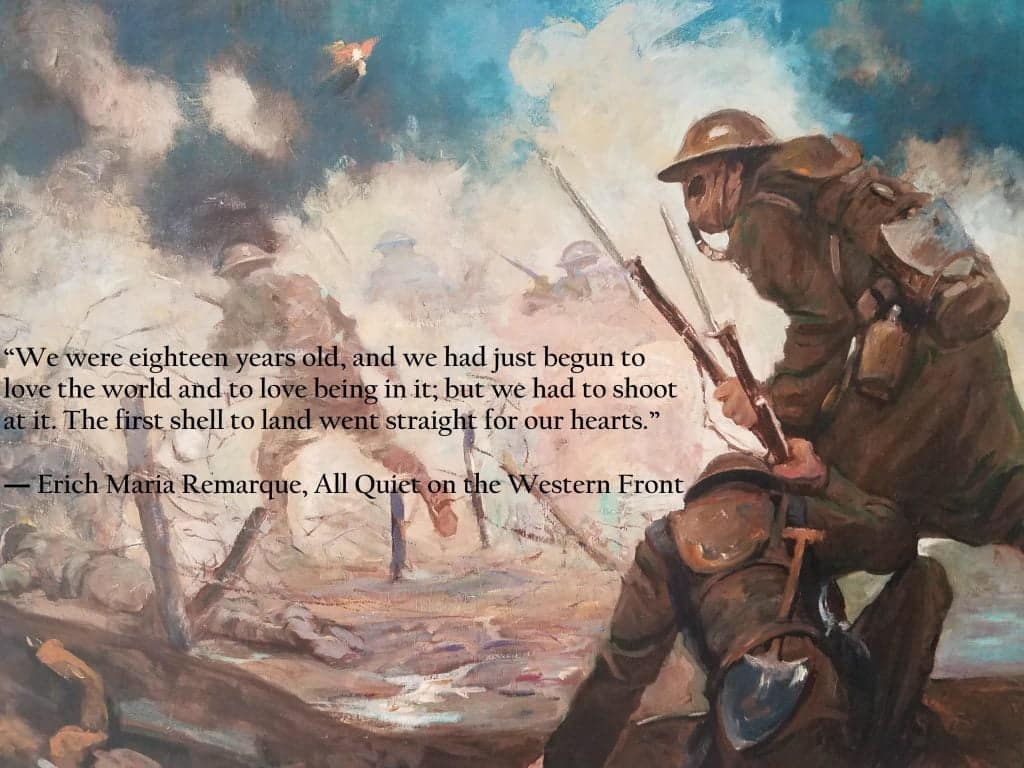
All Quiet on the Western Front is a powerful novel written by Erich Maria Remarque. It tells the story of a young German soldier named Paul Bäumer and his experiences during World War I. The novel explores the horrors of war and the impact it has on the soldiers who are forced to participate in it. Throughout the book, there are numerous poignant quotes that provide insight into the devastating effects of war. In this article, we have compiled a list of all quiet on the western front quotes and page numbers to help you better understand the themes and emotions conveyed in the novel.
One of the most memorable quotes from All Quiet on the Western Front is, “We are not youth any longer. We don’t want to take the world by storm. We are fleeing. We fly from ourselves. From our life. We were eighteen and had begun to love life and the world; and we had to shoot it to pieces” (p. 12). This quote encapsulates the loss of innocence and the disillusionment experienced by the young soldiers as they witness the destruction and death around them.
Another powerful quote comes from Paul Bäumer himself, as he reflects on the futility of war. He says, “The first bomb, the first explosion, burst in our hearts. We are cut off from activity, from striving, from progress. We believe in such things no longer, we believe in the war” (p. 88). This quote highlights the sense of hopelessness and despair that pervades the soldiers’ lives, as they are trapped in a cycle of violence and destruction.
Read these All Quiet on the Western Front quotes and page numbers:
“Comrade, I did not want to kill you… But you were only an idea to me before, an abstraction that lived in my mind and called forth its appropriate response. It was that abstraction I stabbed. But now, for the first time, I see you are a man like me.” (p. 223)
“I am young, I am twenty years old; yet I know nothing of life but despair, death, fear, and fatuous superficiality cast over an abyss of sorrow. I see how peoples are set against one another, and in silence, unknowingly, foolishly, obediently, innocently slay one another.” (p. 87)
“I am very quiet. Let the months and years come, they can take nothing from me, they can take nothing more. I am so alone, and so without hope that I can confront them without fear.” (p. 296)
“I am young, I am twenty years old; yet I know nothing of life but despair, death, fear, and fatuous superficiality cast over an abyss of sorrow. I see how peoples are set against one another, and in silence, unknowingly, foolishly, obediently, innocently slay one another.” (p. 87)
“We were eighteen and had begun to love life and the world; and we had to shoot it to pieces. The first bomb, the first explosion, burst in our hearts. We are cut off from activity, from striving, from progress. We believe in such things no longer, we believe in the war.” (p. 88)
“I want to feel that I have my roots in the earth, to be warmed by the sun, to claim my share of rain and dew, to follow my own slow, invisible sap upwards, to rob from no one, to receive only what is mine by rights, and in all other things to be left alone, unassailed, uninfluenced.” (p. 22)
“I am very quiet. Let the months and years come, they can take nothing from me, they can take nothing more. I am so alone, and so without hope that I can confront them without fear.” (p. 296)
“But now, for the first time, I see you are a man like me. I thought of your hand-grenades, of your bayonet, of your rifle; now I see your wife and your face and our fellowship. Forgive me, comrade. We always see it too late. Why do they never tell us that you are poor devils like us, that your mothers are just as anxious as ours, and that we have the same fear of death, and the same dying and the same agony–Forgive me, comrade; how could you be my enemy?” (p. 223)
“What do they expect of us if a time ever comes when the war is over? Through the years our business has been killing;–it was our first calling in life. Our knowledge of life is limited to death. What will happen afterwards? And what shall come out of us?” (p. 121)
“It is a strange feeling to be so entirely empty. To be dead even before you die, and yet somehow go on living.” (p. 163)
“I am young, I am twenty years old; yet I know nothing of life but despair, death, fear, and fatuous superficiality cast over an abyss of sorrow. I see how peoples are set against one another, and in silence, unknowingly, foolishly, obediently, innocently slay one another.” (p. 87)
“They are more to me than life, these voices, they are more than motherliness and more than fear; they are the strongest, most comforting thing there is anywhere: they are the voices of my comrades.” (p. 252)
“I see how peoples are set against one another, and in silence, unknowingly, foolishly, obediently, innocently slay one another.” (p. 87)
“We are not youth any longer. We don’t want to take the world by storm. We are fleeing. We fly from ourselves. From our life. We were eighteen and had begun to love life and the world; and we had to shoot it to pieces.” (p. 12)
“I am young, I am twenty years old; yet I know nothing of life but despair, death, fear, and fatuous superficiality cast over an abyss of sorrow. I see how peoples are set against one another, and in silence, unknowingly, foolishly, obediently, innocently slay one another.” (p. 87)
“I am young, I am twenty years old; yet I know nothing of life but despair, death, fear, and fatuous superficiality cast over an abyss of sorrow.” (p. 87)
“I am quiet and contented. For me there is only the travelling on paths that have heart, on any path that may have heart. There I travel, and the only worthwhile challenge is to traverse its full length. And there I travel, looking, looking, breathlessly.” (p. 12)
“We are forlorn like children, and experienced like old men, we are crude and sorrowful and superficial–I believe we are lost.” (p. 12)
“I am young, I am twenty years old; yet I know nothing of life but despair, death, fear, and fatuous superficiality cast over an abyss of sorrow. I see how peoples are set against one another, and in silence, unknowingly, foolishly, obediently, innocently slay one another.” (p. 87)
“I wish there was a little less danger and a lot less disillusionment.” (p. 121)
“We were eighteen and had begun to love life and the world; and we had to shoot it to pieces. The first bomb, the first explosion, burst in our hearts. We are cut off from activity, from striving, from progress. We believe in such things no longer, we believe in the war.” (p. 88)
“Comrade, I did not want to kill you… But you were only an idea to me before, an abstraction that lived in my mind and called forth its appropriate response. It was that abstraction I stabbed. But now, for the first time, I see you are a man like me.” (p. 223)
“I am young, I am twenty years old; yet I know nothing of life but despair, death, fear, and fatuous superficiality cast over an abyss of sorrow. I see how peoples are set against one another, and in silence, unknowingly, foolishly, obediently, innocently slay one another.” (p. 87)
“I am young, I am twenty years old; yet I know nothing of life but despair, death, fear, and fatuous superficiality cast over an abyss of sorrow. I see how peoples are set against one another, and in silence, unknowingly, foolishly, obediently, innocently slay one another.” (p. 87)
“We were eighteen and had begun to love life and the world; and we had to shoot it to pieces. The first bomb, the first explosion, burst in our hearts. We are cut off from activity, from striving, from progress. We believe in such things no longer, we believe in the war.” (p. 88)
“I want to feel that I have my roots in the earth, to be warmed by the sun, to claim my share of rain and dew, to follow my own slow, invisible sap upwards, to rob from no one, to receive only what is mine by rights, and in all other things to be left alone, unassailed, uninfluenced.” (p. 22)
“I am very quiet. Let the months and years come, they can take nothing from me, they can take nothing more. I am so alone, and so without hope that I can confront them without fear.” (p. 296)
“But now, for the first time, I see you are a man like me. I thought of your hand-grenades, of your bayonet, of your rifle; now I see your wife and your face and our fellowship. Forgive me, comrade. We always see it too late. Why do they never tell us that you are poor devils like us, that your mothers are just as anxious as ours, and that we have the same fear of death, and the same dying and the same agony–Forgive me, comrade; how could you be my enemy?” (p. 223)
“What do they expect of us if a time ever comes when the war is over? Through the years our business has been killing;–it was our first calling in life. Our knowledge of life is limited to death. What will happen afterwards? And what shall come out of us?” (p. 121)
“It is a strange feeling to be so entirely empty. To be dead even before you die, and yet somehow go on living.” (p. 163)
“I am young, I am twenty years old; yet I know nothing of life but despair, death, fear, and fatuous superficiality cast over an abyss of sorrow. I see how peoples are set against one another, and in silence, unknowingly, foolishly, obediently, innocently slay one another.” (p. 87)
“They are more to me than life, these voices, they are more than motherliness and more than fear; they are the strongest, most comforting thing there is anywhere: they are the voices of my comrades.” (p. 252)
“I see how peoples are set against one another, and in silence, unknowingly, foolishly, obediently, innocently slay one another.” (p. 87)
These quotes from All Quiet on the Western Front offer a glimpse into the emotional depth and profound impact of war on the characters in the novel. They serve as a reminder of the devastating consequences of conflict and the toll it takes on the human spirit. By highlighting these quotes and page numbers, we hope to provide a deeper understanding of the themes and messages conveyed in this remarkable literary work.






