
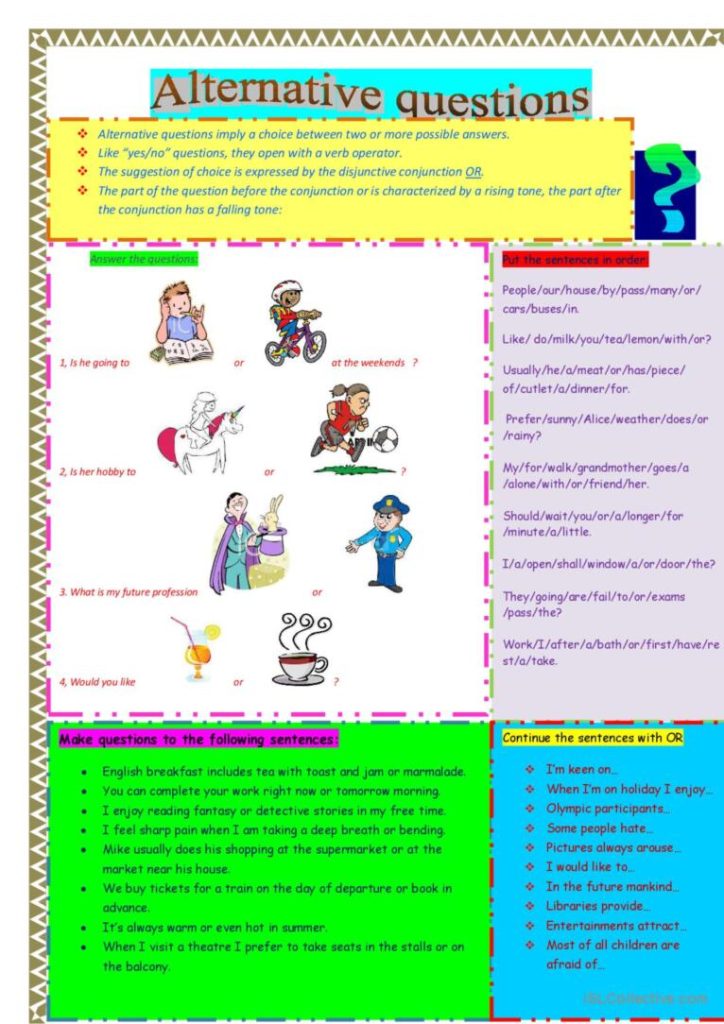
Alternative questions are a type of interrogative sentence that offers two or more options as possible answers. They are commonly used in conversations to seek clarification or to give the other person a choice between two or more alternatives. Alternative questions are an effective way to engage in meaningful conversations and gather information in a concise manner. In this article, we will explore the concept of alternative questions and provide a list of examples to help you become more proficient in using them.
When asking alternative questions, it is important to phrase them in a way that allows the respondent to choose between options. The options can be presented as yes/no, either/or, or multiple choices. The purpose of alternative questions is to prompt the other person to make a decision or express a preference. By using alternative questions, you can make your conversations more interactive and give the other person an opportunity to actively participate.
Alternative questions can be helpful in various situations, such as interviews, surveys, or even casual conversations. They can be used to gather opinions, preferences, or to simply engage in a more dynamic dialogue. By using alternative questions, you can encourage the other person to think critically and express their thoughts more effectively.
See these alternative questions
- Do you prefer coffee or tea?
- Are you going to the party or staying home?
- Did you like the movie or the book better?
- Do you want to go out for dinner or cook at home?
- Should we watch a comedy or a thriller?
- Are you more of an introvert or an extrovert?
- Did you enjoy the concert or the art exhibition?
- Do you like dogs or cats?
- Would you like to travel to the mountains or the beach?
- Is it better to save or spend money?
- Do you prefer summer or winter?
- Do you want to have a salad or a sandwich for lunch?
- Are you a morning person or a night owl?
- Did you enjoy the book or the movie adaptation?
- Do you prefer to exercise indoors or outdoors?
- Should we visit the museum or the zoo?
- Do you like action movies or romantic comedies?
- Would you rather go hiking or swimming?
- Is it better to work alone or in a team?
- Do you prefer fiction or non-fiction books?
- Did you enjoy the play or the musical?
- Do you like to cook or order takeout?
- Would you like to live in the city or the countryside?
- Is it better to study in the morning or at night?
- Do you prefer classical music or pop music?
- Did you enjoy the comedy show or the magic show?
- Do you like to travel by plane or by train?
- Would you rather have a cup of tea or a glass of juice?
- Is it better to work from home or go to the office?
- Do you prefer to read a physical book or an e-book?
- Did you like the original version or the remix?
- Do you like to go shopping online or in physical stores?
- Would you like to visit Europe or Asia?
- Is it better to exercise in the morning or in the evening?
- Do you prefer action-packed vacations or relaxing ones?
- Did you enjoy the theater play or the ballet performance?
- Do you like to watch movies at the cinema or at home?
- Would you rather have pizza or pasta for dinner?
- Is it better to learn a language through classes or self-study?
- Do you prefer rock music or pop music?
- Did you like the original painting or the digital artwork?
- Do you like to go for a run or do yoga for exercise?
- Would you like to visit a historical site or a natural park?
These are just a few examples of alternative questions that you can use in your conversations. Remember to be open-minded and respect the other person’s preferences when asking alternative questions. By using them, you can create engaging and interactive discussions that allow both parties to actively participate.






