
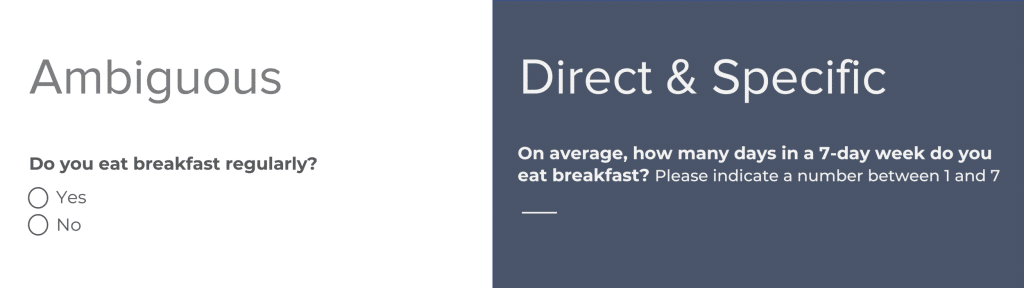
Ambiguous questions are questions that lack clarity or are open to multiple interpretations. They can cause confusion and misunderstandings, leading to ineffective communication. Ambiguity can arise from various factors, such as unclear language, multiple meanings, or lack of context. In this article, we will explore the concept of ambiguous questions and provide examples to illustrate their nature and impact.
Ambiguous questions can be problematic in various situations, including educational settings, professional environments, or everyday conversations. When a question is not clear or can be interpreted in different ways, it becomes challenging for the person answering to provide an accurate response. This can lead to misunderstandings and frustration for both the questioner and the respondent.
One common cause of ambiguous questions is the use of vague language. When a question is phrased in a way that lacks specificity or precision, it becomes open to multiple interpretations. Additionally, cultural or contextual differences can contribute to ambiguity. What may seem like a straightforward question in one culture or context can be confusing or unclear in another.
See these ambiguous questions
Here are some examples of ambiguous questions that highlight the potential for confusion and miscommunication:
- Can you pass me that thing?
- Are you free tomorrow?
- What time is it?
- Where is the nearest bank?
- Did you see that movie?
- When are you coming?
- Do you have any money?
- Who is coming to the party?
- Why did you do that?
- How long will it take?
- Can you get me a coffee?
- What’s your favorite color?
- Do you know the way?
- Is it going to rain today?
- Can you lend me a hand?
- Where did you put my keys?
- Did you eat lunch?
- What are you doing this weekend?
- Did you hear that noise?
- How many siblings do you have?
- Can you give me a ride?
- What do you want for dinner?
- Do you have any plans for tonight?
- Where are you going?
- Did you finish your homework?
- How often do you exercise?
- Can you help me with this problem?
- Who is going to the concert?
- Why did you choose that option?
- What do you think of this book?
- Do you like spicy food?
- Is it hot outside?
- Can you meet me at the park?
- Where did you buy that shirt?
- Did you see the news?
- What time are we leaving?
- Do you have any recommendations?
- Who is your favorite author?
- Why did you change your mind?
- How far is the beach from here?
- Can you speak another language?
- What’s the best way to learn a new skill?
These examples demonstrate how the lack of clarity in a question can lead to different interpretations and potential misunderstandings. It is essential to strive for clear and precise communication to avoid ambiguity and promote effective conversations.






