
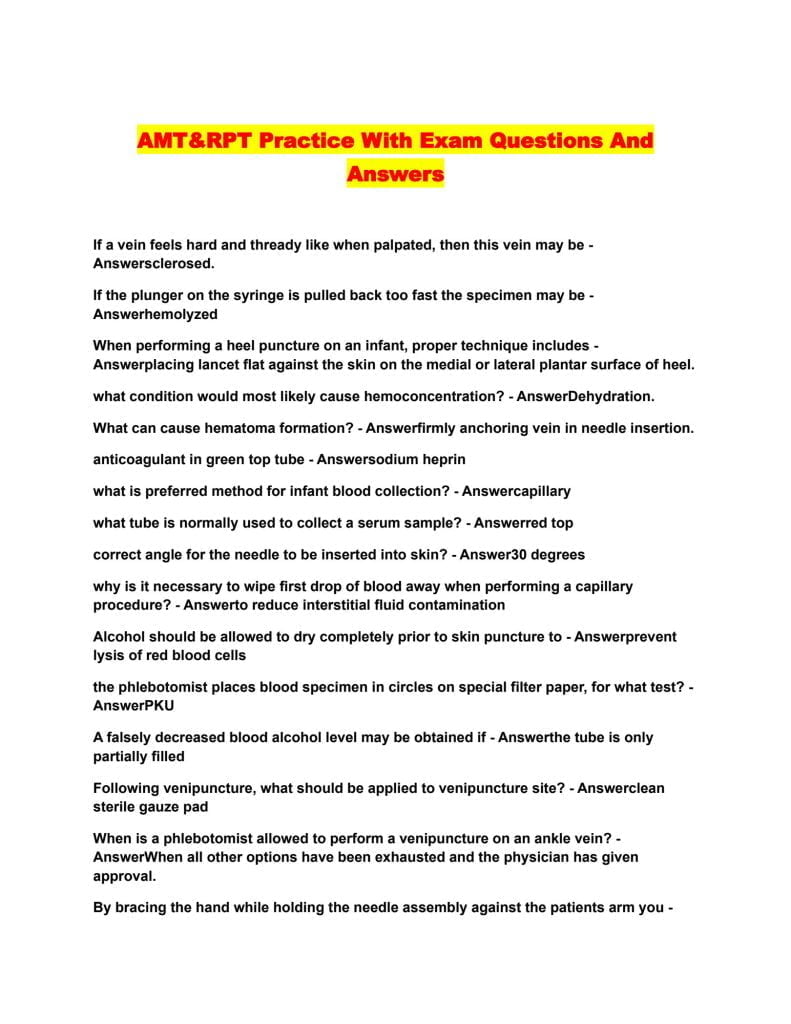
Are you preparing for the American Medical Technologists (AMT) exam? As one of the most respected certifications in the healthcare field, passing the AMT exam can open doors to exciting career opportunities. However, like any exam, thorough preparation is key to success. One effective way to prepare is by practicing with AMT exam questions. In this article, we will provide you with a comprehensive list of over 40 AMT exam questions to help you prepare for the big day.
The AMT exam covers a wide range of topics, including medical laboratory procedures, anatomy and physiology, medical terminology, and laboratory safety. By practicing with these exam questions, you will not only familiarize yourself with the content but also improve your test-taking skills. Remember, the more you practice, the more comfortable and confident you will become in answering the actual exam questions.
Whether you are a recent graduate or a seasoned professional looking to enhance your career, these AMT exam questions will serve as a valuable resource in your preparation. Keep in mind that while these questions are based on the AMT exam format, they are not actual exam questions. Therefore, it is essential to consult official study materials and resources provided by AMT to ensure you are adequately prepared.
See these AMT exam questions
- What is the primary function of red blood cells?
- What is the normal range for fasting blood glucose?
- What is the purpose of a centrifuge in a medical laboratory?
- What is the function of the gallbladder in the digestive system?
- What is the difference between a virus and a bacteria?
- What is the meaning of the medical term “tachycardia”?
- What are the four main blood types?
- What is the function of the cerebellum in the brain?
- What is the purpose of a control group in a scientific experiment?
- What is the normal range for blood pressure in adults?
- What is the role of platelets in the blood clotting process?
- What is the function of the respiratory system?
- What is the normal range for hemoglobin levels in males?
- What is the purpose of an EKG test?
- What is the meaning of the term “antibiotic resistance”?
- What is the function of the adrenal glands?
- What is the normal range for cholesterol levels in adults?
- What is the difference between a benign and malignant tumor?
- What is the function of the lymphatic system?
- What is the normal range for white blood cell count?
- What is the purpose of a Pap smear test?
- What is the meaning of the medical term “polyuria”?
- What are the three main types of muscle tissue?
- What is the function of the pancreas in the digestive system?
- What is the normal range for potassium levels in the blood?
- What is the role of the hypothalamus in the endocrine system?
- What is the purpose of a urinalysis?
- What is the meaning of the term “metabolism”?
- What is the function of the urinary system?
- What is the normal range for creatinine levels in adults?
- What is the difference between a sensory and a motor neuron?
- What is the purpose of an MRI scan?
- What is the function of the pituitary gland?
- What is the normal range for calcium levels in the blood?
- What is the role of the adrenal cortex in the endocrine system?
- What is the purpose of a blood culture test?
- What is the meaning of the term “immunity”?
- What is the function of the integumentary system?
- What is the normal range for albumin levels in adults?
- What is the difference between a dominant and recessive gene?
- What is the purpose of a lumbar puncture?
- What is the function of the thyroid gland?
- What is the normal range for sodium levels in the blood?
- What is the role of the adrenal medulla in the endocrine system?
These are just a few examples of the AMT exam questions you may encounter. Remember to use these questions as a supplement to your overall study plan and consult official AMT study materials for comprehensive preparation. Good luck!






