
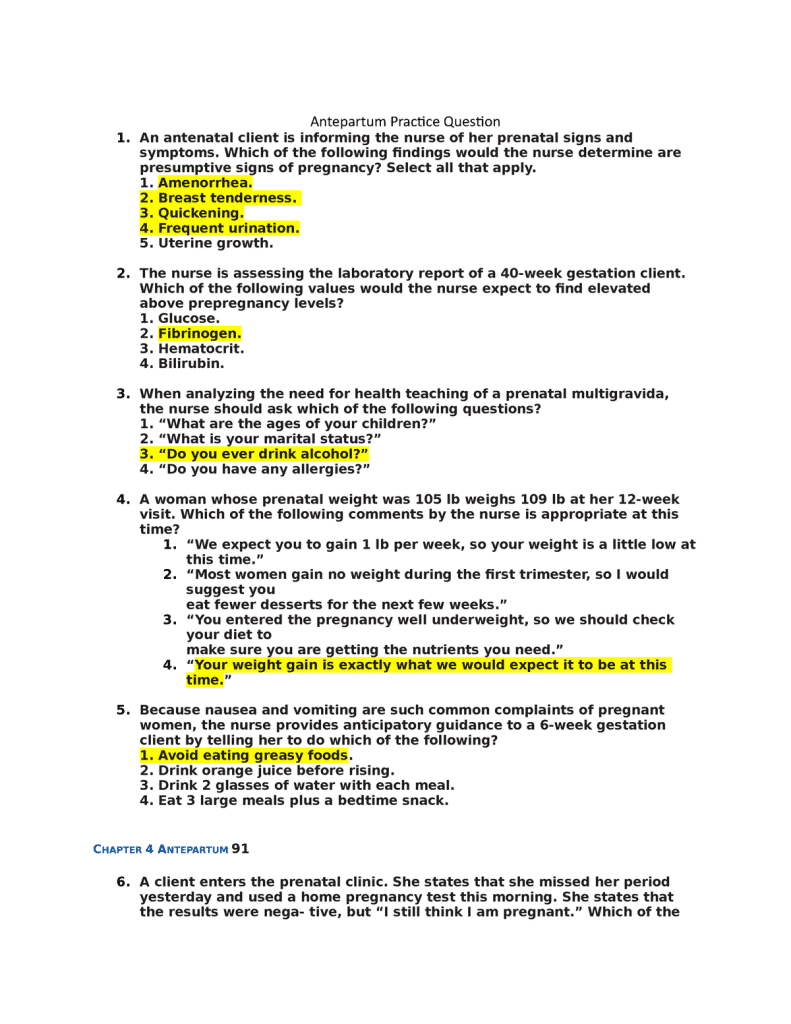
Preparing for the NCLEX exam can be a daunting task, especially when it comes to the antepartum section. Antepartum care refers to the medical care and monitoring provided to pregnant women during their pregnancy. This includes everything from prenatal visits to labor and delivery preparations. To help you feel more confident and prepared for this section of the NCLEX, we have compiled a list of antepartum NCLEX questions for you to practice with.
Antepartum care is crucial in ensuring the health and well-being of both the mother and the baby. It involves assessing and managing conditions such as hypertension, gestational diabetes, and preterm labor. By answering these NCLEX questions, you will be able to test your knowledge on these important topics and identify areas where you may need to study further.
Remember, the NCLEX exam is designed to assess your critical thinking skills and ability to apply your knowledge in real-life scenarios. Practicing with these questions will not only help you familiarize yourself with the exam format but also enhance your problem-solving abilities.
See these Antepartum NCLEX Questions
- 1. What is the recommended weight gain during pregnancy for a woman with a normal BMI?
- 2. What are the potential complications associated with gestational diabetes?
- 3. How can preterm labor be identified and managed?
- 4. What are the risk factors for developing preeclampsia?
- 5. How often should a pregnant woman receive prenatal check-ups?
- 6. What is the purpose of a non-stress test during pregnancy?
- 7. What are the signs and symptoms of placenta previa?
- 8. How is Group B Streptococcus (GBS) infection screened and treated during pregnancy?
- 9. What is the recommended daily intake of folic acid for pregnant women?
- 10. How can a pregnant woman manage common discomforts such as back pain and heartburn?
- 11. What are the potential complications associated with multiple gestation pregnancies?
- 12. How can a pregnant woman prevent urinary tract infections?
- 13. What is the purpose of kick counts during pregnancy?
- 14. What are the risk factors for developing gestational hypertension?
- 15. How is Rh incompatibility managed during pregnancy?
- 16. What are the signs and symptoms of ectopic pregnancy?
- 17. How is gestational diabetes diagnosed?
- 18. What is the recommended position for a pregnant woman during labor and delivery?
- 19. How is gestational hypertension treated?
- 20. What are the potential complications of post-term pregnancy?
- 21. How can a pregnant woman manage nausea and vomiting?
- 22. What is the purpose of a biophysical profile during pregnancy?
- 23. What is the recommended iron intake for a pregnant woman?
- 24. How is preterm premature rupture of membranes (PPROM) managed?
- 25. What are the potential complications of placental abruption?
- 26. How is gestational diabetes managed?
- 27. What are the signs and symptoms of preterm labor?
- 28. How can a pregnant woman prevent and manage constipation?
- 29. What is the purpose of an amniocentesis procedure during pregnancy?
- 30. What are the potential complications of gestational hypertension?
- 31. How is oligohydramnios diagnosed and managed?
- 32. What are the signs and symptoms of a urinary tract infection during pregnancy?
- 33. How can a pregnant woman manage swollen ankles and feet?
- 34. What is the purpose of a non-stress test during pregnancy?
- 35. What are the potential complications of gestational diabetes for the baby?
- 36. How is cholestasis of pregnancy diagnosed and managed?
- 37. What are the signs and symptoms of gestational diabetes?
- 38. How can a pregnant woman prevent and manage hemorrhoids?
- 39. What is the purpose of a biophysical profile during pregnancy?
- 40. What are the potential complications of placenta previa?
By practicing with these antepartum NCLEX questions, you will not only reinforce your knowledge but also gain confidence in your ability to tackle this section of the exam. Remember to review the rationales for each question to understand the underlying concepts and principles. Good luck with your NCLEX preparation!






