
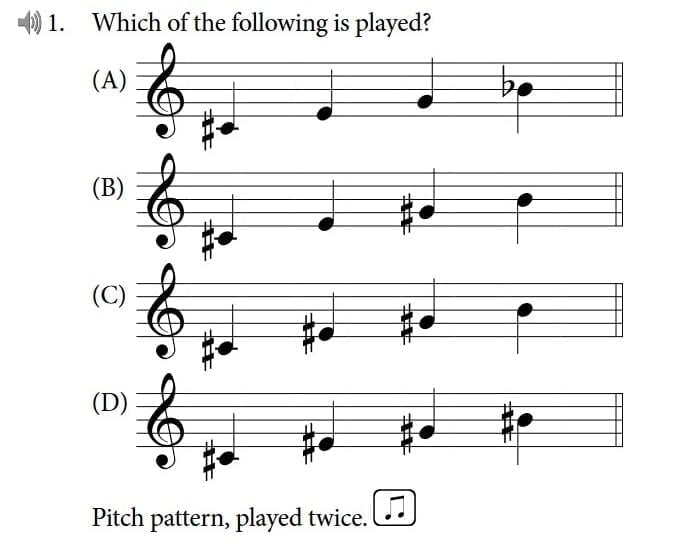
Studying for the AP Music Theory exam can be a challenging task, especially when it comes to practicing and reviewing past exam questions. These questions are designed to test your knowledge and understanding of various musical concepts, including harmony, melody, rhythm, and form. In this article, we will provide a list of AP Music Theory questions that you can use for practice and preparation.
Before we dive into the questions, it’s important to note that the AP Music Theory exam consists of two sections: multiple-choice and free-response. The multiple-choice section assesses your ability to recognize and analyze musical patterns, while the free-response section requires you to compose and analyze musical pieces. By practicing with these questions, you can familiarize yourself with the format and content of the exam.
Now, let’s move on to the AP Music Theory questions:
See these AP Music Theory questions
- What is the definition of a perfect cadence?
- Identify the key signature of the following piece: G major or E minor?
- What is the difference between major and minor scales?
- Define the term “tonic” in music theory.
- What is the symbol for a half step?
- What is the function of a dominant chord?
- Identify the time signature of the following piece: 4/4 or 3/4?
- What is the purpose of a trill?
- What is the interval between C and G?
- Define the term “polyphony” in music theory.
- What is the difference between a major and a minor third?
- Identify the key signature of the following piece: F major or D minor?
- What is the function of a subdominant chord?
- What is the symbol for a whole step?
- What is the definition of a plagal cadence?
- Identify the time signature of the following piece: 2/4 or 6/8?
- What is the purpose of a glissando?
- What is the interval between A and E?
- Define the term “monophony” in music theory.
- What is the difference between a major and a minor sixth?
- Identify the key signature of the following piece: B flat major or G minor?
- What is the function of a tonic chord?
- What is the symbol for a double flat?
- What is the definition of a deceptive cadence?
- Identify the time signature of the following piece: 3/8 or 9/8?
- What is the purpose of a tremolo?
- What is the interval between F and C?
- Define the term “homophony” in music theory.
- What is the difference between a major and a minor seventh?
- Identify the key signature of the following piece: E flat major or C minor?
- What is the function of a dominant seventh chord?
- What is the symbol for a double sharp?
- What is the definition of a half cadence?
- Identify the time signature of the following piece: 5/8 or 7/4?
- What is the purpose of a staccato?
- What is the interval between B and F?
- Define the term “counterpoint” in music theory.
- What is the difference between a major and a minor second?
- Identify the key signature of the following piece: A major or F sharp minor?
- What is the function of a submediant chord?
- What is the symbol for a natural?
- What is the definition of a plagal cadence?
- Identify the time signature of the following piece: 12/8 or 2/2?
- What is the purpose of a fermata?
- What is the interval between D and A?
- Define the term “heterophony” in music theory.
- What is the difference between a major and a minor third?
These are just a few examples of the types of questions you may encounter on the AP Music Theory exam. By practicing with a variety of questions and reviewing key musical concepts, you can feel more confident and prepared on exam day. Good luck!






