
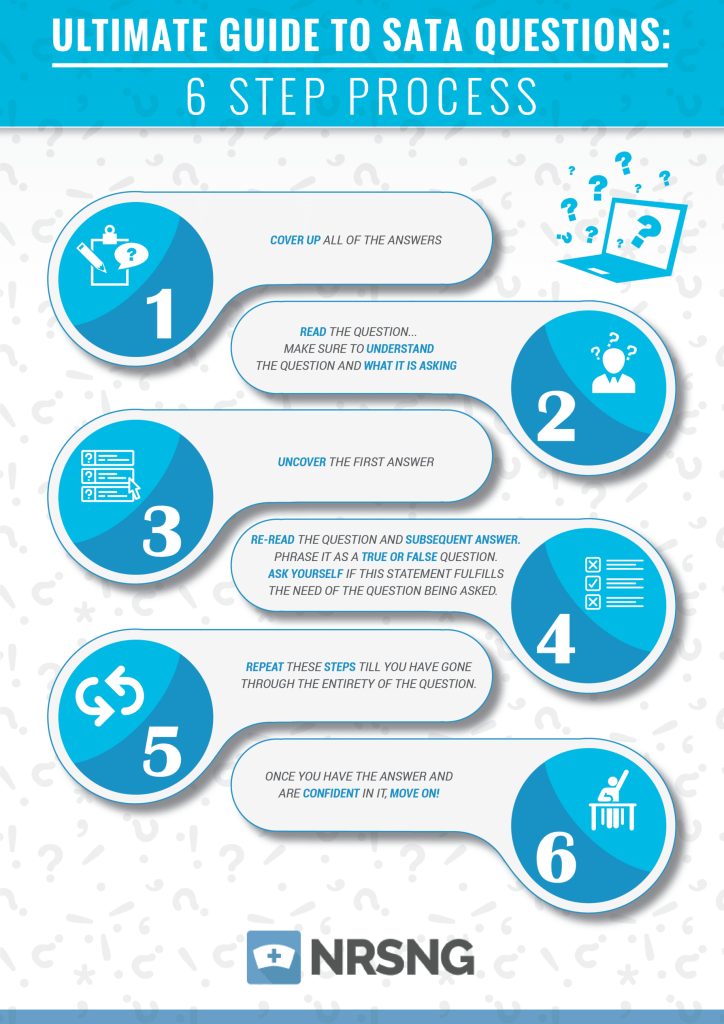
The National Council Licensure Examination for Registered Nurses (NCLEX-RN) is a standardized test that all nurses must pass in order to become licensed in the United States. The exam is designed to assess the knowledge, skills, and abilities necessary for safe and effective practice as an entry-level registered nurse. One type of question that often causes anxiety among test-takers is the select all that apply (SATA) question. These questions require candidates to select multiple correct answers from a list of options. In this article, we will explore whether select all that apply questions are considered higher level questions on the NCLEX.
Higher-level questions on the NCLEX are designed to test a candidate’s ability to think critically and make sound clinical judgments. These questions require candidates to analyze complex situations, prioritize care, and consider multiple factors before selecting the correct answer. The NCLEX aims to assess a nurse’s ability to apply knowledge and make decisions in real-world scenarios. Select all that apply questions, by their nature, often require candidates to consider multiple factors and prioritize care, which aligns with the goals of higher-level questioning.
However, it is important to note that not all select all that apply questions on the NCLEX are necessarily higher level. The difficulty level of a question is determined by the cognitive demand required to answer it correctly, rather than the format of the question itself. Some select all that apply questions may be straightforward and test basic knowledge, while others may require deeper analysis and critical thinking. It is essential for test-takers to approach each question with a critical mindset and carefully evaluate the options before selecting the correct answers.
See these are select all that apply higher level questions on NCLEX
- What are the signs and symptoms of hypoglycemia?
- Which interventions are appropriate for a patient experiencing anaphylaxis?
- What are the potential complications of a pneumothorax?
- Which factors increase the risk of developing pressure ulcers?
- Which medications are contraindicated in pregnancy?
- What are the indications for initiating cardiopulmonary resuscitation (CPR)?
- Which laboratory values should be monitored in a patient receiving anticoagulant therapy?
- What are the signs and symptoms of a stroke?
- Which actions should the nurse take when caring for a patient with a tracheostomy?
- Which assessments are necessary for a patient with suspected appendicitis?
- What are the potential complications of a blood transfusion?
- Which interventions are appropriate for a patient with a urinary tract infection?
- What are the signs and symptoms of heart failure?
- Which actions should the nurse take when caring for a patient with a central venous catheter?
- Which factors increase the risk of falls in older adults?
- What are the indications for initiating contact precautions?
- Which interventions are appropriate for a patient with acute respiratory distress syndrome (ARDS)?
- What are the potential complications of a myocardial infarction?
- Which medications are commonly used to treat hypertension?
- What are the signs and symptoms of sepsis?
- Which actions should the nurse take when caring for a patient with a nasogastric tube?
- Which assessments are necessary for a patient with suspected pneumonia?
- What are the potential complications of a cesarean section delivery?
- Which interventions are appropriate for a patient with diabetes mellitus?
- What are the signs and symptoms of respiratory distress?
- Which actions should the nurse take when caring for a patient with a urinary catheter?
- Which factors increase the risk of developing deep vein thrombosis (DVT)?
- What are the indications for initiating droplet precautions?
- Which interventions are appropriate for a patient with congestive heart failure (CHF)?
- What are the potential complications of a spinal cord injury?
- Which medications are commonly used to treat depression?
- What are the signs and symptoms of anemia?
- Which actions should the nurse take when caring for a patient with a chest tube?
- Which assessments are necessary for a patient with suspected deep vein thrombosis (DVT)?
- What are the potential complications of a gastrointestinal bleed?
- Which interventions are appropriate for a patient with asthma?
- What are the signs and symptoms of hyperglycemia?
- Which actions should the nurse take when caring for a patient with a central line infection?
- Which factors increase the risk of developing urinary tract infections (UTIs)?
- What are the indications for initiating airborne precautions?
- Which interventions are appropriate for a patient with chronic obstructive pulmonary disease (COPD)?
- What are the potential complications of a hip fracture?
- Which medications are commonly used to treat bacterial infections?
These are just a few examples of select all that apply higher level questions that may be encountered on the NCLEX. Remember to approach each question with a critical mindset, carefully evaluate the options, and select the correct answers based on your knowledge and understanding of the concepts.






