
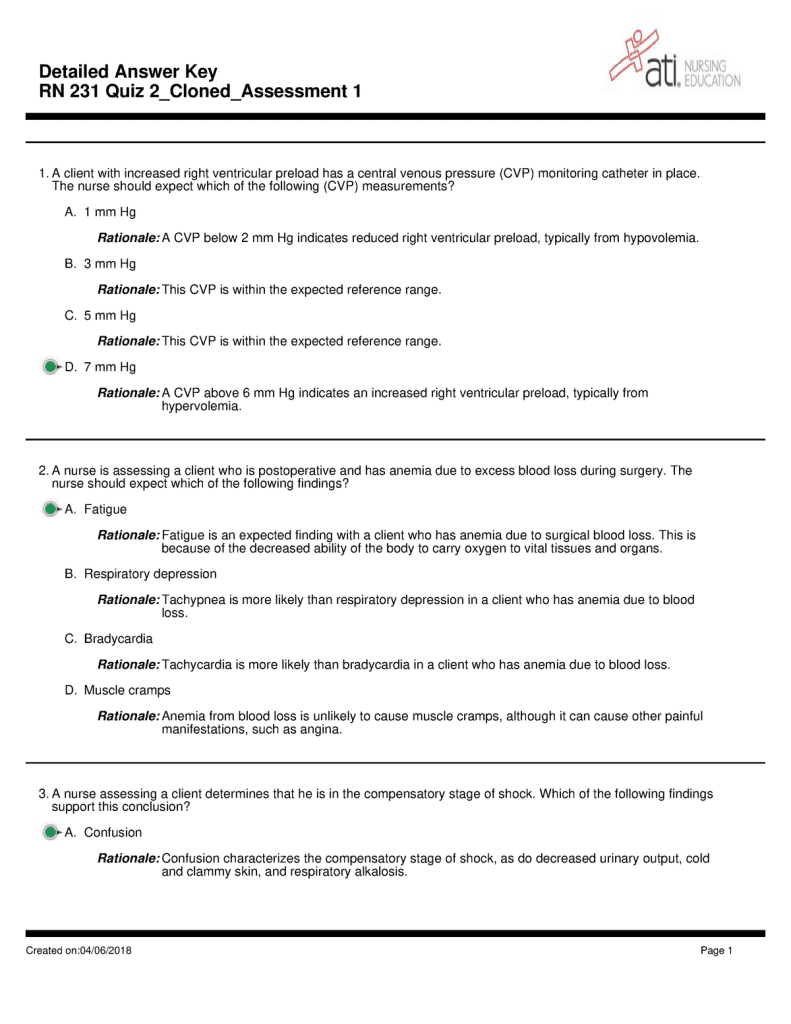
ATI shock questions are an essential part of nursing education and preparation for the NCLEX exam. Understanding shock and its management is crucial for nurses as they often encounter patients in critical condition. Whether you’re a nursing student or a professional nurse looking to refresh your knowledge, this article will provide you with a comprehensive list of ATI shock questions to help you prepare effectively.
Shock is a life-threatening condition that occurs when there is an inadequate supply of oxygen and nutrients to meet the body’s demand. It can result from various causes, including hypovolemia, cardiogenic factors, obstructive factors, and distributive factors. Recognizing the signs and symptoms of shock, understanding its underlying causes, and implementing appropriate nursing interventions are vital for patient care.
Now, let’s dive into a list of ATI shock questions that will test your knowledge and help you assess your understanding of shock management:
See these ATI Shock Questions
- What are the four main types of shock?
- What are the common signs and symptoms of shock?
- What are the priority nursing interventions for a patient in shock?
- How does hypovolemic shock differ from cardiogenic shock?
- What are the causes of obstructive shock?
- How does septic shock develop?
- What are the goals of fluid resuscitation in shock?
- What is the role of vasopressors in shock management?
- What is the difference between crystalloids and colloids?
- When should blood transfusions be considered in shock patients?
- What are the potential complications of shock?
- How does neurogenic shock occur?
- What are the nursing assessments for a patient in shock?
- What is the purpose of administering oxygen in shock?
- What is the significance of lactate levels in shock patients?
- What are the risk factors for developing shock?
- How is shock diagnosed?
- What is the role of invasive hemodynamic monitoring in shock?
- How does anaphylactic shock differ from other types of shock?
- What are the pharmacological interventions for shock?
- What are the potential complications of fluid resuscitation?
- What are the nursing interventions for a patient with cardiogenic shock?
- What is the mechanism of action of inotropic medications in shock?
- What are the causes of distributive shock?
- How does hypovolemic shock affect the body’s compensatory mechanisms?
- What is the role of vasodilators in shock management?
- What are the nursing considerations for a patient receiving vasopressors?
- What are the risk factors for septic shock?
- How does obstructive shock lead to decreased cardiac output?
- What are the potential complications of vasopressor therapy?
- What is the role of mechanical ventilation in shock management?
- What are the nursing interventions for a patient with septic shock?
- How does distributive shock affect the body’s vascular resistance?
- What are the potential complications of cardiogenic shock?
- What are the causes of hypovolemic shock?
- How does distributive shock differ from other types of shock?
- What are the laboratory tests used to diagnose shock?
- What is the role of corticosteroids in shock management?
- What are the nursing interventions for a patient with obstructive shock?
- How does cardiogenic shock affect the heart’s pumping function?
- What are the potential complications of distributive shock?
- What is the significance of base deficit in shock patients?
- What are the causes of cardiogenic shock?
- How does distributive shock lead to hypotension?
These ATI shock questions cover a wide range of topics related to shock management. Use them to test your knowledge, identify areas for improvement, and enhance your understanding of shock and its nursing interventions. Remember, continuous learning and practice are key to becoming a competent and confident nurse in managing shock cases effectively.






