
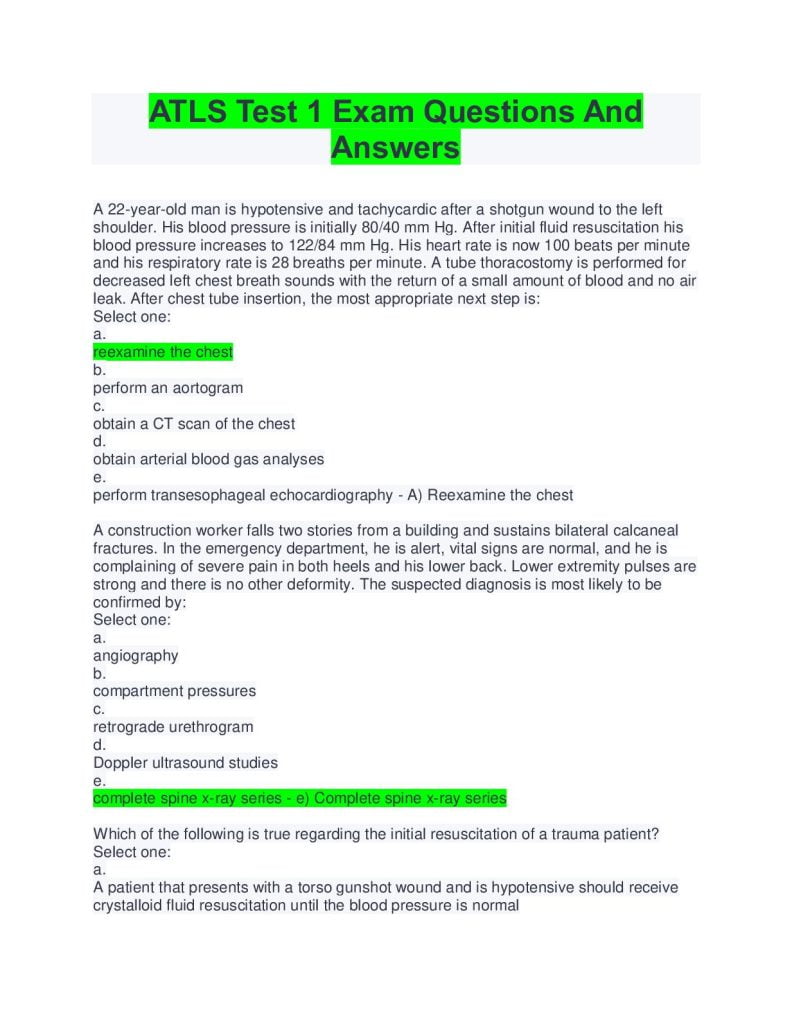
When it comes to providing life-saving care in emergency situations, healthcare professionals need to be well-prepared and knowledgeable. Advanced Trauma Life Support (ATLS) is a training program that equips medical practitioners with the necessary skills to handle trauma patients effectively. To ensure successful completion of the ATLS course, participants are required to thoroughly understand and be able to answer a wide range of ATLS questions.
ATLS questions cover various aspects of trauma care, including the primary survey, secondary survey, and specific management techniques. By testing participants’ knowledge and understanding, these questions help evaluate their ability to assess and treat trauma patients in a systematic and efficient manner.
To help you prepare for the ATLS course, we have compiled a list of more than 40 ATLS questions below. Familiarize yourself with these questions to enhance your understanding of trauma care and increase your chances of successfully completing the ATLS program.
See these ATLS questions:
- What are the components of the primary survey?
- How do you assess a patient’s airway?
- What is the purpose of the secondary survey?
- How do you assess a patient’s breathing?
- What are the signs of shock?
- How do you assess a patient’s circulation?
- What is the role of the focused assessment with sonography for trauma (FAST) exam?
- What are the different types of head injuries?
- How do you manage an open fracture?
- What are the signs of a tension pneumothorax?
- How do you manage a patient with spinal cord injury?
- What are the indications for intubation in trauma patients?
- How do you assess a patient’s neurological status?
- What are the steps for controlling external bleeding?
- How do you manage a patient with a pelvic fracture?
- What is the purpose of a log roll examination?
- How do you assess a patient’s temperature?
- What are the steps for immobilizing a fracture?
- How do you manage a patient with abdominal trauma?
- What are the complications of a chest tube insertion?
- How do you assess a patient’s disability?
- What are the different stages of shock?
- How do you manage a patient with a burn injury?
- What are the steps for performing a cricothyroidotomy?
- How do you assess a patient’s exposure/environment?
- What are the complications of a central line insertion?
- How do you manage a patient with a penetrating chest trauma?
- What are the indications for blood transfusion in trauma patients?
- How do you assess a patient’s disability?
- What are the different stages of shock?
- How do you manage a patient with a burn injury?
- What are the steps for performing a cricothyroidotomy?
- How do you assess a patient’s exposure/environment?
- What are the complications of a central line insertion?
- How do you manage a patient with a penetrating chest trauma?
- What are the indications for blood transfusion in trauma patients?
- How do you assess a patient’s disability?
- What are the different stages of shock?
- How do you manage a patient with a burn injury?
- What are the steps for performing a cricothyroidotomy?
- How do you assess a patient’s exposure/environment?
- What are the complications of a central line insertion?
- How do you manage a patient with a penetrating chest trauma?
- What are the indications for blood transfusion in trauma patients?
By studying these ATLS questions and thoroughly understanding the concepts behind them, healthcare professionals can enhance their trauma care skills and successfully complete the ATLS program. Remember, the more prepared you are, the better equipped you will be to save lives in emergency situations.






