
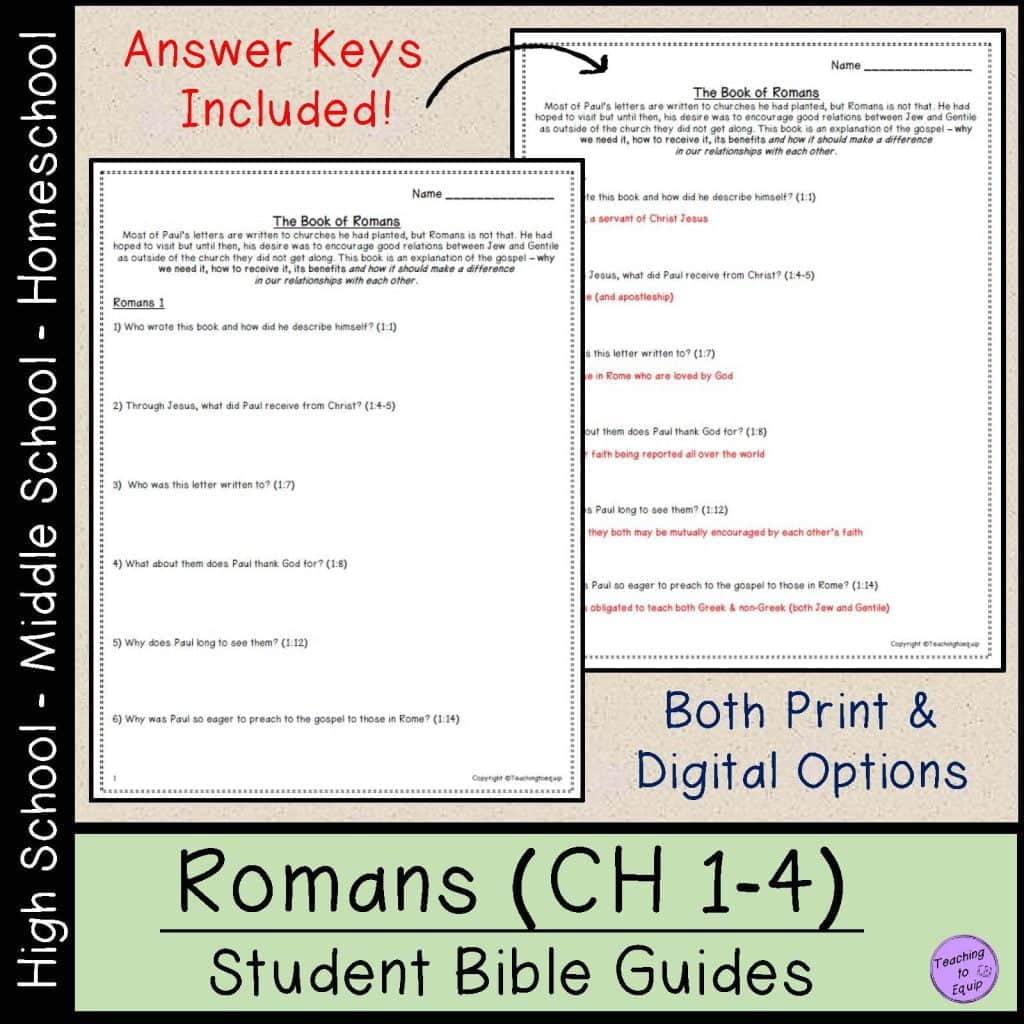
The Book of Romans is one of the most important books in the Bible and is often studied by Christians seeking a deeper understanding of their faith. This powerful and thought-provoking book explores various theological concepts and teachings that are still relevant to believers today. If you’re embarking on a Bible study journey through the Book of Romans, you may have questions and seek answers to help guide your understanding. In this article, we have compiled a comprehensive list of study questions and answers to assist you in your exploration of the Book of Romans.
See these Book of Romans Bible Study Questions and Answers
- What is the main theme of the Book of Romans?
- Who wrote the Book of Romans?
- What is the purpose of the Book of Romans?
- What is the significance of Paul’s introduction in Romans 1:1-7?
- What does it mean to be justified by faith?
- How does Paul describe the righteousness of God in Romans?
- What is the role of the law in salvation according to Romans?
- What does Paul mean by the term “sin” in Romans?
- What is the connection between Adam and sin in Romans 5?
- What does it mean to be dead to sin and alive in Christ?
- How does Paul address the issue of predestination in Romans 8?
- What does it mean to be a living sacrifice according to Romans 12:1?
- What is Paul’s message regarding the relationship between Christians and the government in Romans 13?
- What is the significance of the “weak” and the “strong” in Romans 14?
- What does Paul mean by the phrase “the obedience of faith” in Romans 16:26?
- How does Paul address the issue of circumcision in Romans?
- What is the role of faith in the life of a believer, according to Romans?
- What does Paul mean by the term “grace” in Romans?
- How does Paul address the issue of spiritual gifts in Romans 12?
- What is the significance of the resurrection of Jesus Christ in Romans?
- What is Paul’s view on the relationship between Jews and Gentiles in Romans?
- What is the role of the Holy Spirit in the life of a believer, according to Romans?
- What does it mean to live by the Spirit in Romans 8?
- What does Paul mean by the term “justification” in Romans?
- How does Paul address the issue of unity among believers in Romans?
- What is the connection between faith and works in Romans?
- What does Paul mean by the phrase “vessels of wrath” in Romans 9:22?
- How does Paul address the issue of the weak and the strong in faith in Romans?
- What is the significance of the “remnant” in Romans 11?
- What does Paul mean by the term “reprobate mind” in Romans 1:28?
- What is Paul’s message regarding love and genuine affection in Romans?
- What does it mean to be a “slave to righteousness” according to Romans?
- How does Paul address the issue of spiritual gifts in Romans 12?
- What is the significance of the resurrection of Jesus Christ in Romans?
- What is the role of the Holy Spirit in the life of a believer, according to Romans?
- What does it mean to live by the Spirit in Romans 8?
- What does Paul mean by the term “justification” in Romans?
- How does Paul address the issue of unity among believers in Romans?
- What is the connection between faith and works in Romans?
- What does Paul mean by the phrase “vessels of wrath” in Romans 9:22?
- How does Paul address the issue of the weak and the strong in faith in Romans?
- What is the significance of the “remnant” in Romans 11?
- What does Paul mean by the term “reprobate mind” in Romans 1:28?
These questions and answers are just a starting point for your study of the Book of Romans. As you dive deeper into this rich and profound book, you will likely discover even more questions that will enhance your understanding and strengthen your faith. Remember to approach your study with an open heart and a willingness to seek God’s wisdom. May your journey through the Book of Romans be enlightening and transformative.






