
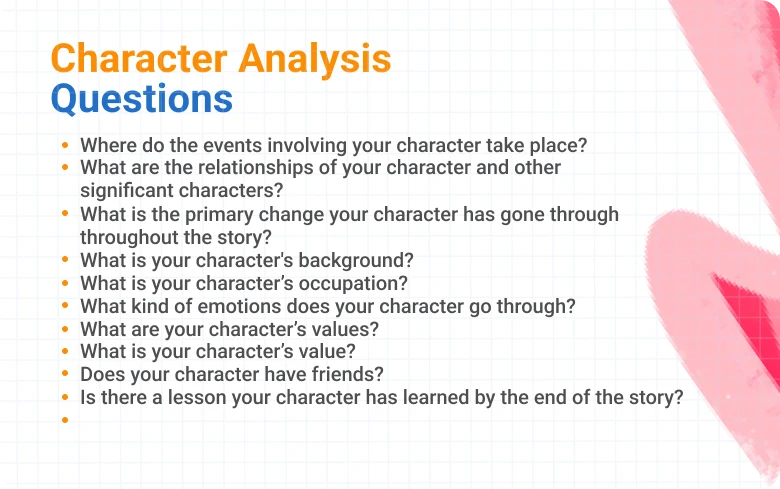
Characters are the lifeblood of any story, driving the plot forward and capturing our hearts and minds. Whether you are a literary enthusiast, a student, or a writer, delving into the depths of a character’s psyche can be an enriching and transformative experience. Character analysis questions are a powerful tool that can help unlock the complexities of a fictional character, allowing us to understand their motivations, desires, and fears.
In this article, we will explore the significance of character analysis questions and how they can enhance our understanding of fictional characters. By asking these thought-provoking questions, we can gain a deeper insight into their actions, relationships, and development throughout the narrative.
So, whether you are reading a classic novel, studying for an English literature exam, or crafting your own story, character analysis questions are a valuable resource to explore the intricate layers of characters and bring them to life.
See these character analysis questions:
- What are the character’s main strengths and weaknesses?
- How does the character’s past shape their present actions?
- What are the character’s goals and motivations?
- How does the character interact with other characters?
- What are the character’s internal conflicts?
- How does the character handle external challenges?
- What are the character’s core values and beliefs?
- What role does the character play in the overall story?
- How does the character change and evolve throughout the narrative?
- What are the character’s fears and insecurities?
- What is the character’s defining moment?
- How does the character’s physical appearance reflect their personality?
- What is the character’s relationship with their family?
- What are the character’s hobbies and interests?
- How does the character express their emotions?
- What are the character’s external and internal obstacles?
- How does the character handle success and failure?
- What is the character’s moral compass?
- How does the character’s socioeconomic background influence their actions?
- What is the character’s role in society?
- How does the character’s gender and identity shape their experiences?
- What are the character’s personal relationships like?
- How does the character’s occupation impact their personality?
- What are the character’s hopes and dreams?
- How does the character’s dialogue reveal their true nature?
- What are the character’s biggest regrets?
- How does the character handle conflicts with others?
- What is the character’s relationship with authority?
- How does the character’s environment influence their behavior?
- What are the character’s coping mechanisms?
- How does the character’s education level affect their worldview?
- What are the character’s external influences?
- How does the character perceive themselves?
- What are the character’s secrets?
- How does the character’s age impact their decisions?
- What are the character’s strengths and weaknesses in relationships?
- How does the character handle betrayal?
- What are the character’s defense mechanisms?
- How does the character’s spirituality or lack thereof shape their actions?
- What are the character’s physical and emotional scars?
- How does the character’s social status affect their interactions?
- What are the character’s fears of intimacy?
- How does the character handle loss?
- What are the character’s prejudices and biases?
These character analysis questions are just the tip of the iceberg. By delving into the complexities of fictional characters, we can gain a deeper understanding of their journey and the themes they embody. So, next time you encounter a captivating character, grab a pen and notebook, and embark on a character analysis adventure that will enrich your reading experience or enhance your storytelling skills.






