
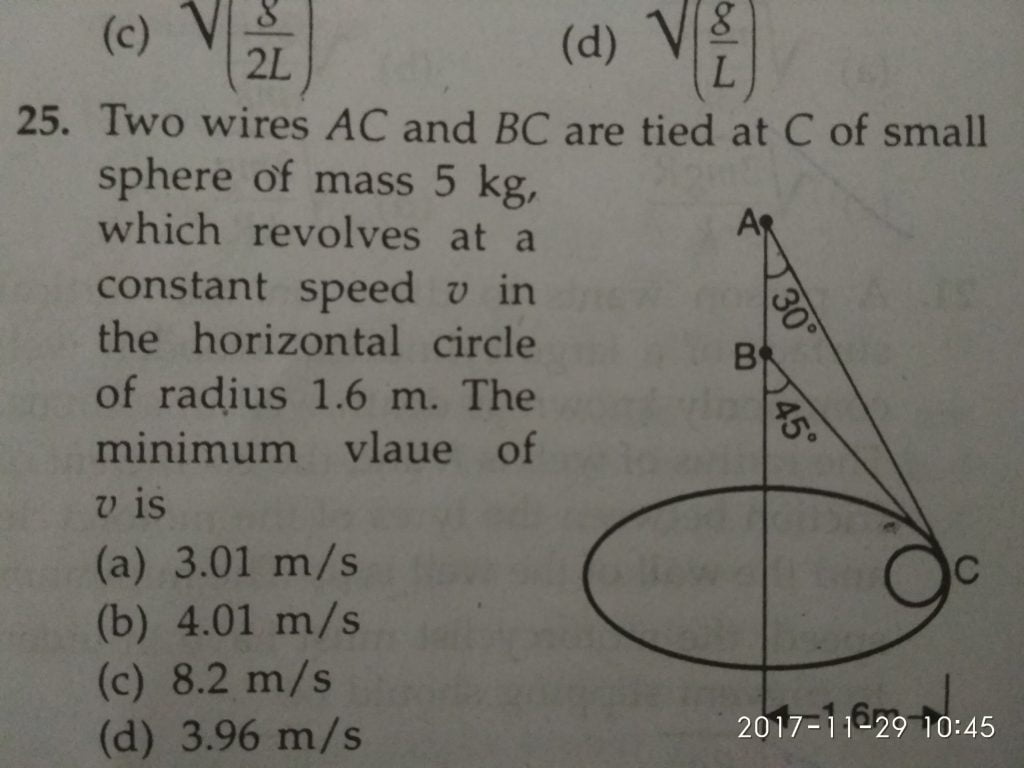
Circular motion is a fundamental concept in physics that involves the movement of an object along a curved path. It is a common topic that is often explored in physics courses and exams. Understanding circular motion requires a solid grasp of key principles such as centripetal force, angular velocity, and acceleration. To help you test your knowledge and deepen your understanding, we have compiled a comprehensive list of circular motion questions. Whether you are a student preparing for an exam or a curious individual looking to expand your knowledge, these questions will challenge and engage you.
See these circular motion questions
- What is circular motion?
- What is the difference between linear and circular motion?
- What is centripetal force?
- How is centripetal force related to circular motion?
- What causes an object to move in a circular path?
- What is the formula for centripetal force?
- How does the radius of the circle affect the centripetal force?
- What is angular velocity?
- How is angular velocity calculated?
- What are the units of angular velocity?
- What is the relationship between angular velocity and linear velocity?
- How is angular acceleration related to circular motion?
- What is the formula for angular acceleration?
- What are the units of angular acceleration?
- How does angular acceleration affect the rate of change of angular velocity?
- What is the difference between tangential acceleration and centripetal acceleration?
- How is tangential acceleration calculated?
- What is the relationship between tangential acceleration and angular acceleration?
- What is the difference between uniform circular motion and non-uniform circular motion?
- What are some examples of circular motion in everyday life?
- How does the mass of an object affect its circular motion?
- What is the role of friction in circular motion?
- What is the relationship between the coefficient of friction and the maximum speed of an object in circular motion?
- How does the angle of banking affect the speed of a car on a curved road?
- What is the relationship between the angle of banking and the radius of the curve?
- What is the difference between vertical and horizontal circular motion?
- What is the relationship between gravitational force and circular motion?
- How does the radius of the circle affect the gravitational force in circular motion?
- What is the relationship between the period and frequency of an object in circular motion?
- What is the formula for the period of an object in circular motion?
- What are some real-life applications of circular motion?
- How is circular motion used in amusement park rides?
- What is the role of tension in circular motion?
- How does the tension in a string affect the speed of an object in circular motion?
- What happens to the tension in a string when the speed of the object increases?
- What is the relationship between the tension in a string and the mass of the object?
- How does the angle of the string affect the tension in circular motion?
- What is the difference between horizontal and vertical circular motion in terms of tension?
- How does the radius of the circle affect the tension in a string?
- What is the relationship between the tension in a string and the centripetal force?
- What is the role of inertia in circular motion?
- How does the inertia of an object affect its circular motion?
- What is the relationship between the radius and the inertia of an object in circular motion?
- What is the difference between uniform circular motion and simple harmonic motion?
These circular motion questions cover a wide range of topics and concepts related to circular motion. By engaging with these questions and exploring their answers, you will gain a deeper understanding of this fundamental physics concept. Whether you are preparing for an exam, conducting research, or simply expanding your knowledge, these questions will challenge and engage you in the fascinating world of circular motion.






