
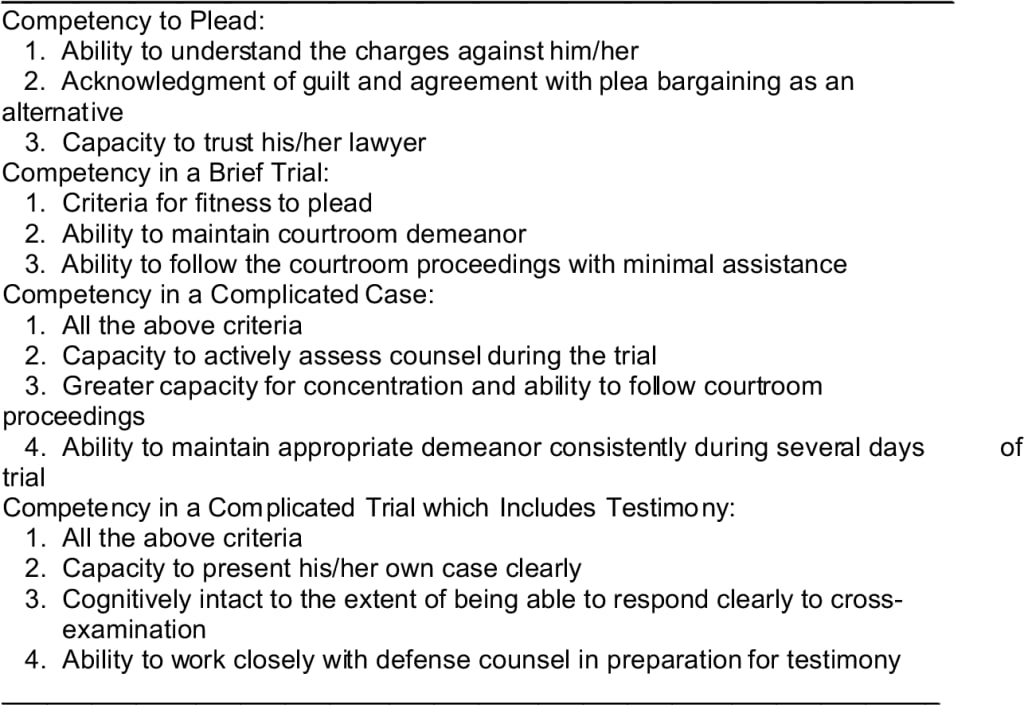
When a person is accused of a crime, the court must ensure that they are mentally competent to stand trial. Competency to stand trial refers to a defendant’s ability to understand the charges against them, comprehend the legal proceedings, and assist in their defense. To determine competency, the court may ask a series of questions to assess the defendant’s mental capacity. These competency to stand trial questions are essential in ensuring a fair trial and upholding the principles of justice.
Competency to stand trial questions typically cover various aspects of the defendant’s mental state. They aim to evaluate their understanding of the legal process, their ability to communicate with their attorney, and their comprehension of the consequences they may face if found guilty. These questions not only help determine if the defendant is competent to stand trial but also provide insights into their mental health and potential need for assistance or treatment.
If a defendant is found incompetent to stand trial, they may undergo mental health treatment to restore their competency. Once deemed competent, the trial proceedings can continue. However, if the defendant’s incompetence is deemed irreversible, they may be subject to alternative legal processes, such as civil commitment or placement in a mental health facility.
See these competency to stand trial questions:
- Do you understand the charges against you?
- Are you aware of what a trial is?
- Can you communicate effectively with your attorney?
- Do you know the potential consequences if found guilty?
- Are you able to testify and present evidence in your defense?
- Can you make decisions regarding your defense strategy?
- Do you understand the role of the judge and jury in a trial?
- Are you aware of your rights as a defendant?
- Can you differentiate between truth and lies?
- Do you remember the events leading up to your arrest?
- Are you able to comprehend complex legal concepts?
- Can you follow and understand courtroom procedures?
- Do you understand the plea bargaining process?
- Can you recall and provide an accurate account of the incident in question?
- Are you able to understand and evaluate witness testimony?
- Do you comprehend the potential implications of pleading guilty?
- Can you maintain focus and attention during court proceedings?
- Are you aware of the potential defenses available to you?
- Do you understand the consequences of refusing to testify?
- Can you distinguish between different types of evidence?
- Are you able to assist in your defense strategy?
- Do you understand the role of the prosecutor in the trial?
- Can you comprehend the potential penalties associated with the charges?
- Are you capable of making rational decisions regarding your defense?
- Do you understand the purpose of cross-examination?
- Can you differentiate between reliable and unreliable sources of information?
- Are you able to comprehend and evaluate expert testimony?
- Do you understand the potential consequences of a guilty plea?
- Can you maintain composure and appropriate behavior during court proceedings?
- Are you aware of any mental health issues that may affect your ability to stand trial?
- Do you understand the principles of presumption of innocence and burden of proof?
- Can you comprehend and evaluate the credibility of witnesses?
- Are you able to understand and evaluate the evidence presented against you?
- Do you understand the potential defenses available to you?
- Can you differentiate between direct and circumstantial evidence?
- Are you aware of any biases or conflicts of interest that may affect your defense?
- Do you comprehend the potential consequences of a not guilty verdict?
- Can you maintain confidentiality with your attorney?
- Are you able to understand and evaluate the reliability of eyewitness testimony?
- Do you understand the potential consequences of a mistrial?
- Can you distinguish between pertinent and irrelevant information?
- Are you aware of any potential witnesses who may support your defense?
- Do you have any concerns or questions regarding the trial proceedings?
These competency to stand trial questions are crucial in evaluating a defendant’s mental competence and ensuring a fair trial. By assessing their understanding of the charges, legal process, and ability to assist in their defense, the court can make informed decisions regarding their competency. Ultimately, competency to stand trial inquiries play a vital role in upholding the principles of justice and protecting the rights of both the defendant and society as a whole.






