
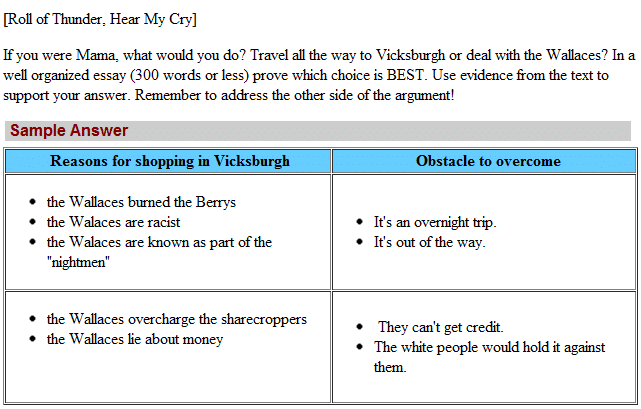
Constructed response questions are a popular assessment tool used by educators to measure students’ understanding and application of knowledge. These questions require students to provide a detailed and thoughtful response rather than a simple yes or no answer. They are designed to assess higher-order thinking skills such as analysis, evaluation, and synthesis. In this article, we will provide you with a comprehensive list of constructed response questions examples to help you better understand their format and effectively prepare for exams and assignments.
Constructed response questions can be found in various subjects and levels of education. They often require students to demonstrate their understanding of a concept by providing evidence, examples, or explanations. These questions not only assess students’ knowledge but also their ability to organize their thoughts and communicate effectively. By practicing these types of questions, students can improve their critical thinking skills and become better equipped to tackle complex problems.
Now, let’s dive into the examples of constructed response questions:
See these Constructed Response Questions Examples
- Explain the process of photosynthesis.
- Compare and contrast the themes of two novels you have read this semester.
- Describe the main causes of the American Civil War.
- Provide evidence from the text to support your interpretation of the poem.
- Discuss the impact of climate change on biodiversity.
- Explain the steps involved in solving a quadratic equation.
- Analyze the author’s use of symbolism in the novel.
- Describe the role of DNA in genetic inheritance.
- Evaluate the effectiveness of the government’s response to the pandemic.
- Compare and contrast the characteristics of a plant and animal cell.
- Explain the concept of supply and demand in economics.
- Discuss the significance of the Magna Carta in shaping modern democracy.
- Analyze the causes and consequences of World War II.
- Provide examples of renewable and non-renewable energy sources.
- Explain the process of mitosis and its importance in cell division.
- Discuss the impact of social media on society.
- Describe the steps involved in conducting a scientific experiment.
- Evaluate the pros and cons of globalization.
- Compare and contrast the functions of the circulatory and respiratory systems.
- Explain the concept of natural selection in evolution.
- Analyze the causes and effects of the Great Depression.
- Provide evidence to support your argument for or against capital punishment.
- Discuss the role of ethics in business decision-making.
- Describe the process of cellular respiration.
- Explain the impact of technology on education.
- Analyze the factors contributing to climate change.
- Compare and contrast the theories of Freud and Jung on personality development.
- Discuss the advantages and disadvantages of renewable energy sources.
- Describe the steps involved in writing a persuasive essay.
- Evaluate the impact of social media on mental health.
- Explain the process of digestion in the human body.
- Analyze the causes and consequences of the Industrial Revolution.
- Provide examples of how the media influences public opinion.
- Discuss the importance of biodiversity in maintaining ecosystem balance.
- Describe the role of the United Nations in promoting global peace.
- Explain the impact of the Internet on communication.
- Analyze the factors contributing to income inequality.
- Compare and contrast the features of a short story and a poem.
- Discuss the ethical implications of genetic engineering.
- Describe the process of protein synthesis.
- Evaluate the effectiveness of current environmental conservation efforts.
- Explain the role of the judicial branch in the United States government.
- Analyze the causes and effects of deforestation.
- Provide examples of how cultural diversity enriches society.
These constructed response questions examples cover a wide range of topics and can be adapted to suit different grade levels and subject areas. Remember to carefully read each question, analyze what is being asked, and provide a well-structured and coherent response. Practice answering these questions to improve your critical thinking and writing skills. By familiarizing yourself with the format and content of constructed response questions, you will be better prepared to demonstrate your knowledge and excel in your academic pursuits.






