
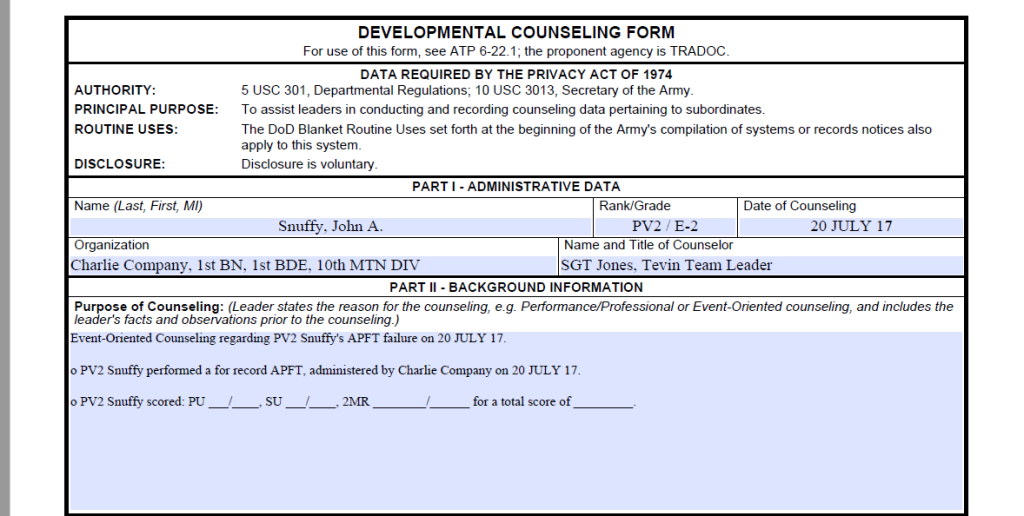
Preparing for a counseling session with an army board can be a nerve-wracking experience. The counseling session is a crucial step in determining a soldier’s career progression and future opportunities within the military. To ensure success, it is essential to be well-prepared and familiar with the types of questions that may be asked during the board. This article aims to provide you with a comprehensive list of counseling army board questions to help you excel in your upcoming session.
Before diving into the list of questions, it is important to understand the purpose of a counseling session with an army board. The board aims to assess a soldier’s knowledge, skills, and abilities, as well as their potential for future leadership roles. The questions asked during the session are designed to evaluate the soldier’s understanding of military regulations, leadership principles, and their ability to make sound decisions under pressure.
Now, let’s take a look at some of the counseling army board questions you may encounter during your session:
See these counseling army board questions
- What are the different types of counseling?
- Explain the importance of counseling in the military.
- What are the key elements of an effective counseling session?
- How do you establish rapport with a subordinate during a counseling session?
- What are the steps involved in the counseling process?
- Describe a situation where you had to counsel a subordinate for disciplinary issues.
- How do you ensure confidentiality during a counseling session?
- What is the purpose of an initial counseling session?
- What are the challenges you may face during a counseling session, and how do you overcome them?
- Explain the difference between directive and non-directive counseling.
- How do you provide constructive feedback during a counseling session?
- What are the possible consequences of not conducting regular counseling sessions?
- How do you handle a subordinate who is resistant to counseling?
- Describe a situation where you had to counsel a soldier for performance improvement.
- What are your responsibilities as a counselor?
- Explain the importance of setting goals during a counseling session.
- How do you evaluate the effectiveness of a counseling session?
- What actions can you take to ensure the soldier’s understanding of the counseling session?
- Describe a situation where you had to counsel a subordinate for personal issues.
- What are the guidelines for documenting a counseling session?
- How do you handle conflicts that may arise during a counseling session?
- Explain the concept of active listening during a counseling session.
- What are the potential benefits of a well-conducted counseling session?
- Describe a situation where you had to counsel a soldier for ethical misconduct.
- How do you tailor your counseling approach based on the needs of the soldier?
- What are the best practices for providing guidance and mentorship during a counseling session?
- Explain the role of self-assessment in the counseling process.
- What are the legal and ethical considerations in conducting a counseling session?
- Describe a situation where you had to counsel a soldier for career development.
- How do you address a subordinate’s concerns and questions during a counseling session?
- What are the potential consequences of not following the counseling process?
- Explain the importance of follow-up sessions after counseling.
- How do you handle a subordinate who disagrees with your counseling recommendations?
- What are the key factors to consider when developing an action plan during a counseling session?
- Describe a situation where you had to counsel a soldier for personal hygiene issues.
- How do you maintain professionalism and objectivity during a counseling session?
- What are the challenges you may face when counseling soldiers from diverse backgrounds?
- Explain the role of empathy and understanding in the counseling process.
- What are the potential risks of not addressing a soldier’s concerns during a counseling session?
- Describe a situation where you had to counsel a soldier for financial mismanagement.
- How do you handle a subordinate who becomes emotional during a counseling session?
- What are the resources available to support soldiers’ development after a counseling session?
- Explain the importance of maintaining confidentiality after a counseling session.
- What are the challenges you may face when counseling a soldier with a history of misconduct?
These are just a few examples of the counseling army board questions you may come across during your session. It is crucial to thoroughly prepare and familiarize yourself with military regulations, leadership principles, and counseling techniques to confidently answer the board’s questions. Good luck!






