
Cardiopulmonary resuscitation (CPR) is a life-saving technique used in emergencies to revive someone whose heart has stopped beating or who is not breathing. It is essential to have a good understanding of CPR to be prepared to act swiftly and effectively in critical situations. In this article, we will address some common cpr questions and answers to help you gain the knowledge necessary to potentially save a life.
See these cpr questions and answers
- What does CPR stand for?
- When should CPR be performed?
- What are the steps of performing CPR on an adult?
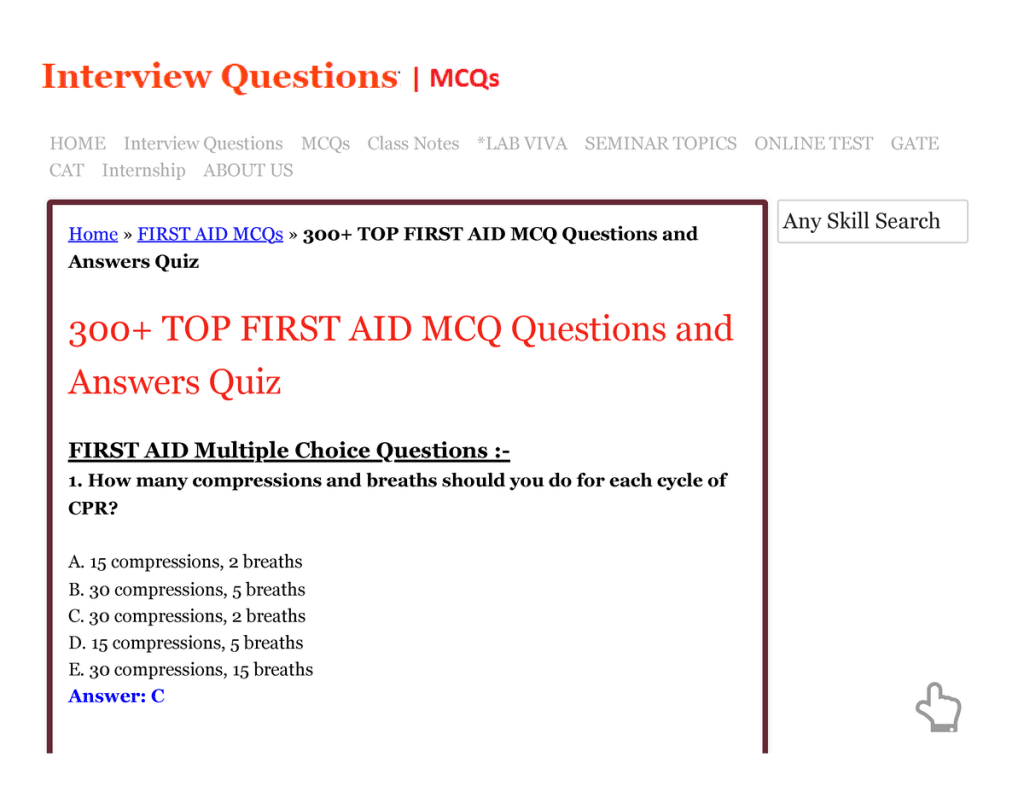
- What is the compression-to-ventilation ratio for CPR in adults?
- Should CPR be performed on a person with a pulse?
- What is the recommended depth of chest compressions for adults?
- How fast should chest compressions be performed during CPR?
- What are the signs that indicate successful CPR?
- Can CPR be performed on a pregnant woman?
- What is the difference between CPR for adults and children?
- What is the recommended compression-to-ventilation ratio for CPR in children?
- Should you perform CPR on a child with a pulse?
- What is the recommended depth of chest compressions for children?
- What is the difference between CPR for children and infants?
- When should you use an automated external defibrillator (AED) during CPR?
- What is the purpose of rescue breaths in CPR?
- Can CPR be performed on an unconscious person?
- Is it necessary to remove clothing before performing CPR?
- What should you do if the person starts breathing during CPR?
- Can CPR cause harm to the person receiving it?
- What is the chain of survival in CPR?
- Can bystanders perform CPR?
- What is the Good Samaritan law and how does it protect CPR providers?
- How can I learn CPR?
- What is the importance of early CPR in cardiac arrest cases?
- Can CPR revive someone who has been underwater for a prolonged period?
- What should you do if a person vomits during CPR?
- Can CPR be performed on a person with a pacemaker?
- What are the potential complications of CPR?
- What are the signs of a successful CPR revival?
- Can you perform CPR on a person who has a DNR (do not resuscitate) order?
- What should you do if the person’s ribs break during CPR?
- Can you perform CPR on a person who is in cardiac arrest due to drug overdose?
- What is the importance of clear communication during CPR?
- What is the recommended rate of chest compressions for infant CPR?
- Can you perform CPR on a choking person?
- What should you do if the person’s mouth is blocked by an object during CPR?
- Can CPR be performed on a person with a tracheostomy?
- What are the potential long-term outcomes for a person who receives CPR?
- What should you do if you are alone when someone collapses and needs CPR?
- Can you perform CPR on a person with a known heart condition?
- What is the importance of maintaining the correct hand position during chest compressions?
- Can you perform CPR on a person with a chest tattoo?
Remember, while these cpr questions and answers provide valuable information, it is always recommended to undergo certified CPR training to ensure you have the necessary skills and knowledge to perform CPR correctly.






