
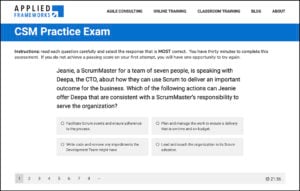
When preparing for the Certified ScrumMaster (CSM) exam, having access to a wide range of practice questions is essential. These questions not only help you assess your knowledge and understanding of Scrum principles and practices, but they also familiarize you with the format and style of the actual exam. Whether you’re a new ScrumMaster or looking to renew your certification, this article will provide you with a comprehensive list of CSM exam questions to help you prepare effectively.
Scrum is a framework that allows teams to collaborate and work together efficiently to develop complex products. The CSM exam tests your understanding of Scrum’s roles, events, artifacts, and principles. By practicing with these exam questions, you can improve your chances of passing the CSM exam and demonstrate your proficiency in Scrum.
Before diving into the list of CSM exam questions, it’s important to note that the actual exam may differ in terms of difficulty and specific content. However, practicing with a variety of questions will help you gain a deeper understanding of Scrum and its application in real-world scenarios.
See these CSM exam questions
- What are the three pillars of Scrum?
- Who is responsible for prioritizing the Product Backlog?
- What is the role of the Scrum Master during the Sprint Planning event?
- What is the purpose of the Daily Scrum?
- What happens during the Sprint Review?
- What is the definition of “Done” in Scrum?
- What is the recommended size for a Scrum Development Team?
- Who is responsible for removing obstacles or impediments during a Sprint?
- What is the purpose of the Sprint Retrospective?
- What is the role of the Product Owner in Scrum?
- How does Scrum differ from traditional project management methodologies?
- What are the advantages of using Scrum?
- What is the role of the Development Team in Scrum?
- What are the Scrum artifacts?
- What is the purpose of the Sprint Backlog?
- What is the recommended duration for a Sprint?
- How does Scrum promote transparency?
- What are the different types of Sprint Burndown charts?
- What is the purpose of the Sprint Goal?
- How does Scrum support continuous improvement?
- What is the role of the Scrum Master in facilitating Scrum events?
- What is the purpose of the Product Backlog refinement?
- How does Scrum address changes in requirements?
- What is the role of the Scrum Master in a self-organizing team?
- What is the purpose of the Scrum Guide?
- What are the characteristics of a good Product Owner?
- What is the role of stakeholders in Scrum?
- How does Scrum promote collaboration and communication?
- What are the different types of Scrum reports?
- What is the role of the Scrum Master in resolving conflicts?
- What is the purpose of the Sprint Burndown chart?
- What is the role of the Scrum Master in removing impediments?
- What is the purpose of the Daily Scrum?
- What are the different roles in Scrum?
- What is the role of the Scrum Master in the Sprint Review?
- What are the benefits of conducting a Sprint Retrospective?
- What is the role of the Scrum Master during the Sprint?
- What is the purpose of the Scrum of Scrums meeting?
- What are the responsibilities of the Development Team?
- What is the role of the Product Owner in Sprint Planning?
- What is the purpose of the Definition of “Done”?
- What is the role of the Scrum Master in the Product Backlog refinement?
- What is the purpose of the Sprint Planning?
These CSM exam questions cover a wide range of topics and will help you assess your knowledge and understanding of Scrum. By practicing with these questions, you can identify any gaps in your knowledge and focus on areas that require further study. Remember to refer to the Scrum Guide and other recommended resources to enhance your understanding of Scrum principles and practices.
Good luck with your CSM exam preparation!






