
Preparing for a DCF (Discounted Cash Flow) interview can be a daunting task, especially if you are not familiar with the concept. However, with the right guidance and practice, you can excel in your DCF interview and land that dream job. In this article, we will provide you with a comprehensive list of DCF interview questions to help you prepare effectively.
DCF is a valuation method used to estimate the value of an investment based on its expected future cash flows. It is widely used in corporate finance and investment banking to evaluate the attractiveness of an investment opportunity. DCF analysis requires a strong understanding of financial concepts and the ability to perform complex calculations.
Before we dive into the list of DCF interview questions, it is important to note that these questions can vary depending on the level of the position you are applying for and the specific company you are interviewing with. However, the questions listed below cover the fundamental concepts and are a great starting point for your preparation.
See these dcf interview questions
- What is DCF analysis and why is it important in corporate finance?
- Explain the concept of discounted cash flows.
- What are the key components of a DCF model?
- How do you calculate the present value of future cash flows?
- What is the discount rate and how is it determined?
- What are the limitations of DCF analysis?
- How do you calculate the terminal value in a DCF model?
- What is the difference between WACC and discount rate?
- Can you explain the concept of free cash flow?
- What are the main factors that can affect the value of an investment in a DCF analysis?
- How do you incorporate risk into a DCF model?
- What is sensitivity analysis and why is it important in DCF?
- Explain the concept of cost of equity.
- What is the difference between enterprise value and equity value?
- How do you calculate the weighted average cost of capital (WACC)?
- What are the main assumptions made in a DCF analysis?
- What is the difference between a perpetuity and an annuity?
- Can you explain the concept of terminal growth rate?
- How do you calculate the net present value (NPV) of an investment?
- What are the advantages of using DCF analysis over other valuation methods?
- What are the key differences between DCF and comparable company analysis?
- How do you determine the appropriate cash flow projections for a DCF model?
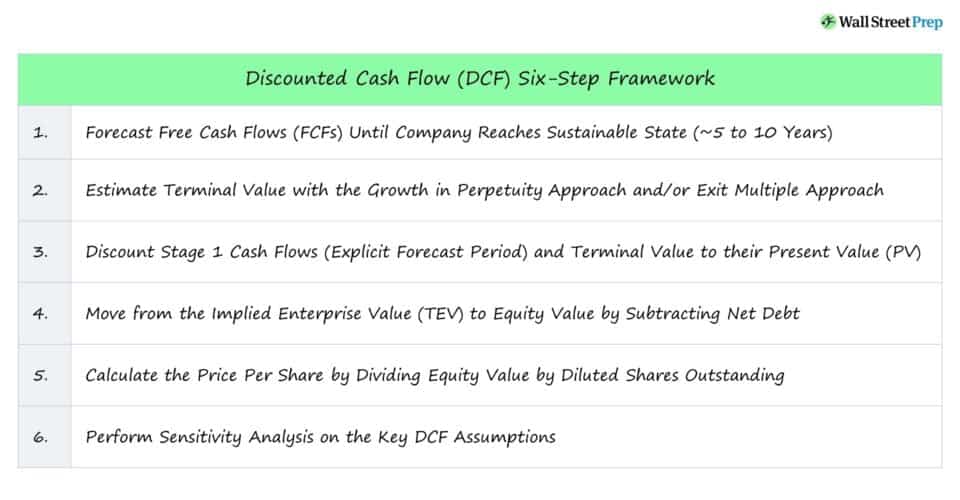
- What are the main steps involved in performing a DCF analysis?
- Can you explain the concept of reinvestment rate?
- What are the key assumptions made in estimating future cash flows?
- How do you determine the appropriate discount rate for a DCF analysis?
- What are the main sources of error in a DCF model?
- What are the main limitations of using DCF analysis in practice?
- How do you incorporate inflation into a DCF model?
- What are the potential pitfalls of using DCF analysis in decision-making?
- Can you explain the concept of weighted average cost of capital (WACC)?
- What are the key differences between DCF and internal rate of return (IRR)?
- How do you determine the appropriate discount rate for a risky investment?
- What are the main factors that can affect the discount rate in a DCF analysis?
- What are the main differences between DCF and dividend discount model (DDM)?
- Can you explain the concept of cost of debt?
- What are the main advantages of using DCF analysis in business valuation?
- How do you incorporate changes in working capital into a DCF model?
- What are the key assumptions made in estimating the terminal value?
- What are the main differences between DCF and real options analysis?
- How do you calculate the cash flow from operations in a DCF model?
- What are the potential drawbacks of using DCF analysis in investment decisions?
- Can you explain the concept of cost of capital?
- What are the main challenges in implementing a DCF analysis in practice?
These DCF interview questions cover a wide range of topics and will help you build a strong foundation for your DCF interview preparation. Make sure to research and practice each question thoroughly to increase your chances of success. Good luck!






