
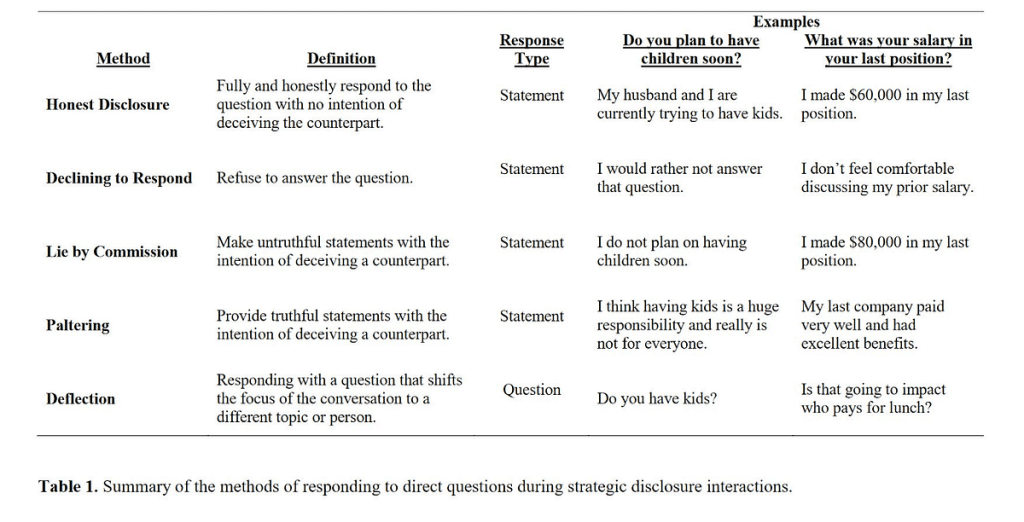
When engaging in conversations, it is common to encounter questions that may make us uncomfortable or put us in a difficult situation. In such instances, deflecting questions can be a useful skill to possess. Deflecting questions involves redirecting the conversation away from the initial question without directly answering it. This tactic allows us to maintain control over the conversation and avoid revealing information that we do not wish to disclose.
Deflecting questions can be employed in various situations, such as during job interviews, negotiations, or even in personal relationships. It is a valuable skill that can help us navigate through tricky conversations and protect our privacy or interests. By mastering the art of deflecting questions, we can effectively steer the conversation towards more comfortable topics while maintaining a sense of control and confidence.
However, it is important to note that deflecting questions should be used sparingly and tactfully. Overusing this technique may lead to distrust or suspicion from the person asking the questions. It is essential to strike a balance between deflecting questions when necessary and providing genuine responses when appropriate.
See these deflecting questions
- What makes you ask that?
- Why do you want to know?
- Can we discuss that later?
- Let’s focus on the main topic.
- That’s an interesting question, but let’s talk about something else.
- I’m not sure I understand. Could you clarify?
- Why does it matter to you?
- That’s a personal matter I’d rather not discuss.
- Let’s keep the conversation professional.
- Can we talk about this another time?
- I prefer not to answer that question.
- Let’s stay on track with our original discussion.
- How about we discuss something more relevant?
- I’m not comfortable sharing that information.
- Let’s focus on the bigger picture.
- That’s not really relevant to our conversation, is it?
- Why are you curious about that?
- I don’t have the information you’re seeking.
- Let’s move on to a different topic.
- I’m not the best person to answer that question.
- Why don’t we shift our attention to something else?
- I’d rather not get into the details.
- That’s an interesting point, but let’s get back to our topic.
- I don’t think I can provide a satisfactory answer to that.
- Let’s respect each other’s privacy.
- I’m not at liberty to discuss that.
- Can we talk about something more positive?
- I’m not comfortable sharing that at the moment.
- That’s a sensitive topic I’d rather avoid.
- Let’s focus on what we can control.
- Why do you need that information?
- I’m not sure how that is relevant to our conversation.
- Let’s keep things professional and on track.
- I’d rather discuss something more uplifting.
- That’s not something I’m prepared to answer.
- Can we save that discussion for another time?
- I don’t feel comfortable delving into that topic.
- Let’s avoid going down that road.
- Why is that important to you?
- I think we should focus on more pressing matters.
- That’s not something I’m willing to disclose.
- Can we agree to discuss something else?
These are just a few examples of deflecting questions that can be used in different contexts. Remember to use them wisely and adapt them to suit the specific situation you find yourself in. Mastering the art of deflecting questions can empower you to navigate through any conversation with confidence and finesse.






