
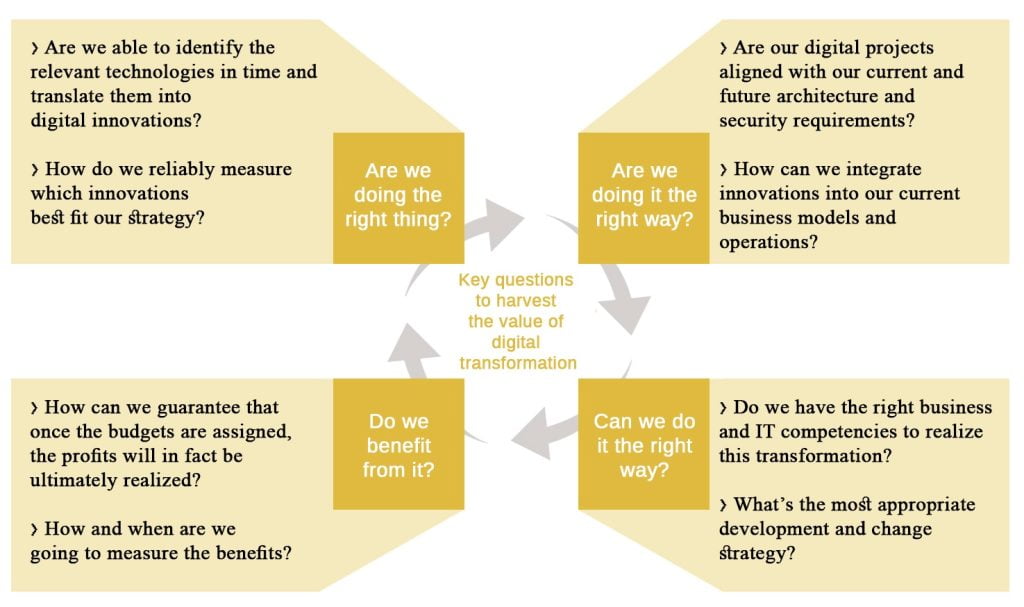
Digital transformation is a crucial process for businesses of all sizes and industries. It involves leveraging digital technologies to improve operations, enhance customer experiences, and drive growth. However, embarking on a digital transformation journey can be complex and challenging. To ensure a successful transformation, organizations need to ask themselves important questions to evaluate their readiness and plan their strategies effectively. In this article, we will explore a comprehensive list of digital transformation questions that will help businesses navigate this transformative process.
See these digital transformation questions
- What is the current state of our digital infrastructure?
- Are our employees equipped with the necessary digital skills?
- What are the key objectives of our digital transformation?
- How will digital transformation impact our business model?
- What are the potential risks and challenges associated with digital transformation?
- Do we have a clear roadmap for our digital transformation journey?
- How will digital transformation affect our existing processes and workflows?
- What technologies and tools are required for successful digital transformation?
- What is the expected timeline for our digital transformation initiatives?
- What are the budgetary implications of digital transformation?
- How will digital transformation impact our customer experiences?
- What are the data security and privacy considerations?
- Do we have the necessary leadership and organizational support for digital transformation?
- How will digital transformation impact our workforce?
- What are the potential cultural barriers to digital transformation?
- How can we ensure effective change management during the transformation process?
- What are the key performance indicators (KPIs) to measure the success of our digital transformation?
- How can we leverage data analytics to drive insights and decision-making?
- What are the emerging digital trends and technologies relevant to our industry?
- How can we foster a culture of innovation and experimentation?
- What collaboration and communication tools are needed for a digitally transformed organization?
- How can we align our digital transformation initiatives with our overall business strategy?
- What are the potential regulatory and compliance implications?
- How can we ensure the scalability and flexibility of our digital infrastructure?
- What are the best practices and success stories in digital transformation?
- How can we engage and empower our employees throughout the transformation process?
- What are the potential impacts on our supplier and partner relationships?
- How can we integrate digital transformation into our marketing and customer acquisition strategies?
- What are the implications for our product and service offerings?
- How can we leverage artificial intelligence and machine learning in our digital transformation?
- What are the potential ethical considerations in adopting new digital technologies?
- How can we ensure seamless connectivity and integration across different digital platforms?
- What are the potential cost savings and revenue growth opportunities through digital transformation?
- How can we measure and optimize the return on investment (ROI) of our digital transformation?
- What are the potential impacts on our supply chain and logistics?
- How can we address customer concerns and resistance to digital transformation?
- What are the potential impacts on our competitive landscape?
- How can we leverage digital transformation to drive sustainability and social responsibility?
- What are the potential implications for our intellectual property and patents?
- How can we ensure regulatory compliance in data management and privacy?
- What are the potential impacts on our pricing and revenue models?
- How can we leverage digital transformation to create a personalized and seamless customer journey?
- What are the potential impacts on our customer retention and loyalty?
- How can we leverage digital transformation to improve our operational efficiency?
- What are the potential impacts on our employee engagement and satisfaction?
These digital transformation questions serve as a starting point for organizations embarking on their digital transformation journey. By thoroughly evaluating and addressing these questions, businesses can develop a robust digital transformation strategy that aligns with their unique goals and challenges. Remember, digital transformation is not a one-time event but an ongoing process that requires continuous adaptation and innovation.






