
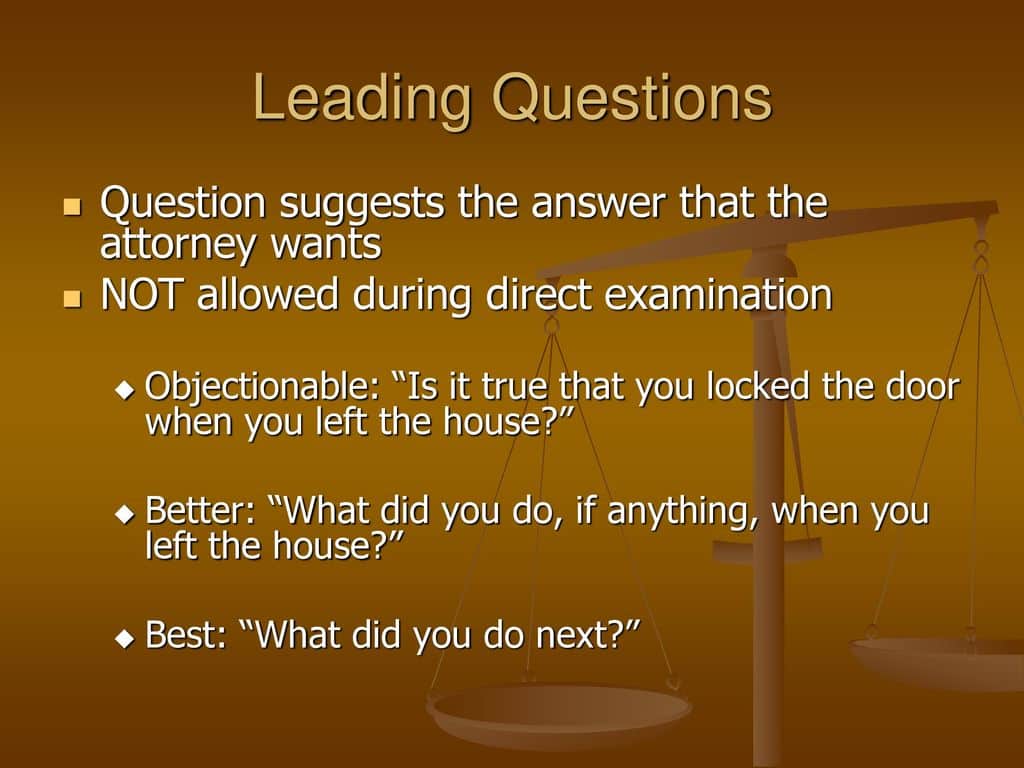
When it comes to legal proceedings, direct examination plays a crucial role in presenting evidence and building a strong case. Direct exam questions are designed to elicit specific information from a witness that supports the attorney’s argument. These questions are carefully crafted to ensure clarity, relevance, and effectiveness in presenting the desired facts. In this article, we will explore the importance of direct examination and provide a comprehensive list of direct exam questions that can be used in various courtroom scenarios.
Direct examination is an essential part of any trial or hearing as it allows the attorney to present their case through the testimony of witnesses. The purpose of direct examination is to establish the facts that support the attorney’s side of the case and to present evidence in a clear and concise manner. It is during direct examination that the attorney has the opportunity to lead the witness and ask specific questions that will help build a persuasive argument.
See these direct exam questions:
Direct Exam Questions
- Can you please state your name and occupation for the record?
- Were you present at the scene of the incident on the date in question?
- What did you observe when you arrived at the scene?
- Did you see anyone else present at the scene?
- Did you witness any altercation or argument between the parties involved?
- Can you describe the physical appearance of the defendant?
- Did you see the defendant holding any weapon during the incident?
- What actions did the defendant take after the incident?
- Were there any other witnesses present at the scene?
- Did you see the defendant fleeing the scene?
- Were you able to identify the defendant at a later time?
- Can you describe the emotional state of the victim after the incident?
- Did you notice any injuries on the victim’s body?
- Did you provide medical assistance to the victim?
- Were you able to collect any physical evidence from the crime scene?
- Can you identify the evidence you collected?
- Did you document the evidence properly?
- Have you handled similar cases in the past?
- Can you explain the procedures you followed during the investigation?
- Did you interview any witnesses during the investigation?
- Can you provide a detailed account of the events leading up to the incident?
- Did the defendant make any statements during the investigation?
- Were there any inconsistencies in the defendant’s statements?
- What is your professional opinion regarding the defendant’s guilt?
- Have you reviewed any documents related to this case?
- Did you find any fingerprints or DNA evidence at the crime scene?
- Can you explain the significance of the evidence collected?
- Did you encounter any difficulties during the investigation?
- What steps did you take to ensure the integrity of the evidence?
- Have you provided expert testimony in previous cases?
- Can you explain the process of analyzing the evidence?
- Did you find any discrepancies between the evidence and the defendant’s version of events?
- What actions did you take after completing the investigation?
- Can you summarize your findings in this case?
- Have you been cross-examined in court before?
- Can you explain the chain of custody for the evidence collected?
- Did you encounter any challenges or obstacles during the investigation?
- Can you explain the significance of the evidence to the jury?
- What are your qualifications and experience in this field?
- Can you provide an expert opinion on the matter?
- What is your understanding of the legal standards in this case?
- Have you considered any alternative explanations for the evidence?
These direct exam questions serve as a starting point for attorneys to build a strong case and present compelling evidence in court. By focusing on the specific facts and details, attorneys can effectively convey their argument and sway the jury in their favor. Remember to tailor these questions to the unique circumstances of your case and use them as a foundation to craft a persuasive direct examination strategy.






