
Death is a topic that has intrigued philosophers, thinkers, and individuals throughout history. It is a subject that raises questions about the meaning of life, the nature of existence, and our own mortality. Epictetus, a Greek philosopher born in the 1st century AD, had much to say on the topic of death. His stoic teachings emphasized the importance of accepting and embracing death as a natural part of life. In this article, we will explore some of Epictetus’ insightful quotes on death and reflect on their relevance in our modern lives.
Epictetus believed that death is an inevitable part of the human experience and that fearing it only leads to unnecessary suffering. He taught that we should not be consumed by the fear of death but rather focus on living a virtuous life. According to Epictetus, death is not to be feared, as it is beyond our control. Instead, we should concentrate on the things that are within our control, such as our thoughts, actions, and attitudes towards life and death.
Now, let’s delve into some powerful quotes by Epictetus that shed light on his stoic perspective on death:
Read these Epictetus quotes on death:
“Death is nothing terrible, for if it were, it would have appeared so to Socrates.”
“Death is a release from the impressions of the senses, and from desires that make us their puppets, and from the vagaries of the mind, and from the hard service of the flesh.”
“What harm is it, just when you are going to take the road to Rome, to lament and groan, and say, ‘Poor me, to have to go to Rome’? Is it not better to set out with a cheery countenance, and say, ‘I’m going to Rome to do business’? For it is equally necessary for you to go to Rome, and no hindrance will arise.”
“Be not concerned, then, about other people’s faults; for they are their own affairs. If you are not responsible for them, do not trouble yourself about them.”
“Remember, it is not enough to be hit or insulted to be harmed, you must believe that you are being harmed. If someone succeeds in provoking you, realize that your mind is complicit in the provocation. Which is why it is essential that we not respond impulsively to impressions; take a moment before reacting, and you will find it easier to maintain control.”
“Seek not that the things which happen should happen as you wish; but wish the things which happen to be as they are, and you will have a tranquil flow of life.”
“Don’t explain your philosophy. Embody it.”
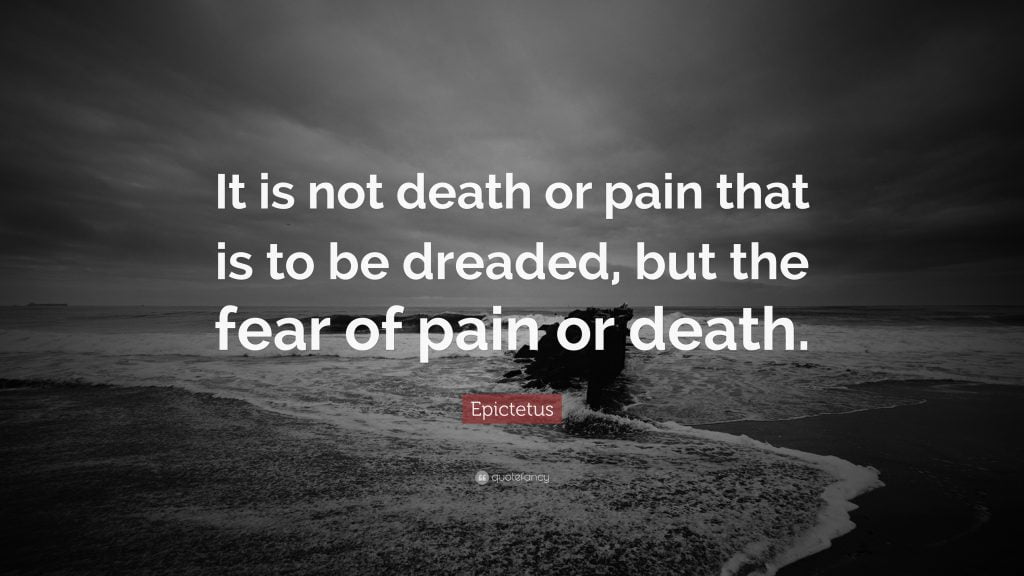
“It is not death or pain that is to be feared, but the fear of pain or death.”
“To accuse others for one’s own misfortunes is a sign of want of education. To accuse oneself shows that one’s education has begun. To accuse neither oneself nor others shows that one’s education is complete.”
“People are not disturbed by things, but by the view they take of them.”
“Wealth consists not in having great possessions, but in having few wants.”
“Don’t demand that things happen as you wish, but wish that they happen as they do happen, and you will go on well.”
“If a person gave away your body to some passerby, you’d be furious. Yet you hand over your mind to anyone who comes along, so they may abuse you, leaving it disturbed and troubled—have you no shame in that?”
“Keep death and exile before your eyes each day, along with everything that seems terrible—by doing so, you’ll never have a base thought nor will you have excessive desire.”
“First say to yourself what you would be; and then do what you have to do.”
“If you want to make progress, put up with being perceived as ignorant or naive in worldly matters, don’t aspire to a reputation for sagacity.”
“It is impossible for a man to learn what he thinks he already knows.”
“When you are offended at any man’s fault, turn to yourself and study your own failings. Then you will forget your anger.”
“Don’t just say you have read books. Show that through them you have learned to think better, to be a more discriminating and reflective person.”
“If anyone tells you that a certain person speaks ill of you, do not make excuses about what is said of you but answer, ‘He was ignorant of my other faults, else he would not have mentioned these alone.'”
“If you wish to be a writer, write.”
These quotes by Epictetus offer us valuable insights into his stoic philosophy on death. They encourage us to face death with acceptance, to focus on what is within our control, and to cultivate a virtuous life. By reflecting on these teachings, we can gain a deeper understanding of our own mortality and live more meaningful lives.






