
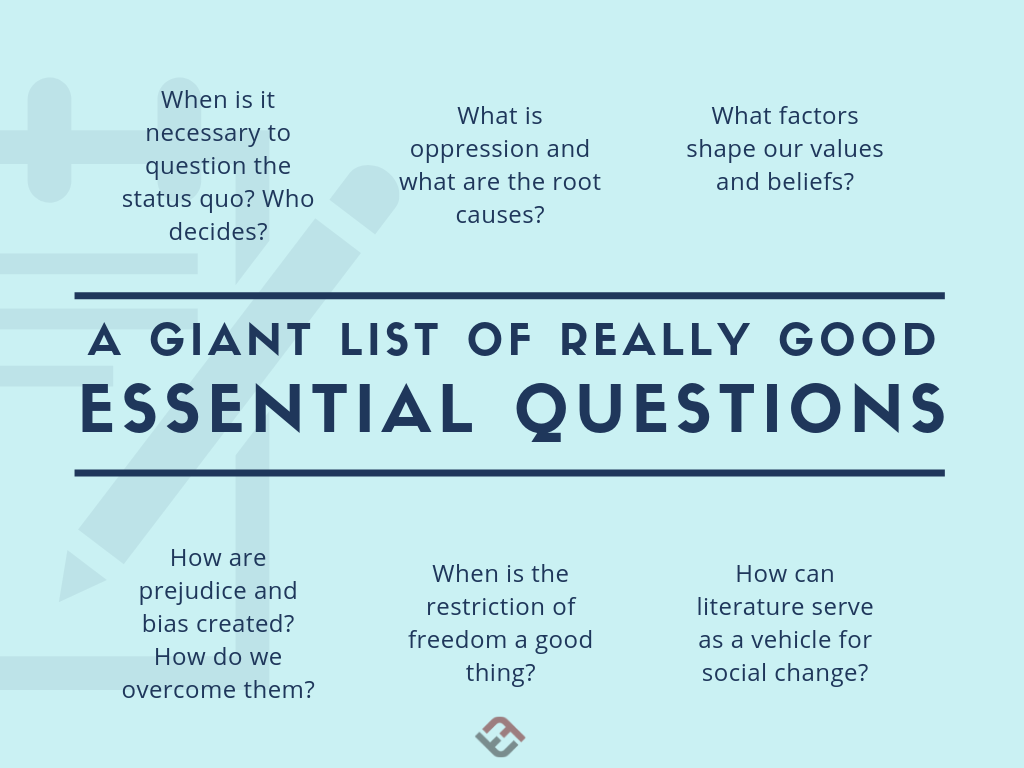
Elementary education is a crucial phase in a child’s academic journey, where they develop foundational skills and cultivate a love for learning. To foster curiosity and critical thinking, teachers often use essential questions to guide classroom discussions and promote deeper understanding. These questions can spark meaningful conversations, encourage problem-solving, and enhance student engagement. In this article, we will explore a diverse list of essential questions specifically designed for elementary students.
Essential questions serve as the driving force behind a lesson or unit, encouraging students to explore and discover knowledge independently. These questions are open-ended and require critical thinking skills to answer, as they do not have a single right or wrong response. By posing essential questions, educators can inspire young minds to think critically, analyze information, and develop their own opinions.
As elementary students navigate various subjects, they encounter new ideas, concepts, and experiences. Essential questions provide them with an opportunity to dig deeper, make connections, and apply their knowledge to real-life situations. These questions also promote active listening and collaboration among students, fostering a supportive and inclusive classroom environment.
See these essential questions for elementary students
- Why is it important to read every day?
- How can we show kindness to others?
- What strategies can we use to solve math problems?
- Why is it important to eat a balanced diet?
- How can we conserve energy at home?
- What are the different types of government?
- How does our behavior impact the environment?
- What are the main characteristics of a good friend?
- Why is it important to learn about different cultures?
- What are the effects of bullying on individuals?
- How can we express our feelings in a healthy way?
- Why is it important to have rules in society?
- What are some ways we can stay safe online?
- How do plants grow and survive?
- What are the main components of a story?
- Why is it important to respect others’ opinions?
- How can we make a positive impact in our community?
- What are the different forms of energy?
- Why is it important to exercise regularly?
- How can we solve conflicts peacefully?
- What are the main characteristics of a good leader?
- Why is it important to learn about history?
- How do animals adapt to their environment?
- What are the different types of weather?
- Why is it important to be honest?
- How can we use technology responsibly?
- What are the main factors that affect climate?
- Why is it important to be a good listener?
- How can we make informed decisions?
- What are the main characteristics of a healthy lifestyle?
- Why is it important to have goals?
- How can we take care of our planet?
- What are the different forms of art?
- Why is it important to express gratitude?
- How can we be responsible consumers?
- What are the main components of a cell?
- Why is it important to have a growth mindset?
- How can we be good citizens in our community?
- What are the different forms of transportation?
- Why is it important to learn a second language?
- How can we solve environmental problems?
- What are the main events of a historical period?
- Why is it important to have empathy for others?
- How can we use technology to help others?
These essential questions are just a starting point for educators to engage their elementary students in meaningful discussions and promote critical thinking. By incorporating essential questions into their teaching strategies, teachers can inspire a lifelong love for learning and empower students to become independent thinkers and problem solvers.






