
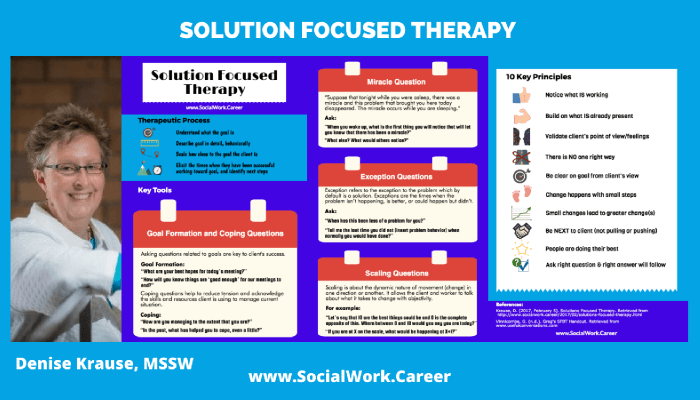
Solution Focused Therapy (SFT) is a goal-oriented therapeutic approach that focuses on finding solutions rather than dwelling on problems. It empowers individuals to identify their strengths and resources to achieve their desired outcomes. One of the key techniques used in SFT is asking exception questions. These questions help individuals explore times when the problem they are facing is not present or is less intense, offering insights into how they can create positive change.
Exception questions in SFT are designed to shift the focus from the problem to the solution. They encourage individuals to think about when and how they have managed to overcome or reduce the impact of their problem in the past. By exploring these exceptions, therapists and clients can uncover strategies and resources that can be applied to current challenges. Exception questions are an essential tool in helping individuals envision a future where the problem is no longer dominant.
In solution focused therapy, exception questions typically start with phrases such as “Tell me about a time when…” or “Can you think of a situation where…”. They invite clients to recall specific instances when they experienced a temporary relief from their problem or when the problem was not present at all. These questions help individuals reflect on their strengths, coping mechanisms, and previous successes. By focusing on exceptions, clients begin to develop a sense of hope and confidence in their ability to create positive change.
See these exception questions in solution focused therapy:
- Can you think of a time when the problem didn’t affect you as much?
- Describe a situation in which the problem was less intense for you.
- Tell me about a time when you were able to handle the problem effectively.
- Can you recall an instance when the problem didn’t bother you at all?
- Describe a time when you felt in control despite the presence of the problem.
- Can you think of a situation where the problem didn’t consume your thoughts?
- Tell me about a time when you were able to find a temporary solution to the problem.
- Describe a situation in which the problem seemed more manageable than usual.
- Can you recall an instance when the problem didn’t interfere with your daily life?
- Tell me about a time when you were able to maintain a positive attitude despite the problem.
- Can you think of a situation where the problem wasn’t as overwhelming?
- Describe a time when you were able to break the cycle of the problem.
- Tell me about a situation in which the problem didn’t escalate.
- Can you recall an instance when the problem didn’t trigger negative emotions?
- Describe a time when you were able to communicate effectively despite the problem.
- Can you think of a situation where the problem didn’t affect your relationships?
- Tell me about a time when you were able to establish boundaries with the problem.
- Describe a situation in which the problem didn’t hinder your progress.
- Can you recall an instance when the problem didn’t drain your energy?
- Tell me about a time when you were able to find moments of peace amidst the problem.
- Can you think of a situation where the problem didn’t have control over your thoughts?
- Describe a time when you were able to challenge the problem effectively.
- Tell me about a situation in which the problem didn’t define your identity.
- Can you recall an instance when the problem didn’t affect your self-esteem?
- Describe a time when you were able to reframe the problem in a positive light.
- Can you think of a situation where the problem didn’t hinder your decision-making?
- Tell me about a time when you were able to prioritize self-care despite the problem.
- Describe a situation in which the problem didn’t prevent you from pursuing your goals.
- Can you recall an instance when the problem didn’t generate fear or anxiety?
- Tell me about a time when you were able to find support to cope with the problem.
- Can you think of a situation where the problem didn’t affect your overall well-being?
- Describe a time when you were able to see opportunities for growth despite the problem.
- Tell me about a situation in which the problem didn’t hinder your creativity.
- Can you recall an instance when the problem didn’t limit your perspective?
- Describe a time when you were able to adapt to the problem effectively.
- Tell me about a time when you were able to maintain a positive outlook despite the problem.
- Can you think of a situation where the problem didn’t affect your motivation?
- Describe a situation in which the problem didn’t impact your ability to enjoy life.
- Can you recall an instance when the problem didn’t prevent you from trying new things?
- Tell me about a time when you were able to find moments of joy despite the problem.
- Can you think of a situation where the problem didn’t lead to self-doubt?
- Describe a time when you were able to maintain healthy boundaries despite the problem.
- Tell me about a situation in which the problem didn’t affect your sense of purpose.
- Can you recall an instance when the problem didn’t hinder your ability to communicate?
- Describe a time when you were able to find moments of clarity amidst the problem.
Using these exception questions in solution focused therapy can help individuals gain insights into their own resilience and strengths. By focusing on their past successes, they can develop a clearer vision of how to overcome their current challenges and create positive change in their lives.






