
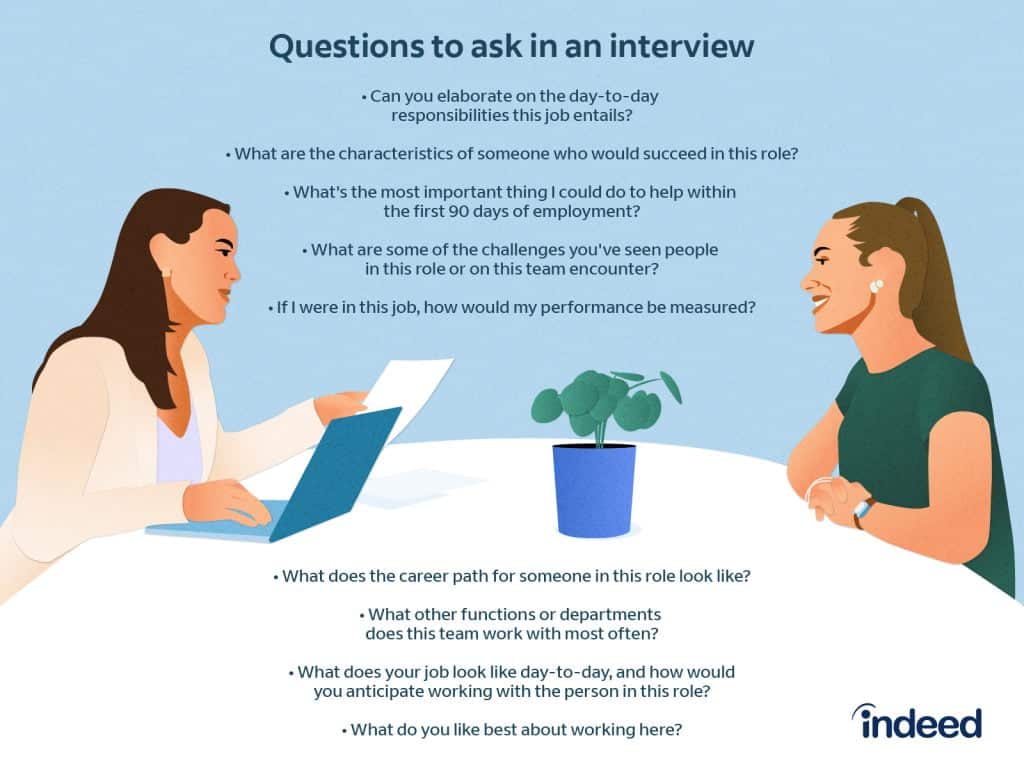
During the job interview process, employers often ask candidates a series of questions to assess their problem-solving skills and ability to think critically. One type of question commonly asked is the expected value interview question. These questions evaluate a candidate’s understanding of probability and their ability to make informed decisions based on uncertain outcomes.
Expected value is a concept used in probability theory to calculate the average outcome of an uncertain event. It is calculated by multiplying each possible outcome by its probability and summing them up. Expected value interview questions typically present a scenario with multiple options and ask the candidate to determine the option with the highest expected value.
Preparing for expected value interview questions can help candidates showcase their analytical thinking and decision-making abilities. It is essential to understand the concept of expected value and practice solving similar problems to increase your chances of success in the interview.
See These Expected Value Interview Questions
- What is the expected value of rolling a fair six-sided die?
- If you flip a fair coin twice, what is the expected value of getting at least one head?
- You are offered a game in which you flip a fair coin. If it lands on heads, you win $10, and if it lands on tails, you lose $5. What is the expected value of playing this game?
- A bag contains 5 red balls and 3 blue balls. If you randomly draw one ball from the bag without replacement, what is the expected value of drawing a red ball?
- You are playing a card game with a standard deck of 52 cards. If you draw one card, what is the expected value of drawing an ace?
- Suppose you are offered a bet in which you have a 70% chance of winning $100 and a 30% chance of losing $50. What is the expected value of taking this bet?
- If you have a 1/3 chance of winning $500 and a 2/3 chance of losing $200, what is the expected value of taking this bet?
- What is the expected value of rolling a pair of fair six-sided dice and summing the numbers rolled?
- If you draw two cards from a standard deck without replacement, what is the expected value of drawing two hearts?
- You are offered a game in which you roll a fair six-sided die. If it lands on an even number, you win $10, and if it lands on an odd number, you lose $5. What is the expected value of playing this game?
- If you have a 1/4 chance of winning $100 and a 3/4 chance of losing $50, what is the expected value of taking this bet?
- What is the expected value of flipping a fair coin three times and getting at least two heads?
- If you draw three cards from a standard deck without replacement, what is the expected value of drawing three diamonds?
- You are playing a game with a spinner divided into four equal sections labeled 1, 2, 3, and 4. If the spinner lands on an odd number, you win $20, and if it lands on an even number, you lose $10. What is the expected value of playing this game?
- If you have a 1/5 chance of winning $200 and a 4/5 chance of losing $100, what is the expected value of taking this bet?
- What is the expected value of rolling a fair six-sided die and getting a number greater than 3?
- If you draw four cards from a standard deck without replacement, what is the expected value of drawing four spades?
- You are offered a game in which you flip a fair coin. If it lands on heads, you win $5, and if it lands on tails, you lose $2. What is the expected value of playing this game?
- If you have a 1/2 chance of winning $50 and a 1/2 chance of losing $25, what is the expected value of taking this bet?
- What is the expected value of rolling a pair of fair six-sided dice and getting a sum of 7?
- If you draw five cards from a standard deck without replacement, what is the expected value of drawing five clubs?
- You are playing a game with a spinner divided into five equal sections labeled A, B, C, D, and E. If the spinner lands on A, you win $15, if it lands on B, you win $10, and if it lands on C, D, or E, you lose $5. What is the expected value of playing this game?
- If you have a 1/6 chance of winning $150 and a 5/6 chance of losing $75, what is the expected value of taking this bet?
- What is the expected value of flipping a fair coin four times and getting at least three heads?
- If you draw six cards from a standard deck without replacement, what is the expected value of drawing six hearts?
- You are offered a game in which you roll a fair six-sided die. If it lands on a multiple of 3, you win $15, and if it lands on any other number, you lose $10. What is the expected value of playing this game?
- If you have a 1/7 chance of winning $250 and a 6/7 chance of losing $125, what is the expected value of taking this bet?
- What is the expected value of rolling a fair six-sided die and getting an odd number?
- If you draw seven cards from a standard deck without replacement, what is the expected value of drawing seven diamonds?
- You are playing a game with a spinner divided into six equal sections labeled 1, 2, 3, 4, 5, and 6. If the spinner lands on a prime number, you win $25, and if it lands on a composite number, you lose $15. What is the expected value of playing this game?
- If you have a 1/8 chance of winning $300 and a 7/8 chance of losing $150, what is the expected value of taking this bet?
- What is the expected value of flipping a fair coin five times and getting at least four heads?
- If you draw eight cards from a standard deck without replacement, what is the expected value of drawing eight spades?
- You are offered a game in which you roll a fair six-sided die. If it lands on a number less than 5, you win $20, and if it lands on 5 or 6, you lose $15. What is the expected value of playing this game?
- If you have a 1/9 chance of winning $350 and an 8/9 chance of losing $175, what is the expected value of taking this bet?
- What is the expected value of rolling a fair six-sided die and getting a prime number?
- If you draw nine cards from a standard deck without replacement, what is the expected value of drawing nine hearts?
- You are playing a game with a spinner divided into seven equal sections labeled A, B, C, D, E, F, and G. If the spinner lands on A or B, you win $30, if it lands on C or D, you win $20, and if it lands on E, F, or G, you lose $10. What is the expected value of playing this game?
- If you have a 1/10 chance of winning $400 and a 9/10 chance of losing $200, what is the expected value of taking this bet?
- What is the expected value of flipping a fair coin six times and getting at least five heads?
- If you draw ten cards from a standard deck without replacement, what is the expected value of drawing ten clubs?
- You are offered a game in which you roll a fair six-sided die. If it lands on a number greater than 2, you win $25, and if it lands on 1 or 2, you lose $20. What is the expected value of playing this game?
- If you have a 1/11 chance of winning $450 and a 10/11 chance of losing $225, what is the expected value of taking this bet?
- What is the expected value of rolling a fair six-sided die and getting a number less than 4?
- If you draw eleven cards from a standard deck without replacement, what is the expected value of drawing eleven diamonds?
- You are playing a game with a spinner divided into eight equal sections labeled 1, 2, 3, 4, 5, 6, 7, and 8. If the spinner lands on a multiple of 4, you win $35, and if it lands on any other number, you lose $25. What is the expected value of playing this game?
- If you have a 1/12 chance of winning $500 and an 11/12 chance of losing $250, what is the expected value of taking this bet?
These expected value interview questions are just a sample of the types of problems you may encounter during a job interview. It is important to familiarize yourself with the concept of expected value and practice similar questions to enhance your problem-solving skills. By demonstrating your ability to analyze uncertain outcomes and make informed decisions, you can impress potential employers and increase your chances of landing the job.






