
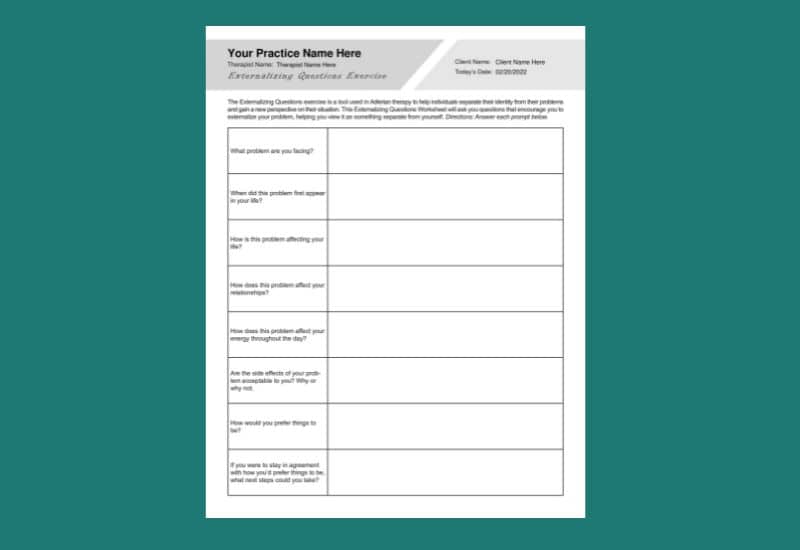
When it comes to problem-solving or decision-making processes, asking the right questions is crucial. Externalizing questions are a powerful tool that can help individuals and teams gain a fresh perspective, challenge assumptions, and find innovative solutions. These types of questions encourage thinking beyond the immediate problem and can lead to new insights and possibilities.
Externalizing questions are designed to shift the focus from the individual or internal factors to external factors. By doing so, they allow people to step outside of their own perspective and consider alternative viewpoints. This can be particularly helpful in breaking free from limiting beliefs or habitual thinking patterns that may be hindering progress.
Whether you are a coach, a leader, or simply looking to improve your problem-solving skills, incorporating externalizing questions into your toolkit can be immensely beneficial. These questions can help you gain a deeper understanding of the problem at hand, explore different angles, and uncover new opportunities for growth and development.
See these externalizing questions
- What would [insert name of a successful person] do in this situation?
- How would an outsider view this problem?
- What would happen if we completely ignored our current constraints?
- What are some unconventional approaches we could take?
- What if failure was not an option?
- How would a child approach this problem?
- What assumptions are we making that might be limiting our options?
- What if we approached this problem from a completely different industry?
- What resources or expertise do we currently lack?
- How might someone from a different cultural background approach this?
- What if we had unlimited time and resources?
- What can we learn from similar problems in the past?
- What would happen if we reversed our current strategy?
- How might technology help us solve this problem?
- What if we asked our customers for their input?
- What would a competitor do in this situation?
- What if we completely changed our target audience?
- How might nature solve this problem?
- What if we approached this problem as a game?
- What would a mentor or advisor suggest?
- How might we leverage existing partnerships or collaborations?
- What if we had all the necessary data at our disposal?
- What can we learn from successful examples in other industries?
- What if we approached this problem from a different geographical location?
- How would we solve this problem if money was not a factor?
- What if we completely changed our business model?
- What if we approached this problem as a team sport?
- What would a wise old sage advise us to do?
- What if we had access to the latest technology?
- How might we involve the community in finding a solution?
- What if we focused on the long-term impact rather than short-term gains?
- What can we learn from historical events that are similar to this problem?
- What if we approached this problem as an artist?
- How might we leverage social media or online platforms?
- What if we completely changed our organizational structure?
- What would a visionary leader do in this situation?
- How might we involve customers in the problem-solving process?
- What if we approached this problem with a beginner’s mind?
- What can we learn from other cultures or traditions?
- What if we focused on the emotional impact of our solution?
- How might we collaborate with other organizations or industries?
- What if we completely changed our marketing strategy?
- What would a renowned expert suggest?
These externalizing questions are just a starting point. Feel free to adapt and modify them to suit your specific needs and context. Remember, the key is to encourage a shift in perspective and open up new possibilities for creative problem-solving. By incorporating externalizing questions into your practice, you can unlock fresh insights and uncover innovative solutions.






