
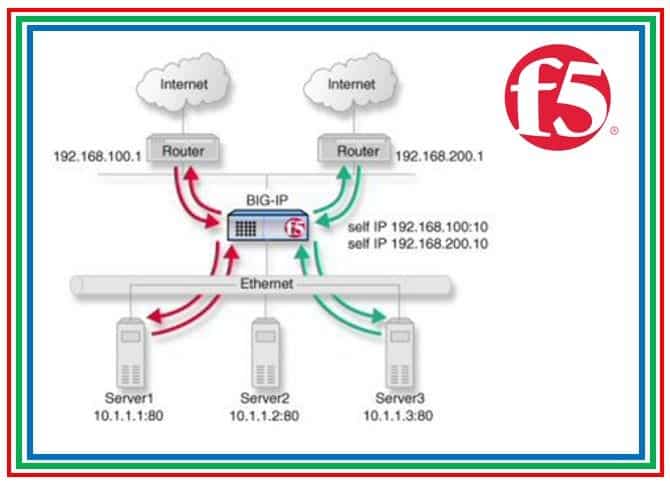
F5 Load Balancer is a widely used networking device that distributes network traffic across multiple servers or resources to ensure high availability and efficient utilization of resources. As F5 Load Balancers play a crucial role in network infrastructure, it is essential for organizations to hire professionals who possess the necessary skills and knowledge to manage and optimize these devices. To help employers in the hiring process, we have compiled a list of commonly asked F5 Load Balancer interview questions.
Whether you are a job seeker preparing for an interview or an employer looking to assess the skills of potential candidates, these interview questions will help you evaluate the candidate’s proficiency in F5 Load Balancer configuration, troubleshooting, and management.
Read on to discover a comprehensive list of F5 Load Balancer interview questions that cover various aspects of load balancing, traffic management, security, and performance optimization.
See these f5 load balancer interview questions
- What is a load balancer and how does it work?
- What are the different types of load balancing algorithms supported by F5 Load Balancer?
- Explain the difference between active-active and active-passive load balancing modes.
- What is SSL offloading and why is it beneficial?
- How do you configure SSL offloading on an F5 Load Balancer?
- What is the purpose of iRules in F5 Load Balancer?
- How do you troubleshoot pool member status issues?
- What is persistence and why is it important in load balancing?
- How does F5 Load Balancer handle session persistence?
- Explain the concept of health monitors in F5 Load Balancer.
- How do you configure a health monitor for a pool in F5 Load Balancer?
- What are the benefits of using iApps in F5 Load Balancer?
- How do you configure iApps in F5 Load Balancer?
- What is SNAT and how does it work in F5 Load Balancer?
- How do you troubleshoot SNAT configuration issues?
- What is the difference between a virtual server and a pool in F5 Load Balancer?
- How do you configure a virtual server in F5 Load Balancer?
- Explain the concept of content switching in F5 Load Balancer.
- What is the purpose of iRules in F5 Load Balancer?
- How do you troubleshoot HTTP header manipulation issues in F5 Load Balancer?
- What are the benefits of using iRules in F5 Load Balancer?
- How do you configure iRules in F5 Load Balancer?
- What is the difference between a local traffic policy and a global traffic policy in F5 Load Balancer?
- Explain the concept of SSL termination in F5 Load Balancer.
- How do you configure SSL termination on an F5 Load Balancer?
- What are some common SSL certificate management challenges in F5 Load Balancer?
- How do you troubleshoot SSL certificate installation issues in F5 Load Balancer?
- What is the purpose of iApps in F5 Load Balancer?
- How do you configure iApps in F5 Load Balancer?
- What is the difference between a virtual server and a pool in F5 Load Balancer?
- How do you configure a virtual server in F5 Load Balancer?
- Explain the concept of content switching in F5 Load Balancer.
- What is the purpose of iRules in F5 Load Balancer?
- How do you troubleshoot HTTP header manipulation issues in F5 Load Balancer?
- What are the benefits of using iRules in F5 Load Balancer?
- How do you configure iRules in F5 Load Balancer?
- What is the difference between a local traffic policy and a global traffic policy in F5 Load Balancer?
- Explain the concept of SSL termination in F5 Load Balancer.
- How do you configure SSL termination on an F5 Load Balancer?
- What are some common SSL certificate management challenges in F5 Load Balancer?
- How do you troubleshoot SSL certificate installation issues in F5 Load Balancer?
These are just a few examples of the many interview questions you can use to assess a candidate’s knowledge and skills in F5 Load Balancer configuration and management. Use this list as a starting point and tailor your questions to the specific requirements of your organization.
Remember, hiring a competent F5 Load Balancer professional can significantly enhance your network infrastructure’s performance, security, and availability. Take the time to thoroughly evaluate candidates and choose the right fit for your organization’s needs.






