
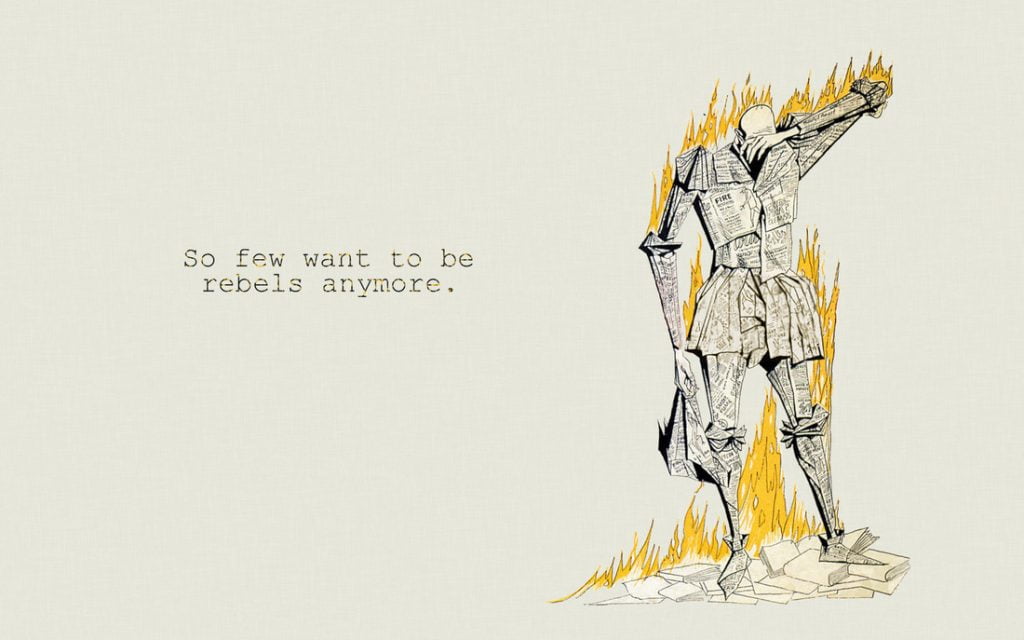
Ray Bradbury’s “Fahrenheit 451” is a dystopian novel that explores the dangers of a society devoid of critical thinking and the power of literature. Central to the narrative is the pervasive use of fire as a symbol of destruction and rebirth. Fire is not only a literal element in the story but also a metaphor for the destructive nature of censorship and ignorance. Throughout the novel, Bradbury employs powerful quotes that highlight the multifaceted symbolism of fire, allowing readers to delve deeper into the themes and messages of the story.
In “Fahrenheit 451,” fire is initially portrayed as a tool used by the government to suppress knowledge and control the masses. Firemen, instead of extinguishing fires, are tasked with burning books, which are seen as dangerous sources of independent thought. The following quotes illustrate this oppressive use of fire:
Read these fire symbolism in Fahrenheit 451 quotes:
“It was a pleasure to burn.” – Guy Montag
“With the brass nozzle in his fists, with this great python spitting its venomous kerosene upon the world, the blood pounded in his head, and his hands were the hands of some amazing conductor playing all the symphonies of blazing and burning to bring down the tatters and charcoal ruins of history.” – Ray Bradbury
“Remember, the firemen are rarely necessary. The public itself stopped reading of its own accord.” – Captain Beatty
“We shall this day light such a candle, by God’s grace, in England, as I trust shall never be put out.” – Latimer
“A book is a loaded gun in the house next door.” – Ray Bradbury
“The books leapt and danced like roasted birds, their wings ablaze with red and yellow feathers.” – Ray Bradbury
As the story progresses, fire takes on a different meaning as a symbol of renewal and rebirth. It represents the transformative power of knowledge and the potential for change. The following quotes reflect this shift in symbolism:
“But fire is a good thing. It’s a powerful cleansing agent.” – Faber
“He wanted above all, like the old joke, to shove a marshmallow on a stick in the furnace, while the flapping pigeon-winged books died on the porch and lawn of the house.” – Ray Bradbury
“We have everything we need to be happy, but we aren’t happy. Something’s missing. I looked around. The only thing I positively knew was gone was the books I’d burned in ten or twelve years.” – Guy Montag
“We’re going to meet a lot of lonely people in the next week and the next month and the next year. And when they ask us what we’re doing, you can say, We’re remembering. That’s where we’ll win out in the long run.” – Guy Montag
“For it is a mad world and it will get madder if we allow the minorities, be they dwarf or giant, orangutan or dolphin, nuclear-head or water conservationalist, pro-computerologist or Neo-Luddite, simpleton or sage, to interfere with aesthetics.” – Beatty
The use of fire symbolism in “Fahrenheit 451” adds depth and complexity to the narrative, allowing readers to reflect on the dangers of censorship, the power of knowledge, and the potential for change. These quotes serve as reminders of the transformative nature of fire and its significance in the novel’s exploration of societal issues. By understanding the symbolism behind fire, readers can gain a deeper appreciation for the themes and messages conveyed in Bradbury’s masterpiece.






