
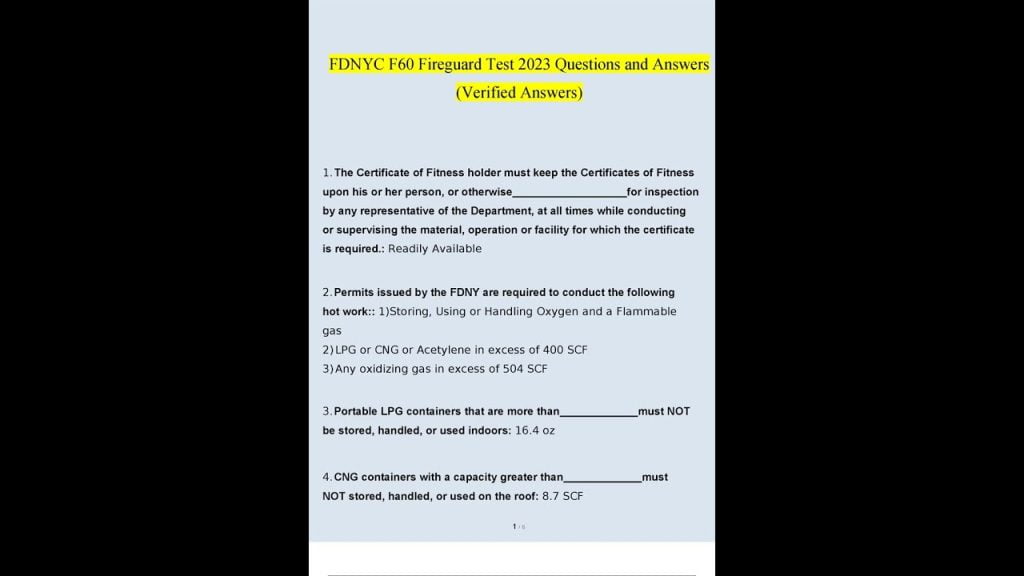
When it comes to fire safety, every individual must be well-informed and prepared. The Fire Department of New York (FDNY) has implemented the Fireguard test to ensure that individuals possess the necessary knowledge and skills to prevent and respond to fire emergencies. If you are preparing for the Fireguard test, it is essential to familiarize yourself with the types of questions you may encounter. In this article, we have compiled a comprehensive list of fireguard test questions to help you prepare effectively.
The Fireguard test covers various aspects of fire safety, including fire prevention, fire extinguisher usage, emergency evacuation procedures, and fire safety regulations. By reviewing these questions, you can enhance your understanding of fire safety principles and increase your chances of passing the Fireguard test with flying colors.
Remember, fire safety is everyone’s responsibility. By equipping yourself with the knowledge and skills to prevent and handle fire emergencies, you can play a vital role in ensuring the safety of yourself and those around you. Now, let’s dive into the fireguard test questions:
See these Fireguard Test Questions
- What is the first step you should take in the event of a fire?
- What are the three elements of the fire triangle?
- What are the different classes of fire extinguishers?
- How often should fire extinguishers be inspected?
- How can you identify the type of fire extinguisher?
- What is the PASS technique when using a fire extinguisher?
- When should you attempt to extinguish a fire?
- What are the main causes of electrical fires?
- What should you do if your clothes catch fire?
- What is the maximum occupancy for a room based on fire regulations?
- How often should fire drills be conducted in a workplace?
- What is the purpose of a fire safety plan?
- What is the importance of having clear exit routes?
- What are the different types of fire alarms?
- What should you do if the fire alarm sounds?
- What are the steps to take when evacuating a building?
- What is the role of a Fireguard in an emergency situation?
- What are the potential hazards of smoking in prohibited areas?
- What are the guidelines for storing flammable materials?
- What are the different types of fire suppression systems?
- What is the purpose of fire safety inspections?
- What are the requirements for maintaining clear fire exits in a building?
- What precautions should be taken when handling combustible liquids?
- What are the safety measures for preventing kitchen fires?
- What are the responsibilities of a Fireguard during a fire drill?
- What is the importance of reporting fire hazards?
- What are the potential dangers of overcrowding in a room during an emergency?
- What is the role of fire safety signage?
- What are the common causes of fire in residential buildings?
- What measures can be taken to prevent fires in high-rise buildings?
- What should be included in a fire safety inspection checklist?
- What are the requirements for maintaining fire extinguishers in a workplace?
- What are the steps to take when encountering a smoke-filled area?
- What are the different types of fire sprinkler systems?
- What should you do if someone is trapped in a burning building?
- What are the potential risks of using extension cords?
- What are the safety measures for preventing fires in electrical panels?
- What should you do if you discover a fire in a confined space?
- What are the guidelines for storing and handling compressed gas cylinders?
- What are the responsibilities of a Fireguard in a multi-story building?
- What are the potential hazards of blocked fire exits?
- What should you do if a fire re-ignites after being extinguished?
- What are the primary causes of fires in industrial settings?
By thoroughly studying and understanding these fireguard test questions, you will be well-prepared to demonstrate your knowledge and skills in fire safety. Remember to always prioritize safety and take the necessary precautions to prevent and respond to fire emergencies effectively.






