
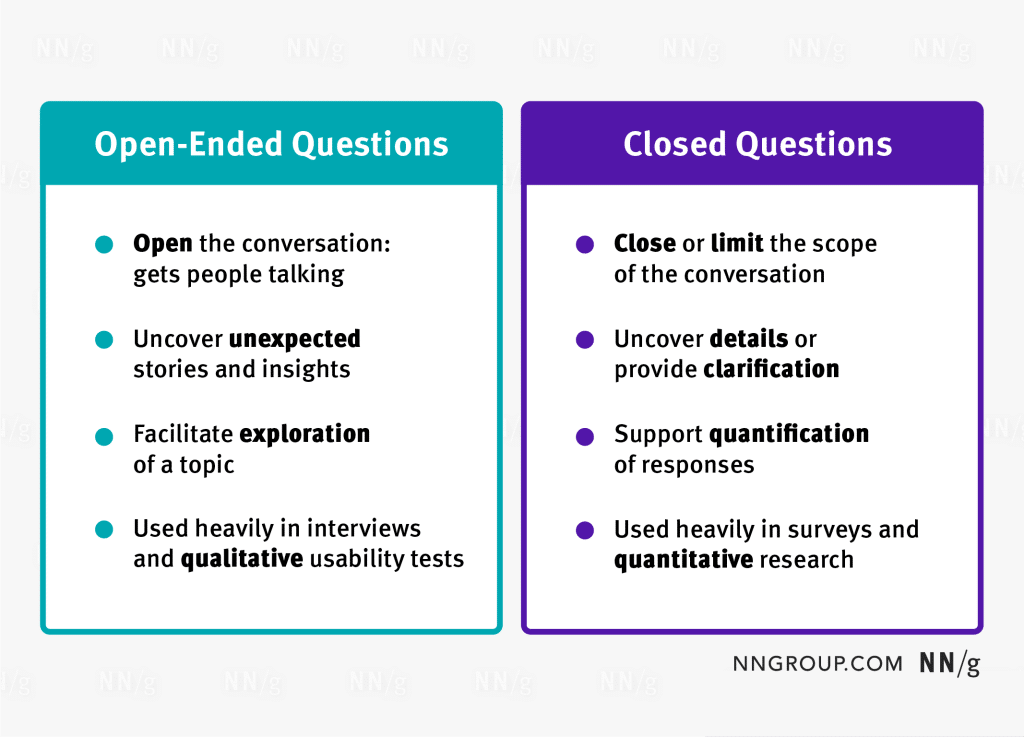
When it comes to communication, asking questions is an essential tool. Questions allow us to gather information, clarify doubts, and engage in meaningful conversations. One type of question that is commonly used is a fixed-alternative question. In this article, we will explore what fixed-alternative questions are and provide a list of examples to help you understand their usage.
A fixed-alternative question is a type of question that presents a limited number of predefined options as possible answers. These questions are often used to inquire about preferences, choices, or opinions. The options provided in a fixed-alternative question are mutually exclusive, meaning that only one option can be chosen. This type of question is characterized by the use of words like “either,” “or,” “neither,” or “nor” to present the alternatives.
Fixed-alternative questions are commonly used in surveys, interviews, and everyday conversations. They allow the questioner to gather specific information and offer the respondent a clear set of options to choose from. These questions are particularly useful when seeking a direct answer or when there is a need to compare and contrast different choices.
See these fixed-alternative questions
- Do you prefer coffee or tea?
- Would you rather go to the beach or the mountains?
- Do you like dogs or cats?
- Do you enjoy reading fiction or non-fiction?
- Do you prefer summer or winter?
- Would you rather watch a movie or read a book?
- Do you like to cook or eat out?
- Do you prefer action movies or romantic comedies?
- Do you enjoy hiking or biking?
- Do you prefer sweet or savory snacks?
- Would you rather travel by plane or train?
- Do you like to exercise in the morning or evening?
- Do you prefer Android or iOS?
- Would you rather stay at a hotel or a hostel?
- Do you enjoy listening to music or podcasts?
- Do you prefer to work alone or in a team?
- Would you rather visit a museum or a park?
- Do you like to dance or sing?
- Do you prefer fiction or non-fiction books?
- Would you rather have a cat or a dog as a pet?
- Do you enjoy swimming in the pool or the ocean?
- Do you prefer to shop online or in-store?
- Would you rather watch a comedy or a thriller?
- Do you like to travel by car or by train?
- Do you prefer hot or cold weather?
- Would you rather go for a run or a bike ride?
- Do you enjoy eating out or cooking at home?
- Do you prefer rock or pop music?
- Do you like to watch sports or play sports?
- Would you rather go on a road trip or a beach vacation?
- Do you enjoy watching movies or TV shows?
- Do you prefer to work in an office or remotely?
- Would you rather go camping or stay in a hotel?
- Do you like to listen to podcasts or audiobooks?
- Do you prefer to exercise indoors or outdoors?
- Would you rather visit a historical site or a natural landmark?
- Do you enjoy painting or drawing?
- Do you prefer to read e-books or physical books?
- Would you rather have a morning or evening workout?
- Do you like to watch documentaries or reality shows?
- Do you prefer to work in the morning or evening?
- Would you rather have a city or countryside lifestyle?
- Do you enjoy playing video games or board games?
Fixed-alternative questions provide a structured approach to gather information and engage in conversations. By offering predefined options, these questions simplify decision-making and allow for a more focused discussion. Whether you are conducting a survey or simply trying to get to know someone better, fixed-alternative questions can be a valuable tool to facilitate communication.






