
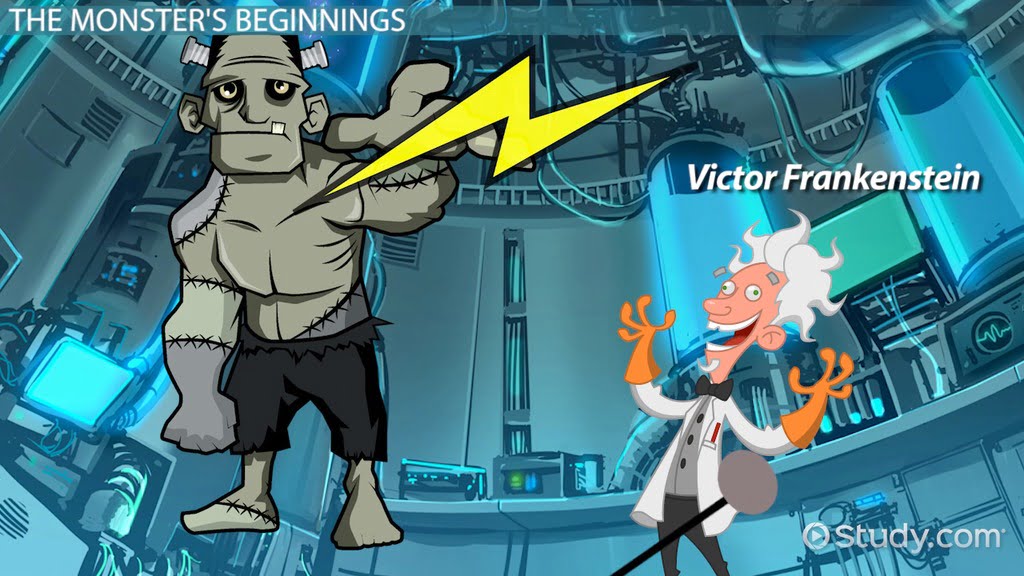
When it comes to the novel “Frankenstein” by Mary Shelley, one of the most debated themes is the concept of nature versus nurture. Throughout the story, readers are left questioning whether the creature’s actions were a result of his inherent nature or if they were shaped by the environment he was exposed to. This ongoing debate has led to numerous thought-provoking quotes that delve into the complex relationship between nature and nurture.
Shelley’s exploration of the nature versus nurture debate can be seen in quotes such as “I was benevolent and good; misery made me a fiend” where the creature reflects upon how his initial nature was tainted by the harsh treatment he received from society. This quote suggests that his actions were a direct result of the nurture he experienced, rather than his inherent nature. Similarly, the quote “I, the miserable and the abandoned, am an abortion, to be spurned at, and kicked, and trampled on” highlights the impact of societal rejection on the creature’s development.
Another perspective on the nature versus nurture debate is showcased in quotes like “I ought to be thy Adam, but I am rather the fallen angel” where the creature questions his own identity and whether his actions are a reflection of his nature or the result of his unfortunate circumstances. This quote suggests that the creature’s actions may be a combination of both nature and nurture, as his inherent nature is juxtaposed with the negative influences he has encountered.
Read these Frankenstein Nature vs Nurture Quotes
“I was benevolent and good; misery made me a fiend.”
“I, the miserable and the abandoned, am an abortion, to be spurned at, and kicked, and trampled on.”
“I ought to be thy Adam, but I am rather the fallen angel.”
“Nothing is so painful to the human mind as a great and sudden change.”
“I am malicious because I am miserable.”
“You seek for knowledge and wisdom, as I once did; and I ardently hope that the gratification of your wishes may not be a serpent to sting you, as mine has been.”
“I am alone and miserable; man will not associate with me; but one as deformed and horrible as myself would not deny herself to me.”
“Cursed, cursed creator! Why did I live?”
“I have love in me the likes of which you can scarcely imagine and rage the likes of which you would not believe. If I cannot satisfy the one, I will indulge the other.”
“Even broken in spirit as he is, no one can feel more deeply than he does the beauties of nature. The starry sky, the sea, and every sight afforded by these wonderful regions seem still to have the power of elevating his soul from earth.”
“I am full of fears; for if I fail there, I am an outcast in the world forever.”
“I was benevolent and good; misery made me a fiend. Make me happy, and I shall again be virtuous.”
“The companions of our childhood always possess a certain power over our minds which hardly any later friend can obtain.”
“I do know that for the sympathy of one living being, I would make peace with all. I have love in me the likes of which you can scarcely imagine and rage the likes of which you would not believe.”
“The world was to me a secret which I desired to divine.”
“I am a blasted tree; the bolt has entered my soul; and I felt then that I should survive to exhibit what I shall soon cease to be—a miserable spectacle of wrecked humanity, pitiable to others and intolerable to myself.”
“I am alone and miserable; man will not associate with me; but one as deformed and horrible as myself would not deny herself to me.”
“The cup of life was poisoned forever, and although the sun shone upon me as upon the happy and gay of heart, I saw around me nothing but a dense and frightful darkness, penetrated by no light but the glimmer of two eyes that glared upon me.”
“I am full of fears; for if I fail there, I am an outcast in the world forever.”
“I have love in me the likes of which you can scarcely imagine and rage the likes of which you would not believe. If I cannot satisfy the one, I will indulge the other.”
These quotes from “Frankenstein” shed light on the ongoing nature versus nurture debate. They highlight the complex relationship between an individual’s inherent nature and the influences of their environment. Whether it is the creature’s reflection on his own actions or his questioning of his identity, these quotes provoke deeper thought on the impact of nature and nurture in shaping one’s character.






