
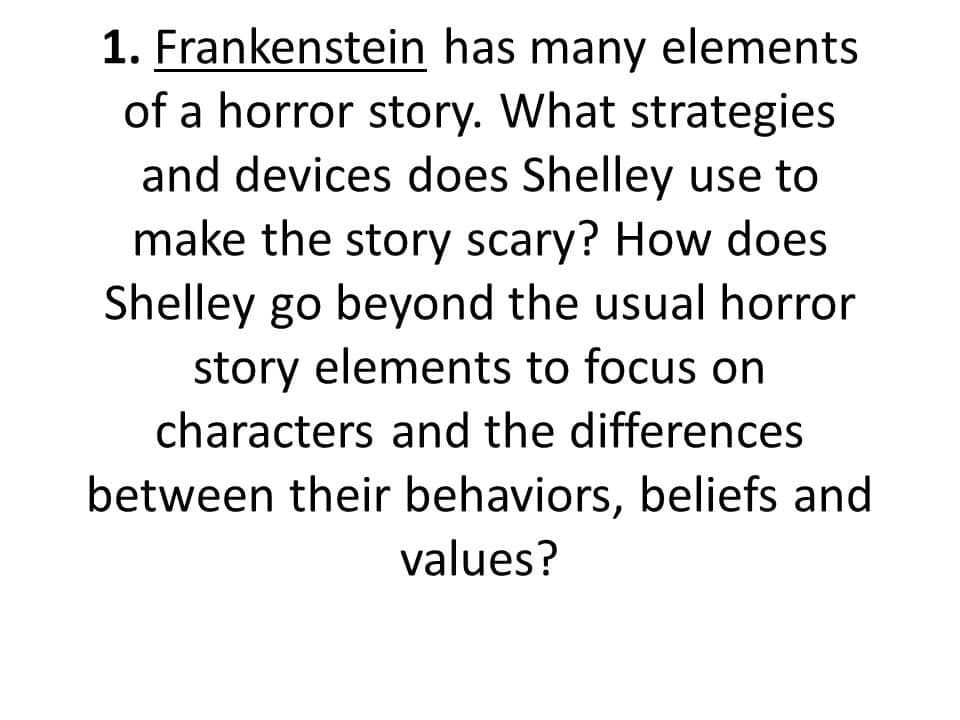
Frankenstein, written by Mary Shelley, is a classic novel that explores themes of science, morality, and the consequences of playing god. It is a thought-provoking book that raises many questions about the nature of humanity and the ethical implications of scientific advancement. Socratic seminars are a great way to engage students in deep discussions about these complex topics. In this article, we provide a comprehensive list of Frankenstein Socratic seminar questions and answers that can help facilitate meaningful conversations in the classroom.
Before diving into the questions, it’s important to understand what a Socratic seminar is. It is a student-led discussion where participants analyze a text, such as Frankenstein, and explore its deeper meanings through open-ended questions. The goal is to foster critical thinking, active listening, and respectful dialogue. By using these questions during the seminar, students can delve into the complexities of the novel and gain a deeper understanding of its themes and messages.
Now, let’s explore some of the most engaging Frankenstein Socratic seminar questions and answers:
See these Frankenstein Socratic seminar questions and answers:
- What is the role of ambition in the novel?
- How does Shelley use the concept of creation to explore the human condition?
- What are the consequences of Victor Frankenstein’s actions?
- Is the creature inherently evil, or is he a product of his environment?
- What is the significance of the novel’s subtitle, “The Modern Prometheus”?
- How does Frankenstein critique the Romantic ideals of the time?
- What is the relationship between science and morality in the novel?
- Is Victor Frankenstein a sympathetic character? Why or why not?
- What is the role of nature in the novel?
- What does Frankenstein suggest about the dangers of unchecked scientific progress?
- How does the creature’s isolation contribute to his transformation?
- What is the impact of societal rejection on the creature’s development?
- Does Frankenstein present a feminist critique of society?
- What parallels can be drawn between Victor Frankenstein and the creature?
- What is the significance of the Arctic setting in the novel’s conclusion?
- How does Shelley use symbolism throughout the novel?
- What is the role of family and parental figures in Frankenstein?
- Does Frankenstein suggest that humans are inherently flawed?
- What is the role of knowledge and education in the novel?
- How does Frankenstein explore the theme of revenge?
- What is the significance of the creature’s inability to fit into society?
- How does the novel challenge traditional gender roles and expectations?
- What is the role of secrecy in Frankenstein?
- How does the novel explore the theme of loneliness and isolation?
- What is the relationship between science and nature in Frankenstein?
- Does Frankenstein advocate for the pursuit of knowledge at all costs?
- How does the novel address the ethical implications of scientific experimentation?
- What is the relevance of Frankenstein in today’s society?
- How does Shelley use narrative structure to convey meaning in the novel?
- What is the role of religion in Frankenstein?
- How does the novel challenge our notions of what it means to be human?
- What is the significance of the framing device in Frankenstein?
- How does the novel explore the theme of power and control?
- What is the impact of Victor Frankenstein’s abandonment of the creature?
- Does Frankenstein suggest that society is responsible for the creature’s actions?
- How does the creature’s acquisition of language affect his understanding of the world?
- What is the role of beauty and aesthetics in Frankenstein?
- How does the novel challenge our preconceived notions of monsters?
- What is the significance of the creature’s desire for companionship?
- Does Frankenstein present a critique of the scientific community?
- What lessons can be learned from Frankenstein about the dangers of playing god?
- How does the novel explore the theme of responsibility?
- What is the role of fate in Frankenstein?
These are just a few examples of the thought-provoking questions that can be used to stimulate discussion during a Frankenstein Socratic seminar. Remember, the goal of these seminars is not to find a right or wrong answer, but rather to encourage critical thinking and explore different perspectives. By engaging in these discussions, students can develop their analytical skills and gain a deeper appreciation for the complexities of Mary Shelley’s masterpiece.






