
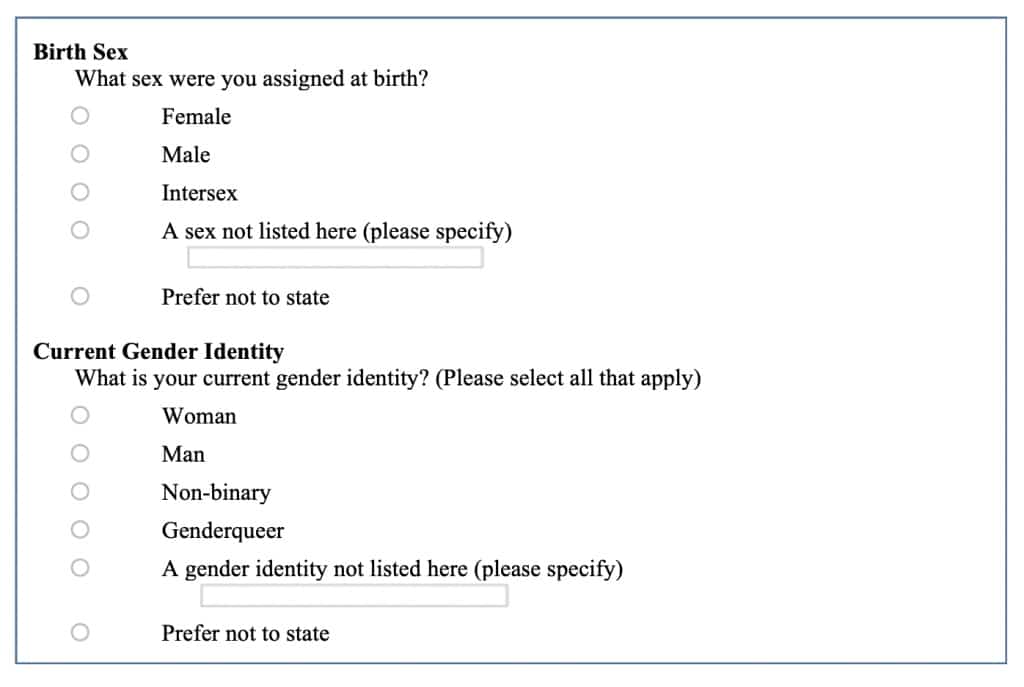
Gender questions on forms have become a topic of discussion and debate in recent years. As society becomes more aware and accepting of different gender identities, it has become important for organizations to update their forms to be more inclusive. These questions can have a significant impact on individuals who do not identify with traditional binary genders, and it is crucial to create a safe and inclusive environment for everyone. In this article, we will explore the importance of gender questions on forms and provide a list of gender-inclusive questions that can be used in various settings.
Gender questions on forms serve multiple purposes. They can provide valuable demographic information for organizations, help ensure equal representation, and contribute to a more inclusive society. By asking about gender identity, organizations can gain a better understanding of the diversity within their community or customer base. This data can then be used to inform decision-making processes and tailor services to better meet the needs of individuals of all gender identities.
Furthermore, including gender questions on forms can help break down barriers and promote inclusivity. Many individuals who do not identify with the traditional gender binary often feel excluded or invalidated when faced with forms that only provide options for male or female. By including gender-inclusive questions, organizations show that they recognize and respect the individuality of all individuals, regardless of their gender identity.
See these Gender Questions on Forms
- What is your gender identity?
- How do you identify your gender?
- Do you identify as male, female, or another gender?
- What pronouns do you use?
- Are you transgender?
- Which of the following best describes your gender?
- Do you identify as genderqueer?
- What is your assigned sex at birth?
- How do you personally define your gender?
- Do you identify as non-binary?
- What gender do you most identify with?
- Are you cisgender?
- What gender do you currently live as?
- Do you identify as a man, woman, or another gender?
- What gender were you assigned at birth?
- Do you identify as genderfluid?
- What is your preferred gender identity?
- Are you agender?
- What gender do you feel you embody?
- Do you identify as bigender?
- What is your gender expression?
- Are you gender nonconforming?
- What gender do you feel most comfortable with?
- Do you identify as Two-Spirit?
- What is your gender affiliation?
- Are you gender questioning?
- What gender do you feel best represents you?
- Do you identify as genderqueer?
- What gender do you feel connected to?
- Are you genderfluid?
- What gender do you prefer to be addressed as?
- Do you identify as non-binary?
- What gender do you resonate with?
- Are you third gender?
- What gender do you align with?
- Do you identify as androgynous?
- What gender do you identify as?
- Are you pangender?
- What gender do you present as?
- Do you identify as gender questioning?
- What is your gender preference?
- Are you gender nonconforming?
In conclusion, gender questions on forms play a vital role in creating inclusive environments and promoting diversity. By updating forms to include gender-inclusive questions, organizations can ensure that individuals of all gender identities feel seen, heard, and respected. It is important to remember that gender is a personal and individual experience, and inclusive forms can help validate and honor that experience. By embracing gender diversity, organizations can foster a more inclusive and accepting society.






