
Genetics is a fascinating field that explores the inheritance and variation of traits in living organisms. It plays a crucial role in understanding the genetic basis of diseases, evolution, and the development of new technologies. One effective way to test your knowledge and understanding of genetics is through multiple-choice questions.
In this article, we have compiled a list of multiple-choice questions that cover various topics in genetics. Whether you are a student preparing for an exam or simply curious about genetics, these questions will challenge your understanding and help you reinforce your knowledge.
Before diving into the questions, it is important to note that answering them correctly requires a solid understanding of genetic principles and concepts. Make sure to read each question carefully and consider all the options before selecting your answer. Now, let’s put your genetics knowledge to the test!
See these Genetics Questions Multiple Choice
- 1. What is the basic unit of heredity in living organisms?
- 2. Which molecule carries genetic information in cells?
- 3. In humans, how many chromosomes are present in each somatic cell?
- 4. What is the term for the physical appearance of an organism?
- 5. Which of the following is a sex-linked disorder?
- 6. What is the probability of obtaining a homozygous recessive offspring when crossing two heterozygous individuals?
- 7. Which process produces gametes?
- 8. What does the Law of Segregation state?
- 9. What is the term for the alternate forms of a gene?
- 10. What is the purpose of a Punnett square?
- 11. In a DNA molecule, adenine pairs with which other nucleotide?
- 12. What is the result of a frameshift mutation?
- 13. What is the function of tRNA in protein synthesis?
- 14. Which type of inheritance pattern results in the blending of traits?
- 15. What is the term for a change in the DNA sequence of a gene?
- 16. What is the purpose of gel electrophoresis in DNA analysis?
- 17. Which scientist is known as the “Father of Genetics”?
- 18. What is the probability of rolling a six on a fair six-sided die?
- 19. How many alleles are present in a diploid organism for a given gene?
- 20. Which technique allows scientists to cut DNA at specific sequences?
- 21. What is the purpose of the polymerase chain reaction (PCR)?
- 22. Which organelle is responsible for the production of ATP in eukaryotic cells?
- 23. What is the function of the enzyme helicase during DNA replication?
- 24. Which type of mutation does not alter the amino acid sequence of a protein?
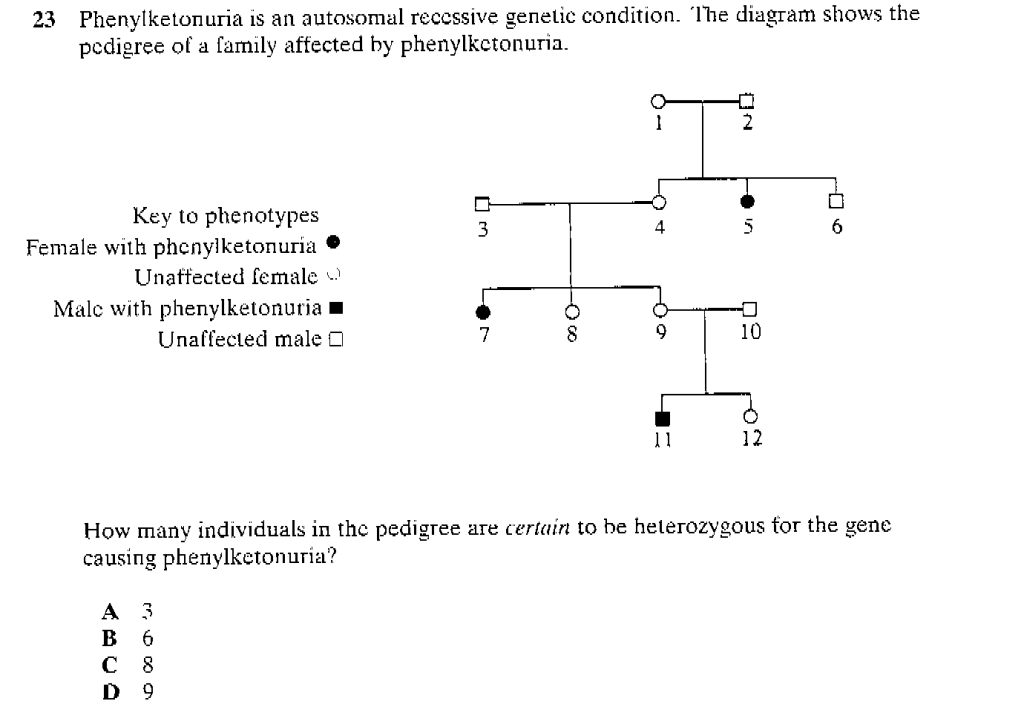
- 25. What is the purpose of a genetic pedigree?
- 26. In a dihybrid cross, how many different genotypes are possible in the offspring?
- 27. What is the purpose of the lac operon in bacteria?
- 28. Which type of inheritance pattern results in the presence of both dominant and recessive traits in an individual?
- 29. What is the term for the specific location of a gene on a chromosome?
- 30. In humans, which pair of chromosomes determines the sex of an individual?
- 31. What is the function of the enzyme DNA ligase during DNA replication?
- 32. Which process allows for the exchange of genetic material between homologous chromosomes?
- 33. What is the purpose of the Central Dogma of molecular biology?
- 34. Which type of mutation leads to the production of a non-functional protein?
- 35. What is the term for the genetic makeup of an organism?
- 36. In humans, which blood type is considered the universal donor?
- 37. What is the purpose of the Ames test in genetic toxicology?
- 38. Which type of inheritance pattern results in the presence of multiple alleles for a single gene?
- 39. What is the function of the enzyme RNA polymerase during transcription?
- 40. In a monohybrid cross, what is the genotypic ratio of the offspring when crossing two heterozygous individuals?
These genetics multiple-choice questions cover a wide range of topics, including inheritance patterns, DNA structure and replication, protein synthesis, genetic disorders, and more. By answering these questions, you can assess your understanding of genetics and identify areas that may require further study.
Remember, genetics is a complex and evolving field, so it is important to stay updated with the latest research and discoveries. Keep exploring and digging deeper into the fascinating world of genetics!






