
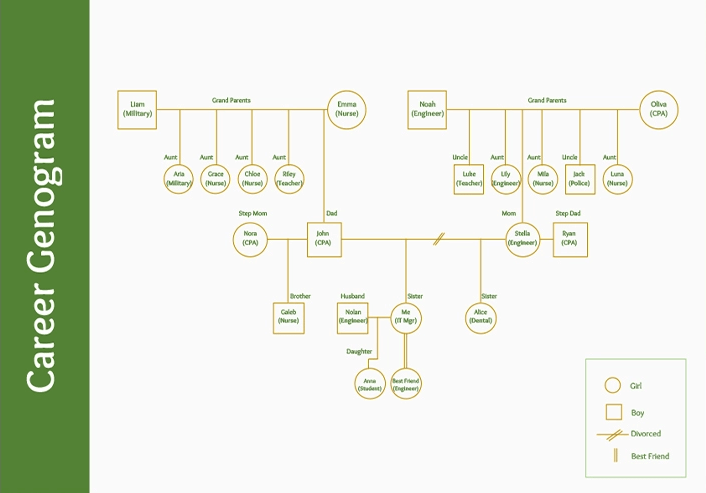
A genogram is a diagram that represents the relationships and interactions between family members across multiple generations. It is a powerful tool used in therapy, counseling, and social work to gain a comprehensive understanding of family dynamics and identify patterns that may impact an individual’s well-being. By asking the right genogram questions, professionals can delve deeper into family history, uncover hidden issues, and develop effective strategies for intervention.
In this article, we will explore a range of genogram questions that can help professionals gain valuable insights into the intricate web of family relationships. Whether you are a therapist, counselor, or someone interested in exploring your own family history, these questions will provide a starting point for understanding the complex dynamics that shape our lives.
Before we dive into the list of questions, it is important to remember that genograms are sensitive and personal tools. It is crucial to approach the process with empathy, respect, and sensitivity to avoid causing distress or triggering negative emotions. Always ensure that the individual or family is comfortable and willing to share their experiences.
See these genogram questions
- What is the structure of your immediate family?
- What are the roles and responsibilities of each family member?
- How are decision-making processes handled within the family?
- What is the history of mental health issues in your family?
- Has anyone in your family experienced addiction or substance abuse?
- Are there any instances of domestic violence or abuse within your family?
- What are the major life events that have shaped your family’s history?
- Is there a history of divorce or separation in your family?
- How does your family handle conflicts or disagreements?
- What are the communication patterns within your family?
- Are there any patterns of chronic illness or genetic conditions?
- Have there been any major relocations or migrations within your family?
- What are the religious or cultural traditions practiced within your family?
- How do you define and express love within your family?
- What are the expectations and pressures placed on family members?
- Are there any patterns of educational or career achievements?
- How do family members support each other emotionally?
- What is the level of involvement in extended family relationships?
- Are there any secrets or unresolved conflicts within your family?
- What are the financial dynamics within your family?
- How do family members cope with stress or adversity?
- What are the roles of gender and sexuality within your family?
- How has your family dealt with significant losses or grief?
- Are there any patterns of estrangement or disconnection within your family?
- What are the cultural or societal influences on your family?
- How does your family celebrate or commemorate important milestones?
- What are the expectations regarding marriage and starting a family?
- Are there any patterns of favoritism or scapegoating within your family?
- How does your family handle issues related to money or inheritance?
- What are the attitudes towards mental health and seeking therapy within your family?
- Are there any patterns of adoption or foster care within your family?
- How do family members express and handle emotions?
- What are the generational differences in attitudes and values within your family?
- How has your family been influenced by historical events or social movements?
- Are there any patterns of immigration or cultural assimilation within your family?
- What are the expectations regarding gender roles and responsibilities within your family?
- How does your family define success and achievement?
- What are the patterns of sibling relationships within your family?
- How have family members dealt with major life transitions or milestones?
- Are there any patterns of estrangement or disconnection within your family?
- What are the cultural or societal influences on your family?
- How does your family celebrate or commemorate important milestones?
- What are the expectations regarding marriage and starting a family?
- Are there any patterns of favoritism or scapegoating within your family?
- How does your family handle issues related to money or inheritance?
- What are the attitudes towards mental health and seeking therapy within your family?
- Are there any patterns of adoption or foster care within your family?
These genogram questions are just a starting point for exploring family dynamics and relationships. Remember, every family is unique, and it is essential to adapt and tailor your questions according to the specific context and needs of the individuals you are working with. By creating a safe and supportive environment, you can facilitate meaningful conversations and help individuals gain a deeper understanding of themselves and their family.






