
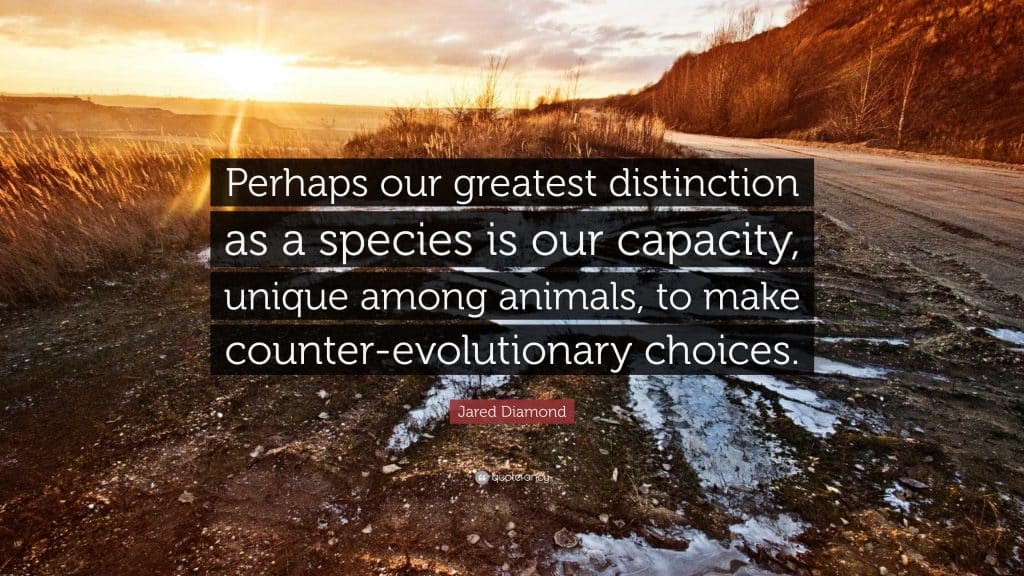
Guns, Germs, and Steel is a highly acclaimed book written by Jared Diamond, which provides a fascinating analysis of the factors that have shaped human societies throughout history. The book explores the reasons behind the unequal distribution of power and wealth between different civilizations. Diamond argues that geographical and environmental factors, rather than inherent intellectual or moral superiority, have played a significant role in determining the outcomes of different societies. This article presents a compilation of thought-provoking quotes from Guns, Germs, and Steel that shed light on the book’s central themes.
Throughout Guns, Germs, and Steel, Diamond emphasizes the importance of understanding the influence of geography and environment on human societies. He challenges the notion that certain cultures or races are inherently superior or inferior to others. Diamond argues that the uneven distribution of power and resources can be attributed to historical circumstances rather than innate abilities or characteristics. By examining the impact of geography, climate, and natural resources, Diamond provides a fresh perspective on the development of civilizations.
One of the key takeaways from Guns, Germs, and Steel is the concept of geographical determinism. Diamond suggests that the geographical characteristics of a region can significantly shape the course of history. He highlights how the availability of domesticable plants and animals, as well as the ease of diffusion of ideas and technologies, can either propel or hinder societal progress. These factors ultimately determine whether a society develops advanced technologies, complex political systems, and economic prosperity.
Read these Guns, Germs, and Steel Quotes
“History followed different courses for different peoples because of differences among peoples’ environments, not because of biological differences among peoples themselves.”
“Much of human history has consisted of unequal conflicts between the haves and the have-nots.”
“In short, Europe’s colonization of Africa had nothing to do with differences between European and African peoples themselves, as white racists assume. Rather, it was due to accidents of geography and biogeography—in particular, to the continents’ different areas, axes, and suites of wild plant and animal species. That is, the different historical trajectories of Africa and Europe stem ultimately from differences in real estate.”
“The striking differences between the long early history of Eurasia (much of it already summarized in this book) and the history of the other continents have been due not to innate Eurasian superiority but to differences in environmental endowments, specifically in the availability of wild plant and animal species that could be domesticated, and in the suitability of those species for intensive food production, for transport, and for other uses by humans.”
“In short, Europe’s colonization of Africa had nothing to do with differences between European and African peoples themselves, as white racists assume. Rather, it was due to accidents of geography and biogeography—in particular, to the continents’ different areas, axes, and suites of wild plant and animal species. That is, the different historical trajectories of Africa and Europe stem ultimately from differences in real estate.”
“Food production became feasible in only a few places in the world, and those few places were the sites of the world’s earliest civilizations.”
“The histories of the Fertile Crescent, China, and Mesoamerica provide three examples of how food production led to the rise of complex societies, and thus to the development of guns, germs, and steel.”
“Human societies were once all alike: without writing, without wheels, without steel, without money, and without states. That is, up until the end of the last Ice Age around 11,000 years ago, all peoples on all continents lived as small, mobile groups of hunter-gatherers, using essentially the same Stone Age tools and techniques for hunting game and gathering wild plant foods.”
“In short, Europe’s colonization of Africa had nothing to do with differences between European and African peoples themselves, as white racists assume. Rather, it was due to accidents of geography and biogeography—in particular, to the continents’ different areas, axes, and suites of wild plant and animal species. That is, the different historical trajectories of Africa and Europe stem ultimately from differences in real estate.”
“The striking differences between the long early history of Eurasia (much of it already summarized in this book) and the history of the other continents have been due not to innate Eurasian superiority but to differences in environmental endowments, specifically in the availability of wild plant and animal species that could be domesticated, and in the suitability of those species for intensive food production, for transport, and for other uses by humans.”
“Geography both facilitated and constrained the spread of peoples and their technologies. It affected the ease of diffusion of inventions, the opportunities for trade, the possibilities of conquest, and the areas available for settlement.”
“The natural resources of the environment determine what it is possible for a society to achieve in terms of economic production and wealth.”
“The opposite of poverty is not wealth; the opposite of poverty is health.”
“In short, Europe’s colonization of Africa had nothing to do with differences between European and African peoples themselves, as white racists assume. Rather, it was due to accidents of geography and biogeography—in particular, to the continents’ different areas, axes, and suites of wild plant and animal species. That is, the different historical trajectories of Africa and Europe stem ultimately from differences in real estate.”
“Food production became feasible in only a few places in the world, and those few places were the sites of the world’s earliest civilizations.”
“The histories of the Fertile Crescent, China, and Mesoamerica provide three examples of how food production led to the rise of complex societies, and thus to the development of guns, germs, and steel.”
“Human societies were once all alike: without writing, without wheels, without steel, without money, and without states. That is, up until the end of the last Ice Age around 11,000 years ago, all peoples on all continents lived as small, mobile groups of hunter-gatherers, using essentially the same Stone Age tools and techniques for hunting game and gathering wild plant foods.”
“Geography both facilitated and constrained the spread of peoples and their technologies. It affected the ease of diffusion of inventions, the opportunities for trade, the possibilities of conquest, and the areas available for settlement.”
“The natural resources of the environment determine what it is possible for a society to achieve in terms of economic production and wealth.”
“The opposite of poverty is not wealth; the opposite of poverty is health.”
These quotes from Guns, Germs, and Steel offer valuable insights into the factors that have shaped human societies. By challenging conventional explanations for societal differences, Jared Diamond opens up a new perspective on the course of history. Understanding the influence of geography, environment, and available resources is essential to comprehending the unequal distribution of power and wealth among civilizations. Guns, Germs, and Steel continues to be a thought-provoking book that prompts readers to reevaluate their understanding of human history.






