
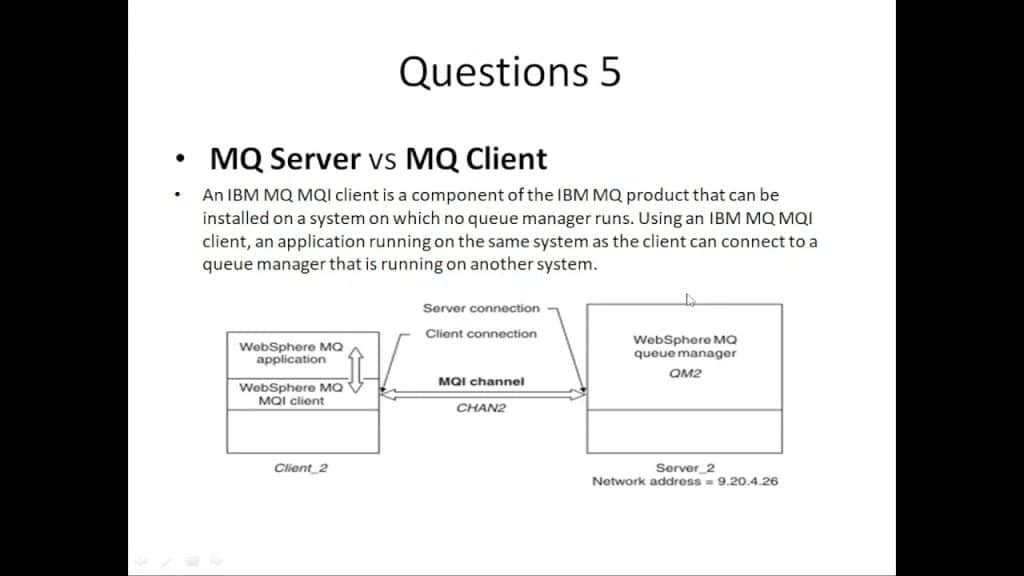
IBM MQ (formerly known as IBM WebSphere MQ) is a messaging middleware that enables applications to communicate with each other, even if they’re running on different platforms. It is widely used in enterprise environments to facilitate the reliable and secure exchange of information.
If you’re preparing for an interview for a position that involves working with IBM MQ, it is important to be familiar with the key concepts and functionalities of this messaging system. To help you in your preparation, we have compiled a list of commonly asked IBM MQ interview questions. By going through these questions, you can gain a better understanding of the technology and be better equipped to answer any interview questions related to IBM MQ.
Below, you will find a comprehensive list of IBM MQ interview questions that cover various topics related to this messaging system. These questions will test your knowledge of IBM MQ architecture, features, troubleshooting, and more.
See these IBM MQ interview questions
- What is IBM MQ?
- What are the key features of IBM MQ?
- How does IBM MQ ensure reliable message delivery?
- What is a message queue?
- What is a message channel?
- What is the difference between a queue and a topic?
- What is the purpose of a command server?
- What are the different types of messages supported by IBM MQ?
- What is a trigger message?
- Explain the process of message recovery in IBM MQ.
- How does IBM MQ handle message encryption?
- What is a dead-letter queue?
- How can you ensure message integrity in IBM MQ?
- What is the role of a channel initiator?
- Explain the concept of publish/subscribe in IBM MQ.
- What is a channel exit?
- How can you monitor IBM MQ?
- What is the difference between persistent and non-persistent messages?
- What are the advantages of using IBM MQ?
- How does IBM MQ handle message routing?
- What is the purpose of a transmission queue?
- Explain the concept of clustering in IBM MQ.
- What is a backout queue?
- How can you handle poison messages in IBM MQ?
- What is the role of a message broker in IBM MQ?
- How does IBM MQ handle message compression?
- What is the purpose of a channel sender?
- Explain the concept of message grouping in IBM MQ.
- How can you achieve load balancing in IBM MQ?
- What is the role of a channel receiver?
- What is the difference between synchronous and asynchronous messaging?
- How can you monitor the performance of IBM MQ?
- Explain the process of message transformation in IBM MQ.
- What is a subqueue?
- What is the purpose of a channel initiator?
- How can you handle poison messages in IBM MQ?
- What is the role of a message broker in IBM MQ?
- How does IBM MQ handle message compression?
- What is the purpose of a channel sender?
- Explain the concept of message grouping in IBM MQ.
- How can you achieve load balancing in IBM MQ?
- What is the role of a channel receiver?
- What is the difference between synchronous and asynchronous messaging?
- How can you monitor the performance of IBM MQ?
- Explain the process of message transformation in IBM MQ.
- What is a subqueue?
This is just a sample of the IBM MQ interview questions that you may come across during your job interview. It is essential to study and understand these questions to demonstrate your knowledge and expertise in IBM MQ effectively.






