
As a salesperson, your goal is not only to understand your customers’ needs but also to uncover the implications and consequences of those needs. This is where implication questions in SPIN selling come into play. By asking the right questions, you can help your customers realize the true impact of their problems and position yourself as the solution provider. In this article, we will explore the power of implication questions and provide you with a comprehensive list to enhance your sales conversations.
Implication questions are designed to help customers fully understand the potential consequences of their problems. They dig deeper into the pain points and challenges your customers are facing, allowing you to demonstrate the value of your product or service. By asking these questions, you can help customers see the bigger picture and create a sense of urgency to take action.
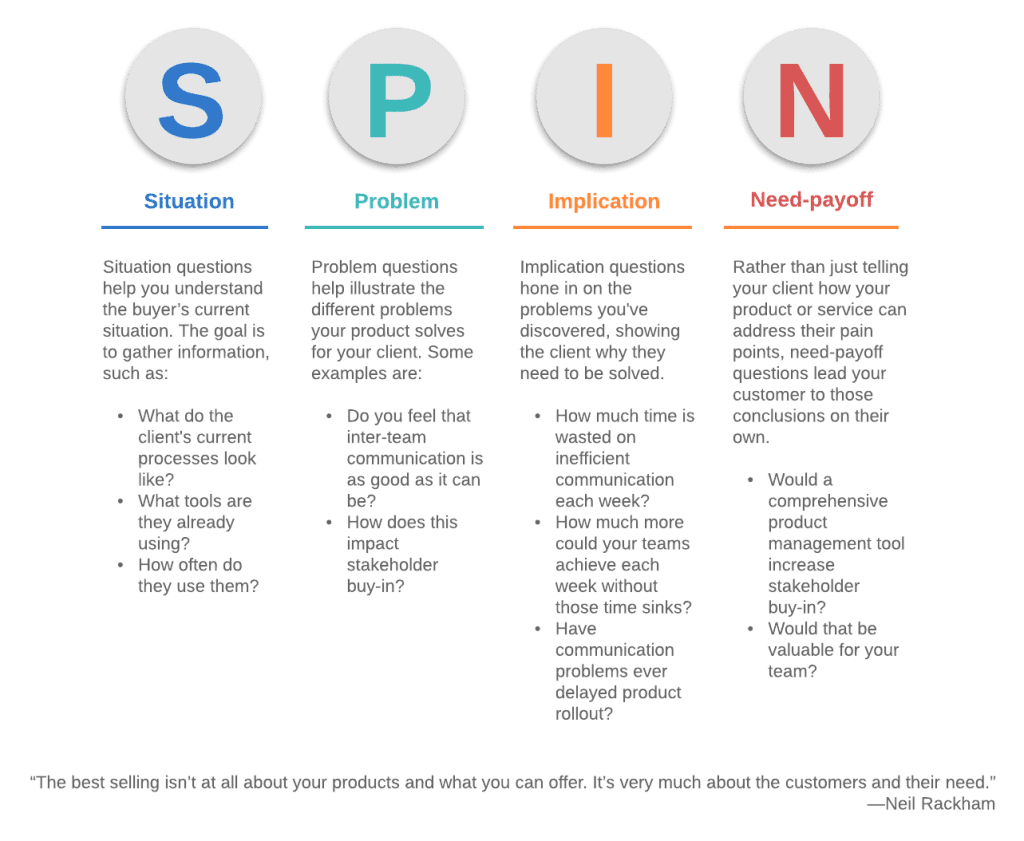
In SPIN selling, a renowned sales methodology developed by Neil Rackham, implication questions are one of the four types of questions used to navigate the sales process. Alongside situation questions, problem questions, and need-payoff questions, implication questions form a powerful framework that can drive meaningful conversations and ultimately lead to successful sales outcomes.
See these implication questions in SPIN Selling:
- What are the potential consequences if this problem is not addressed?
- How does this issue affect your overall productivity?
- What impact does this have on your bottom line?
- Are there any risks associated with not finding a solution?
- How does this problem impact customer satisfaction?
- What are the implications of not taking action?
- How does this issue affect your ability to compete in the market?
- What would happen if this problem continues to persist?
- How does this challenge impact your team’s morale and motivation?
- What are the long-term consequences of not finding a solution?
- How does this problem affect your reputation?
- What would be the cost of not addressing this issue?
- What happens if this problem worsens over time?
- How does this challenge impact your customer retention rate?
- What are the risks associated with maintaining the status quo?
- What opportunities are being missed by not solving this problem?
- How does this issue affect your ability to scale and grow?
- What would be the consequences of not investing in a solution?
- How does this problem impact your employees’ job satisfaction?
- What would be the impact on your market share if this problem persists?
- What are the implications of delaying a decision?
- How does this challenge affect your product/service quality?
- What would be the consequences of not adapting to changing market trends?
- What are the risks associated with choosing not to take action?
- How does this issue impact your ability to attract new customers?
- What would be the long-term effects of not addressing this problem?
- How does this problem affect your operational efficiency?
- What would be the consequences of not investing in innovation?
- What happens if this issue remains unresolved?
- How does this challenge impact your ability to meet customer demands?
- What are the implications of not staying ahead of your competitors?
- How does this problem affect your cash flow?
- What would be the impact on your company’s reputation if this issue persists?
- What are the risks associated with not finding a solution in a timely manner?
- How does this issue impact your customer loyalty?
- What would be the consequences of not improving your processes?
- How does this challenge affect your ability to reach your goals?
- What happens if this problem continues to drain your resources?
- What are the implications of not investing in employee training and development?
- How does this problem affect your ability to innovate?
- What would be the impact on your overall customer experience if this issue persists?
- What are the risks associated with not adapting to new technologies?
- How does this issue impact your revenue growth?
- What would be the consequences of not addressing this problem in a timely manner?
- How does this challenge affect your ability to retain top talent?
By incorporating implication questions into your sales conversations, you can guide customers towards recognizing the true implications of their problems and motivate them to take action. Remember, the key is to ask open-ended questions that encourage customers to reflect on the consequences of inaction. With practice and mastery, implication questions will become an essential tool in your sales arsenal, driving successful outcomes and fostering long-term customer relationships.






