
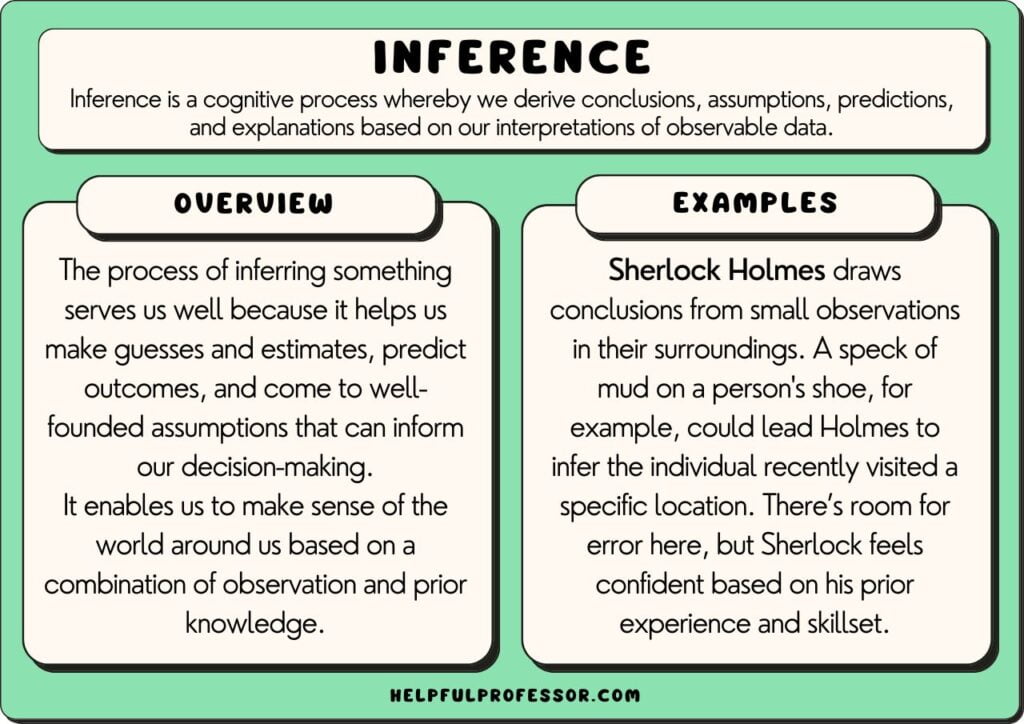
Inference questions are a type of question that require the reader or listener to draw conclusions or make deductions based on information that is not explicitly stated. These questions challenge our ability to read between the lines and understand implied meanings, making them a crucial component of critical thinking and comprehension skills.
When answering inference questions, it is important to carefully analyze the given information and consider any underlying assumptions or implications. This type of questioning is commonly found in reading comprehension tests, interviews, and problem-solving scenarios. By mastering the art of inference, you can sharpen your analytical skills and enhance your ability to make informed decisions.
See these inference questions
- What does the character’s facial expression suggest about their mood?
- Based on the evidence provided, what conclusion can you draw?
- What might be the reason behind the sudden change in behavior?
- What can you infer from the character’s choice of words?
- Why did the author include this particular detail in the passage?
- What is the main idea that can be inferred from the paragraph?
- What can you conclude from the experiment’s results?
- What implications can be drawn from the data presented?
- What might be the author’s purpose in writing this article?
- What can you gather from the tone of the speaker’s voice?
- What can be inferred about the character’s background based on their actions?
- What conclusions can you make about the character’s intentions?
- What is the likely outcome of the current situation?
- What can you deduce from the overall theme of the story?
- What can be inferred from the historical context of the event?
- What might be the reason behind the sudden change in the market?
- What conclusions can you draw from the statistical data?
- What can be inferred about the relationship between the two characters?
- Why did the author choose to emphasize this particular detail?
- What can you gather from the protagonist’s inner thoughts?
- What conclusions can be made about the speaker’s viewpoint?
- What can be inferred from the symbolism used in the artwork?
- What might be the underlying message of the poem?
- What can you conclude about the author’s perspective on the issue?
- What implications can be drawn from the dialogue between the characters?
- What can be inferred about the character’s motives based on their actions?
- What conclusions can you make about the speaker’s intentions?
- What is the likely cause of the problem described in the passage?
- What can you deduce from the overall tone of the essay?
- What can be inferred from the scientific principles mentioned in the article?
- What might be the reason behind the sudden increase in prices?
- What conclusions can you draw from the experiments conducted?
- What can be inferred about the relationship between the main characters?
- Why did the author choose to omit this particular information?
- What can you gather from the protagonist’s body language?
- What conclusions can be made about the narrator’s perspective?
- What can be inferred from the metaphors used in the story?
- What might be the underlying theme of the novel?
- What can you conclude about the author’s stance on the topic?
- What implications can be drawn from the conversation between the speakers?
- What can be inferred about the character’s personality based on their behavior?
- What conclusions can you make about the character’s motives?
- What is the likely consequence of the character’s decision?
- What can you deduce from the overall structure of the argument?
These are just a few examples of inference questions that can help you develop your critical thinking skills. By practicing answering these questions, you will become more adept at drawing logical conclusions and understanding implicit meanings. Remember, inference is all about reading between the lines and making educated guesses based on the available information. So keep honing your skills, and you’ll soon become a master at answering inference questions!






