
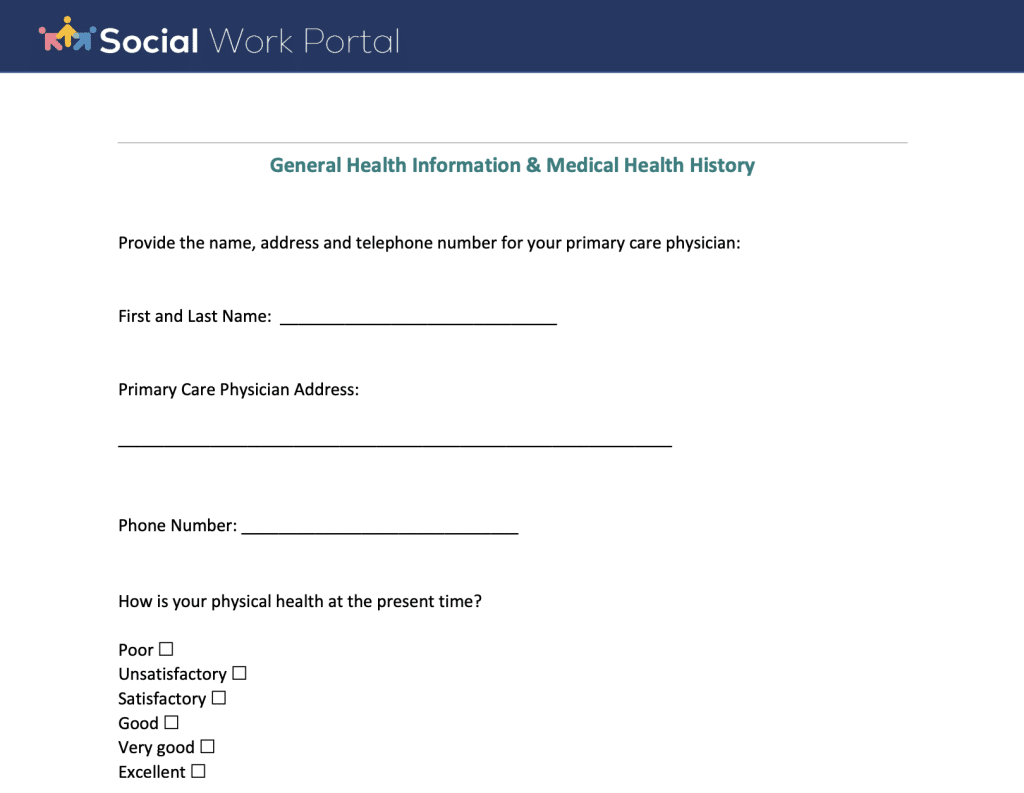
When it comes to making informed decisions, gathering accurate and comprehensive information is crucial. This is especially true in the field of psychology and counseling, where professionals rely on intake assessments to understand their clients’ needs and provide appropriate support. Intake assessments involve a series of questions designed to gather essential information about a client’s background, current situation, and goals. These assessments play a vital role in establishing a strong foundation for effective therapy or counseling. In this article, we will explore the importance of intake assessment questions and provide a comprehensive list of examples to help professionals conduct thorough assessments.
Intake assessment questions are carefully crafted to cover various aspects of a client’s life, including personal history, current challenges, and future aspirations. These questions serve as a starting point for professionals to get to know their clients better, establish rapport, and develop personalized treatment plans. By gathering information about a client’s mental health history, family background, daily routines, and existing support systems, professionals can gain valuable insights into the client’s unique circumstances.
Moreover, intake assessment questions also provide an opportunity for clients to express their concerns, share their experiences, and voice their expectations from the therapeutic process. This collaborative approach helps build trust between the client and the professional, creating a safe and supportive environment for the client to explore their emotions and work towards positive change.
See these intake assessment questions:
- What brings you to seek therapy/counseling at this time?
- Have you been in therapy or counseling before? If yes, please provide details about your previous experiences.
- What are your main goals or expectations from therapy/counseling?
- Can you briefly describe your current emotional state?
- Have you experienced any recent life events that have impacted your well-being?
- Do you have a personal or family history of mental health issues?
- Are you currently taking any medications or receiving medical treatment? If yes, please provide details.
- How would you describe your social support system?
- Have you experienced any significant changes in your relationships recently?
- What are some of the most challenging aspects of your life right now?
- How do you typically cope with stress or difficult emotions?
- Do you have any specific fears or phobias?
- Have you ever had thoughts of self-harm or suicide?
- Have you experienced any traumatic events in your life?
- What is your current living situation?
- Are you satisfied with your current job or career? If not, what would you like to change?
- Do you have any hobbies or activities that bring you joy?
- How would you describe your sleep patterns?
- What is your typical diet and exercise routine?
- Have you ever been diagnosed with a psychiatric disorder?
- Do you have any concerns about your physical health?
- Do you have a history of substance abuse?
- What are your expectations from the therapeutic relationship?
- What are some cultural or spiritual beliefs that are important to you?
- Have you ever been involved in legal issues or court proceedings?
- Are there any specific cultural or social factors that influence your life?
- How do you spend your leisure time?
- Do you have any concerns about confidentiality or privacy?
- What are your strengths and resources that could support your therapy/counseling process?
- Are you currently experiencing any physical symptoms or health problems?
- What are your thoughts about medication (if applicable)?
- Do you have any concerns about the cost or affordability of therapy/counseling?
- How do you feel about the prospect of change?
- What are your values and beliefs?
- Do you have any specific cultural or religious practices that are important to you?
- How do you define success or progress in therapy/counseling?
- Are there any specific fears or reservations you have about therapy/counseling?
- How do you typically communicate your needs and boundaries?
- Are there any specific triggers or situations that worsen your symptoms or distress?
- What are your preferred methods or approaches for learning and personal growth?
- Do you have any concerns about the time commitment required for therapy/counseling?
- How would you describe your support system outside of therapy/counseling?
- Are there any specific goals or areas of your life that you would like to focus on in therapy/counseling?
These intake assessment questions provide a comprehensive starting point for professionals to gather essential information about their clients. However, it is important to adapt and tailor these questions based on the specific needs and context of each individual. By conducting thorough intake assessments, professionals can lay the groundwork for a successful therapeutic journey that addresses their clients’ unique challenges and goals.






