
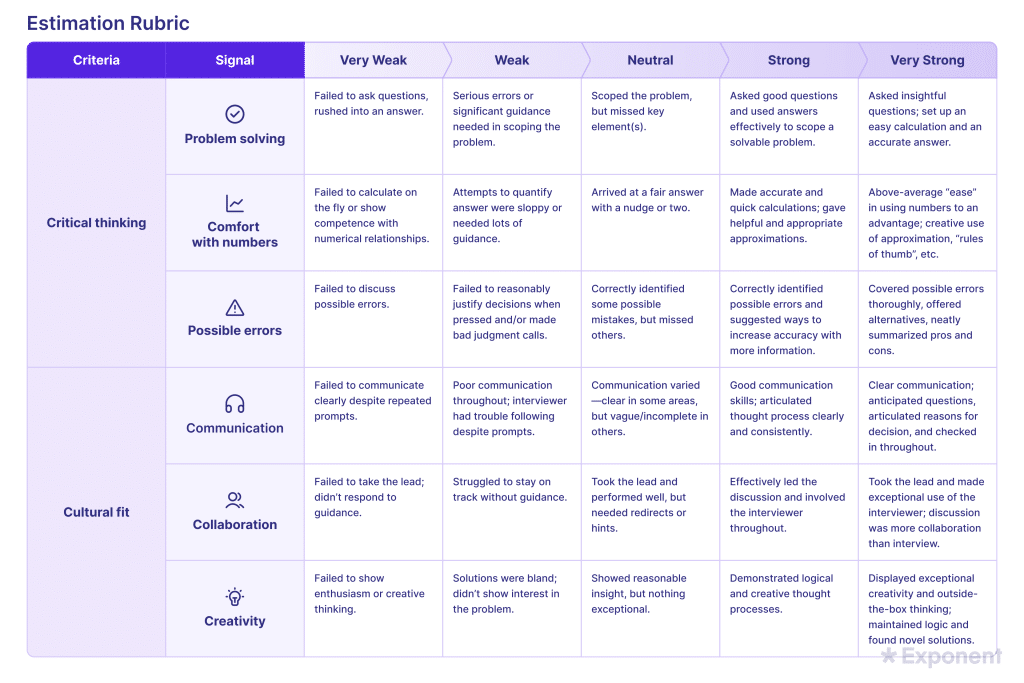
Interviews are a crucial part of the hiring process as they provide employers with a valuable opportunity to assess a candidate’s skills, experience, and suitability for a specific role. However, conducting interviews can be a challenging task, especially if you don’t have a structured approach in place. This is where an interview questions rubric can be immensely helpful.
An interview questions rubric is a tool that provides a standardized framework for evaluating candidates during interviews. It consists of a set of predetermined questions that are designed to assess various aspects of a candidate’s qualifications, including their technical skills, problem-solving abilities, and cultural fit. By using a rubric, employers can ensure fairness and consistency in their evaluation process, making it easier to compare candidates and make informed hiring decisions.
Creating an effective interview questions rubric requires careful consideration of the specific requirements of the role and the desired qualities in a candidate. It’s important to focus on questions that directly address the key competencies and job-related skills necessary for success in the position. By doing so, employers can gather the information they need to assess a candidate’s suitability accurately.
See these interview questions rubric
- Describe a situation where you had to resolve a conflict within a team.
- How do you prioritize your tasks when you have multiple deadlines to meet?
- Tell us about a time when you had to handle a difficult customer and how you resolved the situation.
- What steps do you take to ensure accuracy in your work?
- Describe a challenging project you worked on and how you overcame obstacles.
- How do you stay updated with the latest industry trends and developments?
- Give an example of a time when you had to adapt to a change in project requirements.
- How do you handle feedback and criticism?
- Tell us about a successful teamwork experience and your role in it.
- What strategies do you use to prioritize customer satisfaction?
- Describe a situation where you had to meet a tight deadline. How did you manage your time?
- How do you handle stress and pressure in the workplace?
- What steps do you take to ensure effective communication with team members and stakeholders?
- Tell us about a time when you had to make a difficult decision. What factors did you consider?
- Describe a time when you had to deal with an underperforming team member. How did you address the situation?
- How do you approach problem-solving? Can you provide an example?
- What motivates you in your work?
- Give an example of a situation where you had to handle confidential information.
- Describe a time when you had to influence others to adopt your ideas or suggestions.
- How do you handle competing priorities?
- Tell us about a time when you had to resolve a technical issue or bug in a project.
- What steps do you take to ensure attention to detail in your work?
- Describe a time when you had to work with a diverse group of individuals. How did you ensure effective collaboration?
- How do you keep yourself organized and manage your workload?
- Tell us about a time when you had to deliver a presentation. How did you prepare for it?
- What steps do you take to foster a positive work environment?
- Describe a situation where you had to deal with a difficult team member. How did you handle it?
- How do you handle ambiguity and uncertainty in your work?
- Tell us about a time when you had to navigate a complex project. How did you approach it?
- What steps do you take to ensure effective collaboration with remote team members?
- Describe a time when you had to resolve a conflict between two team members.
- How do you approach learning new technologies or tools?
- Tell us about a time when you had to manage multiple projects simultaneously. How did you prioritize?
- What steps do you take to ensure customer satisfaction?
- Describe a situation where you had to deal with a challenging client. How did you handle it?
- How do you handle setbacks or failures in your work?
- Tell us about a time when you had to delegate tasks to team members. How did you ensure successful completion?
- What steps do you take to ensure effective documentation of your work?
- Describe a time when you had to negotiate with a colleague or stakeholder. How did you approach it?
- How do you handle tight deadlines and unexpected changes in project timelines?
- Tell us about a time when you had to lead a team through a challenging project. How did you motivate them?
- What steps do you take to ensure continuous improvement in your work?
- Describe a situation where you had to manage conflicting priorities. How did you handle it?
- How do you approach decision-making? Can you provide an example?
- Tell us about a time when you had to resolve a communication issue within a team.
These interview questions rubric serve as a starting point to help employers evaluate candidates effectively. However, it’s important to adapt and customize the questions to suit the specific needs of each role and organization. By using a well-structured rubric, employers can streamline their interview process and make informed decisions that align with their hiring goals.






